Bratislava
Opening: 22.09.2026
Exhibition: 23.09 - 28.11.2026
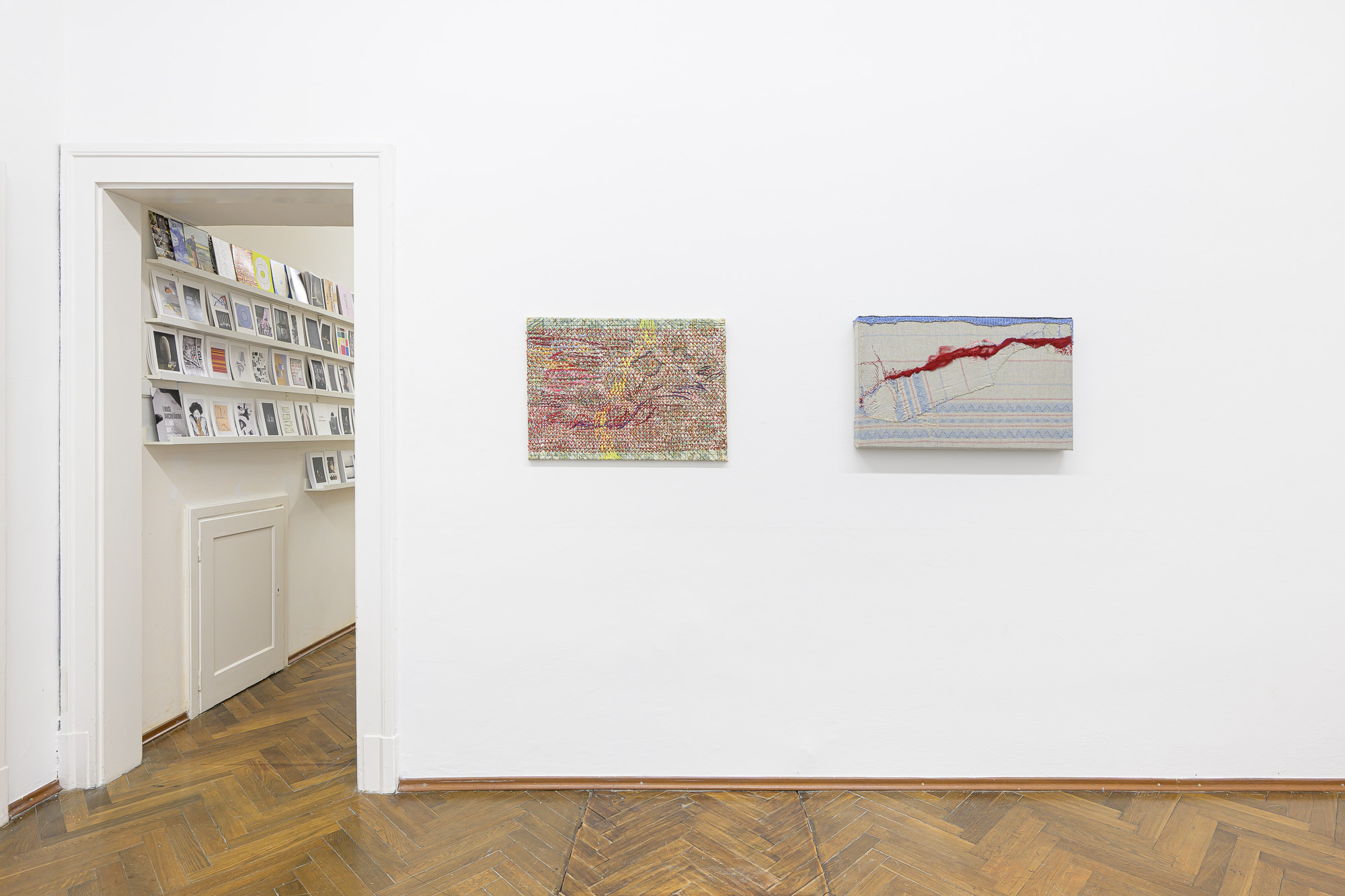
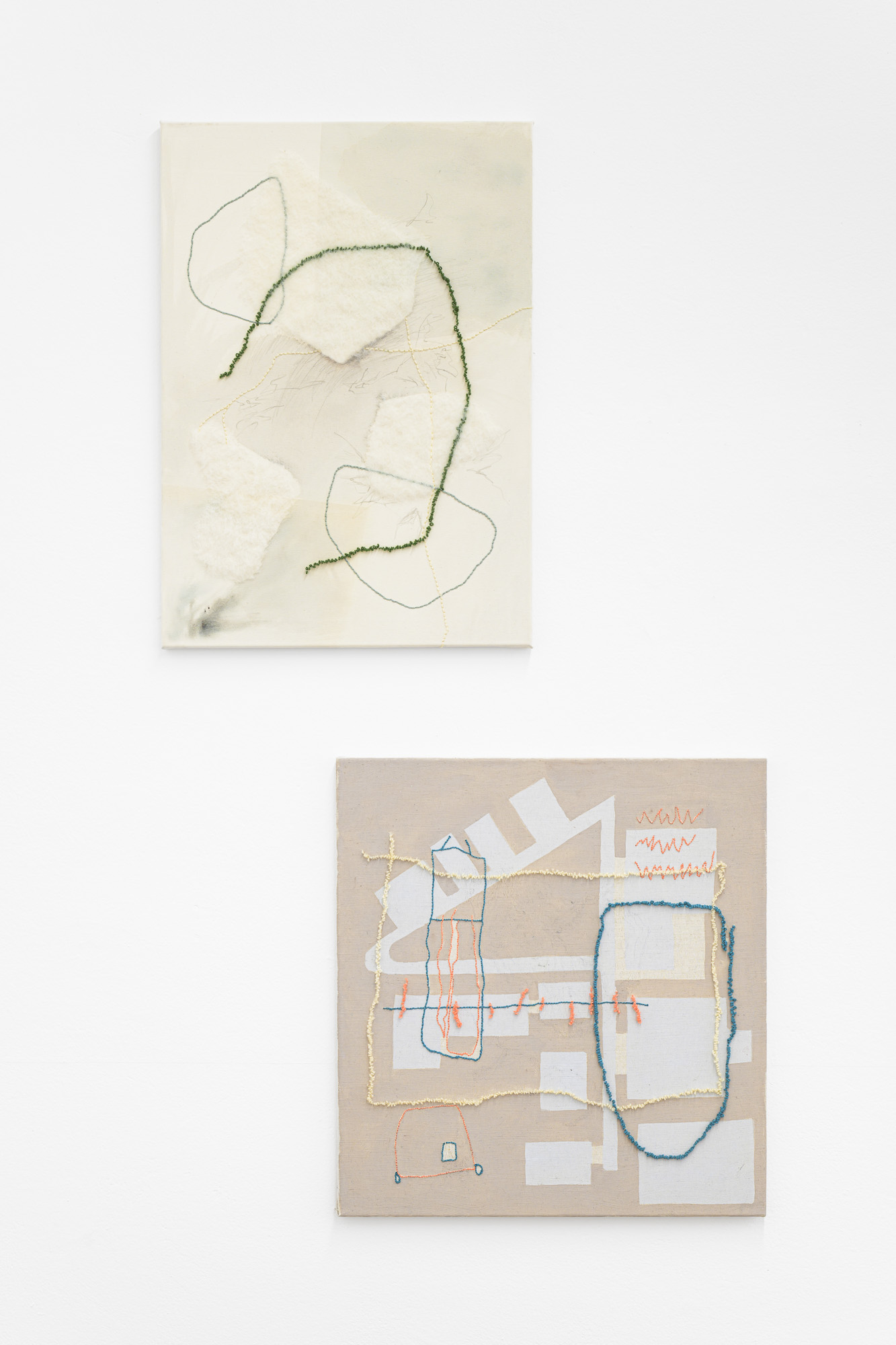
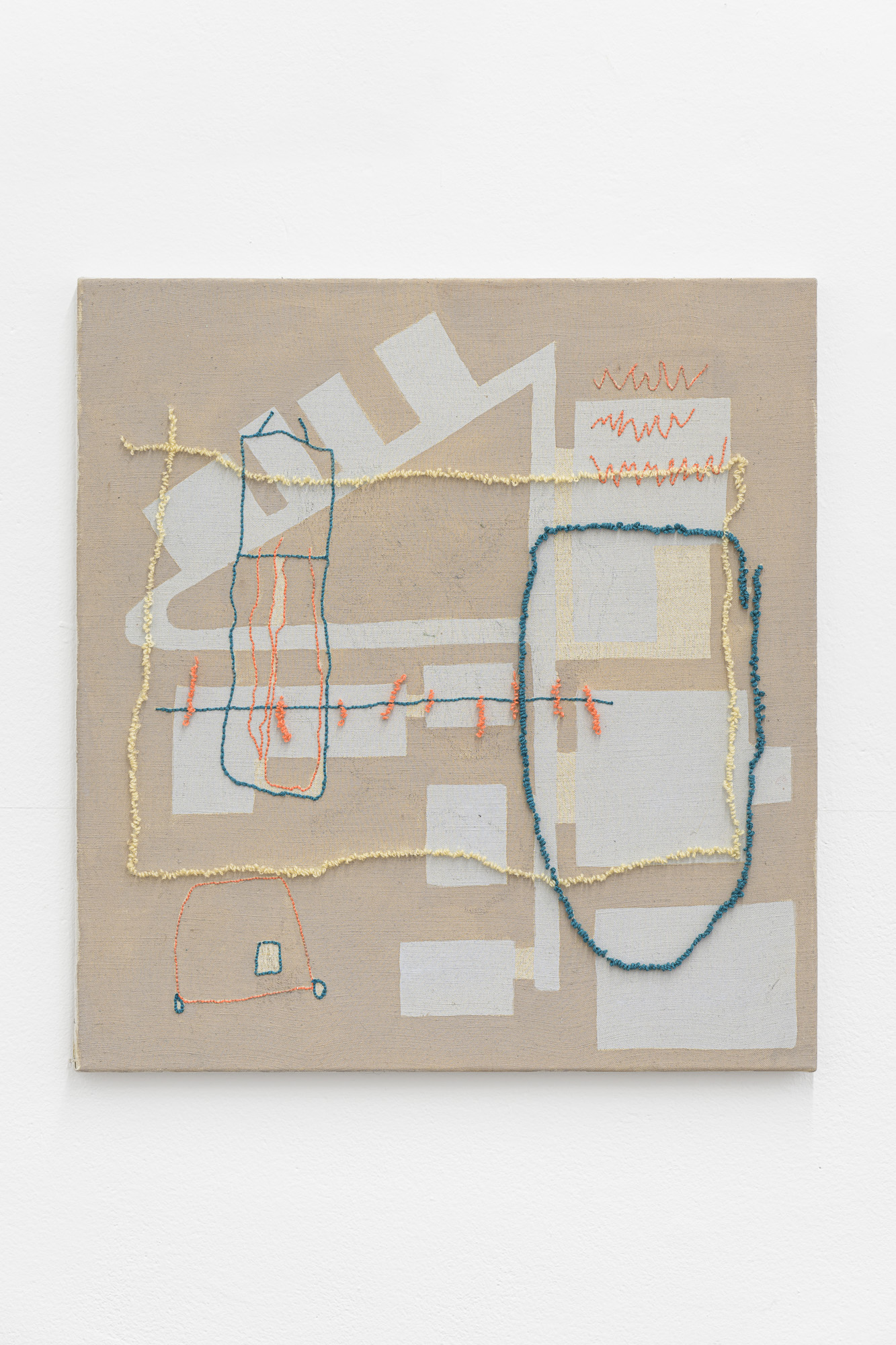
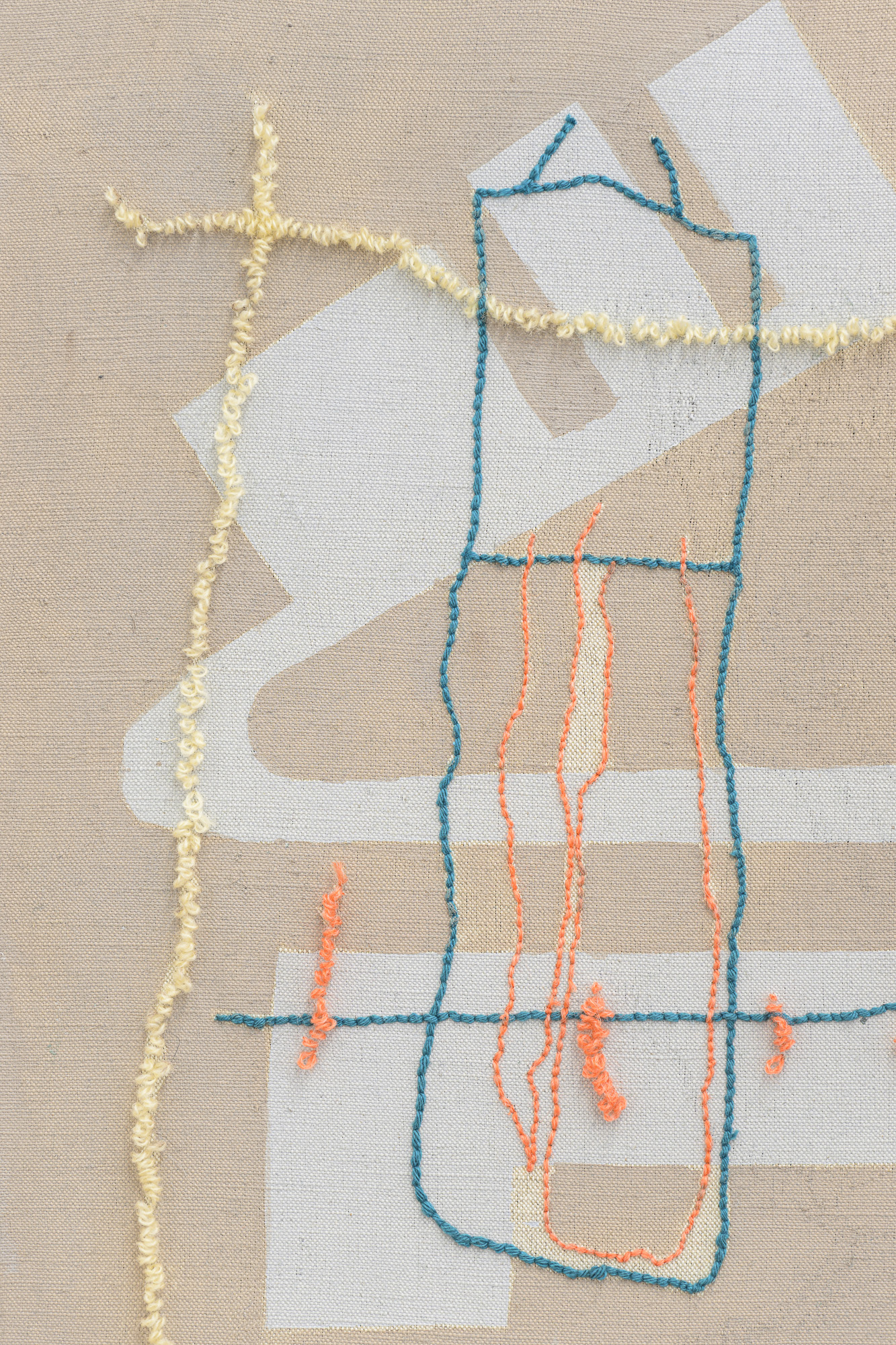
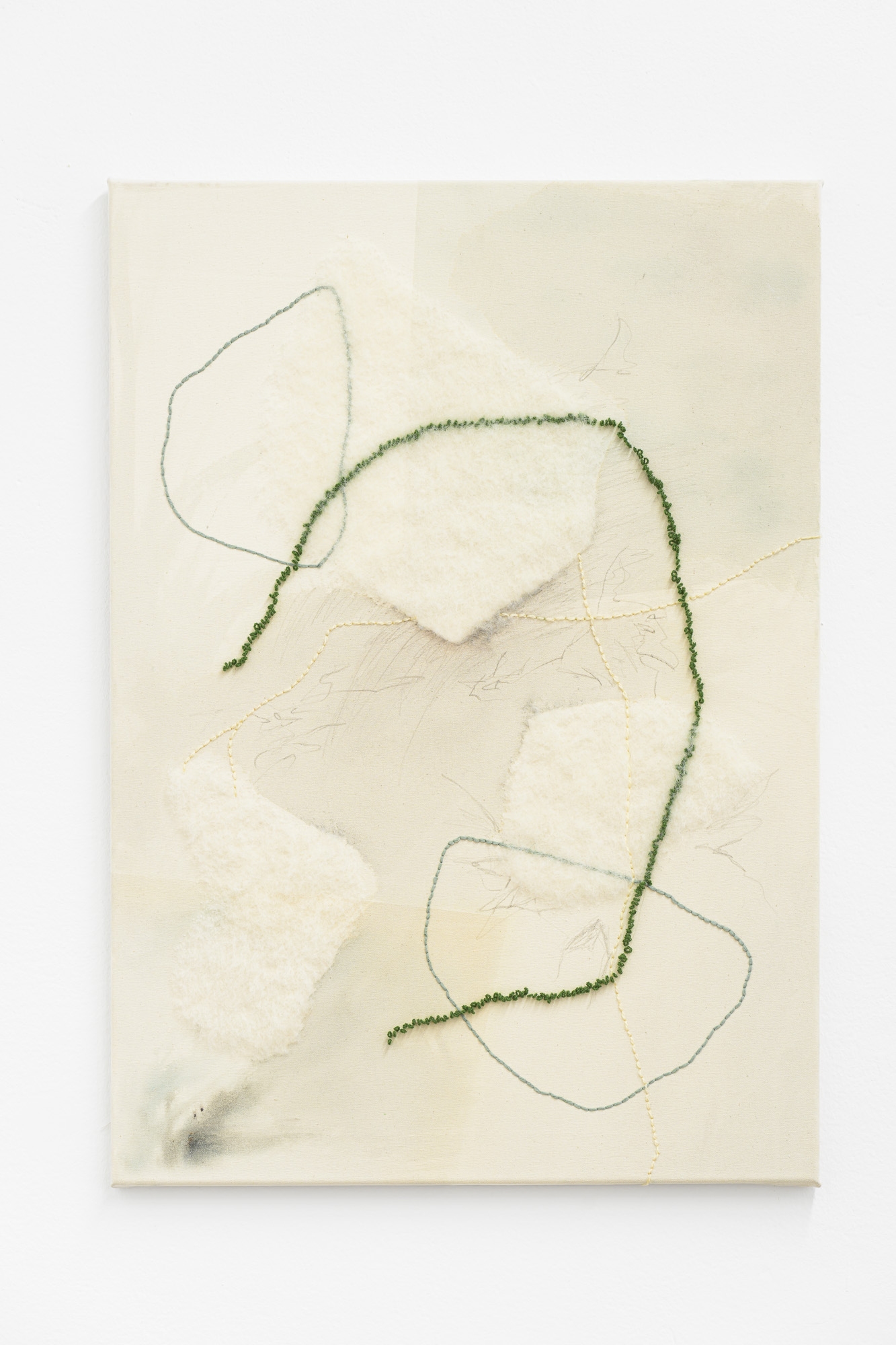
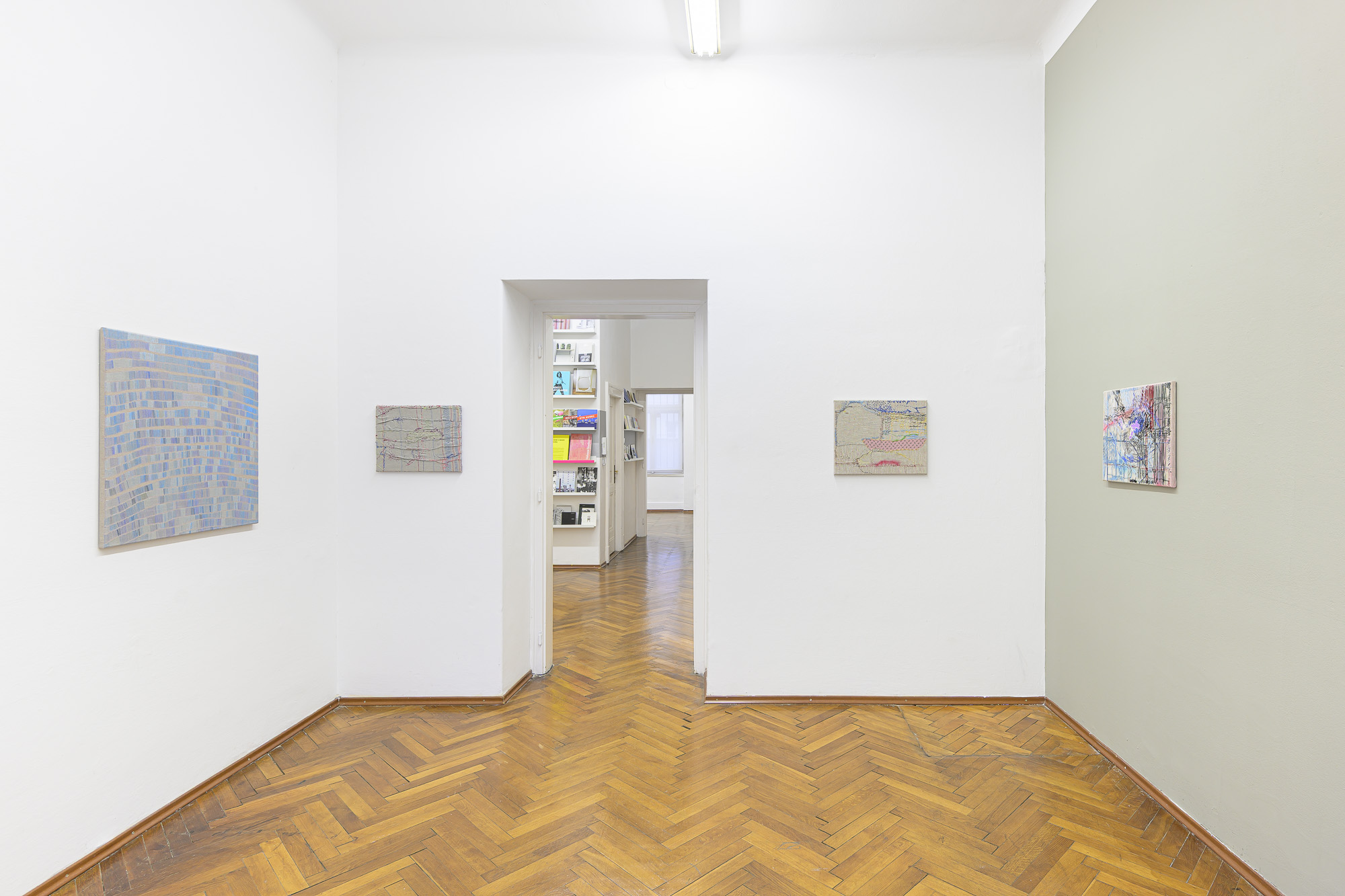
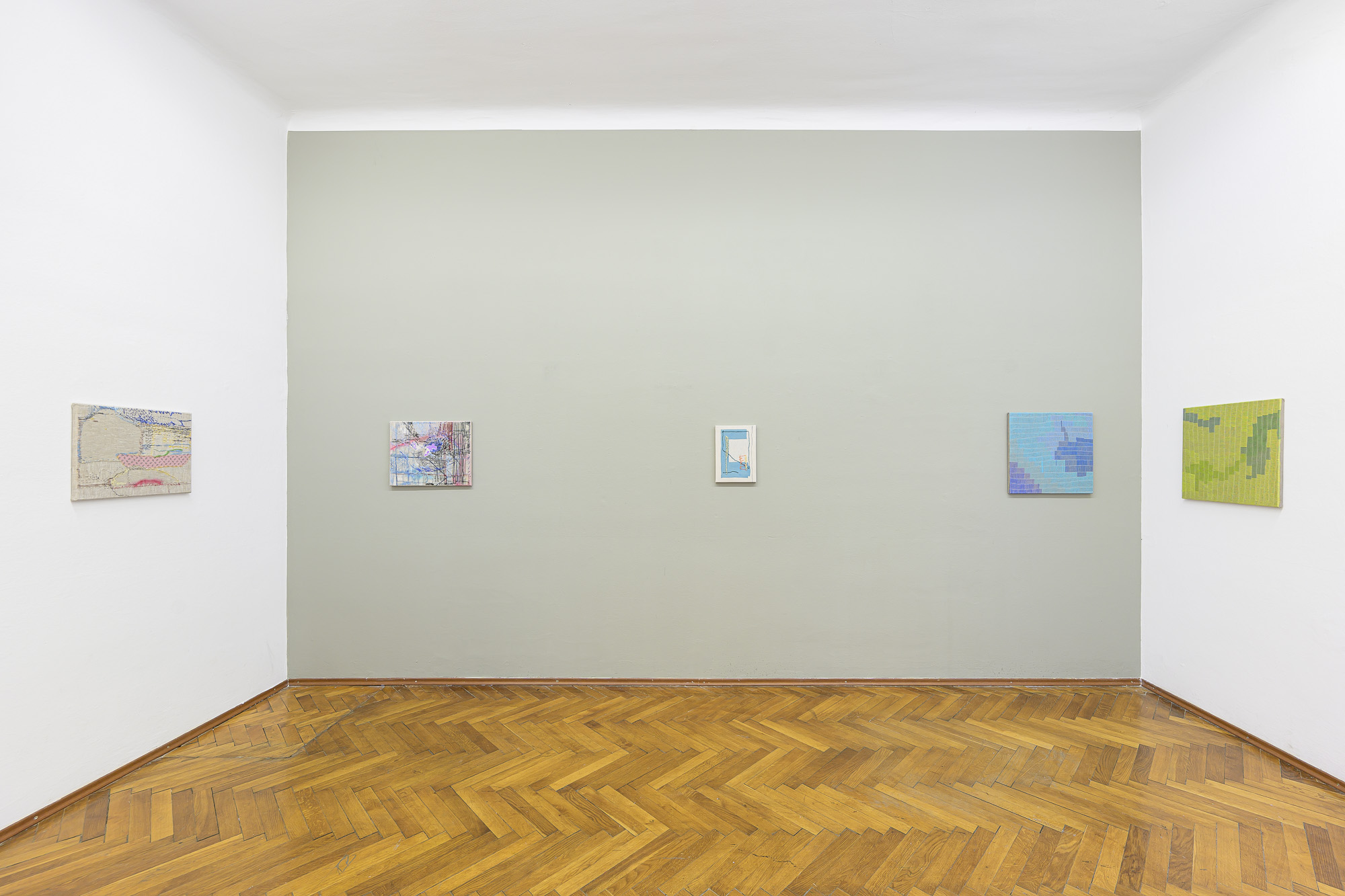
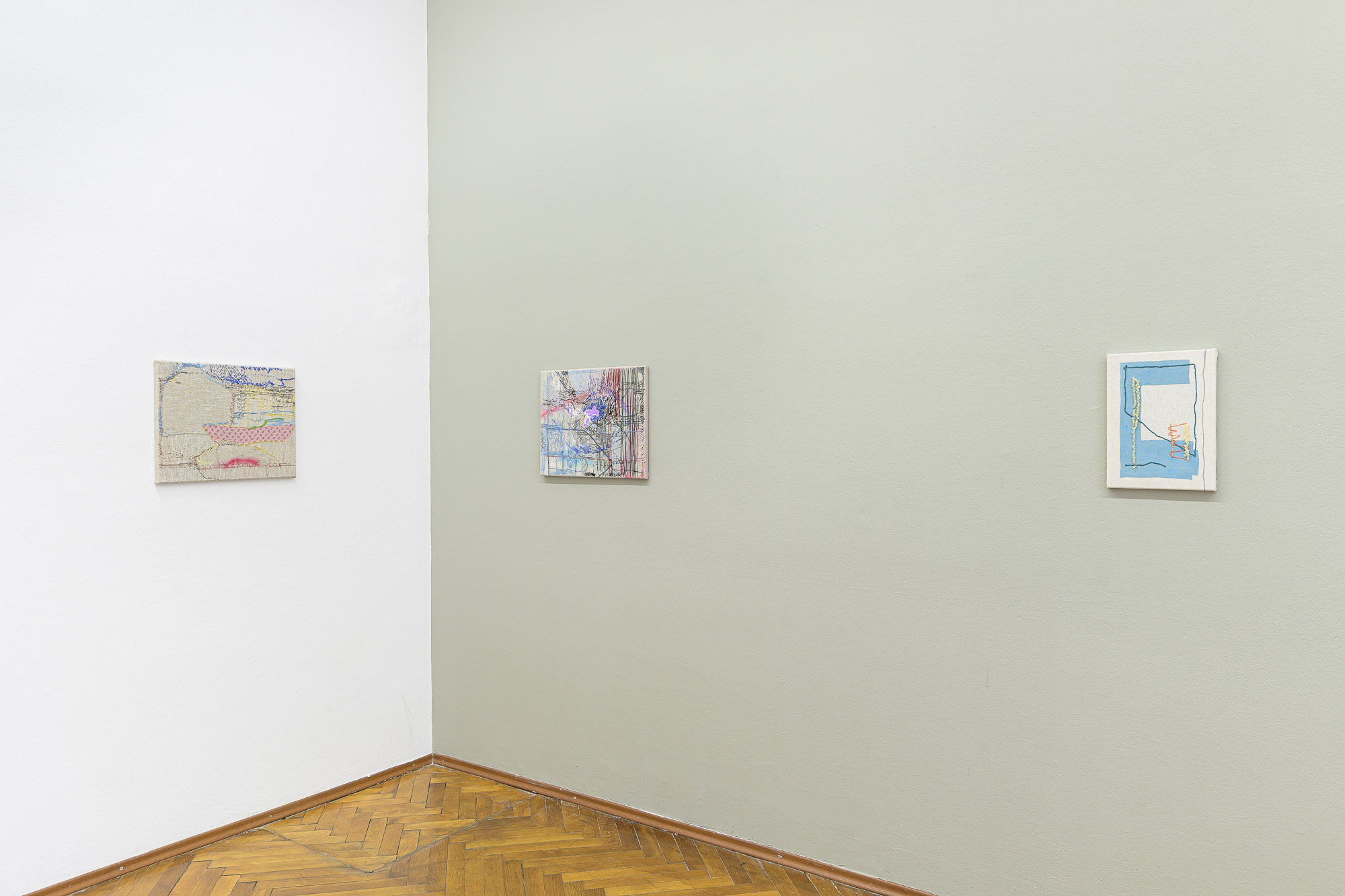
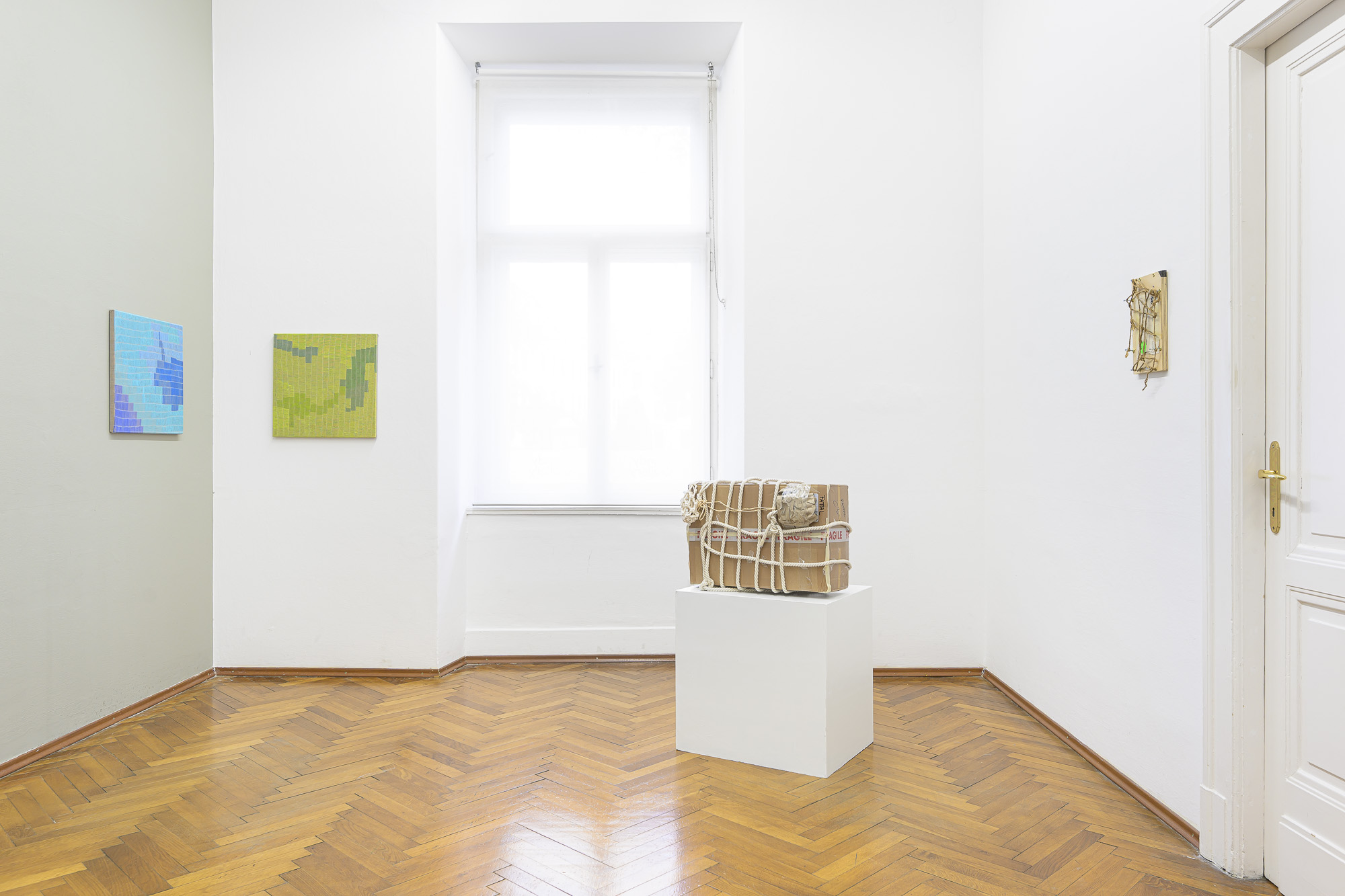
Between Thread and Territory explores the invisible connections that weave together our spaces, identities and memories. The “thread” — a strand, a line, a trajectory — evokes the artisanal gesture, the transmission of stories and the networks that shape contemporary life. “Territory”, meanwhile, refers not only to the physical and political spaces we inhabit, but also to the intimate and emotional landscapes we carry within us.
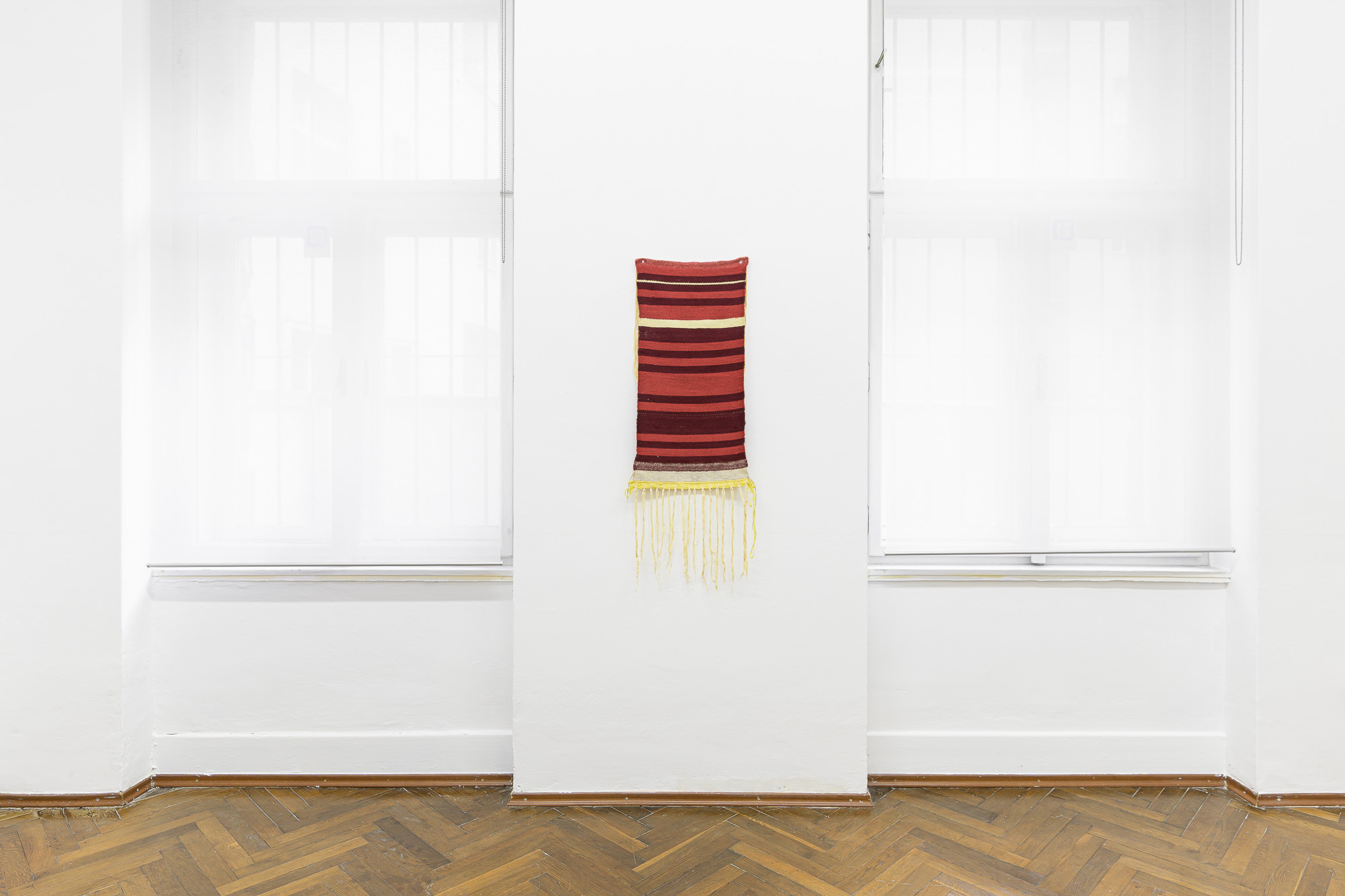
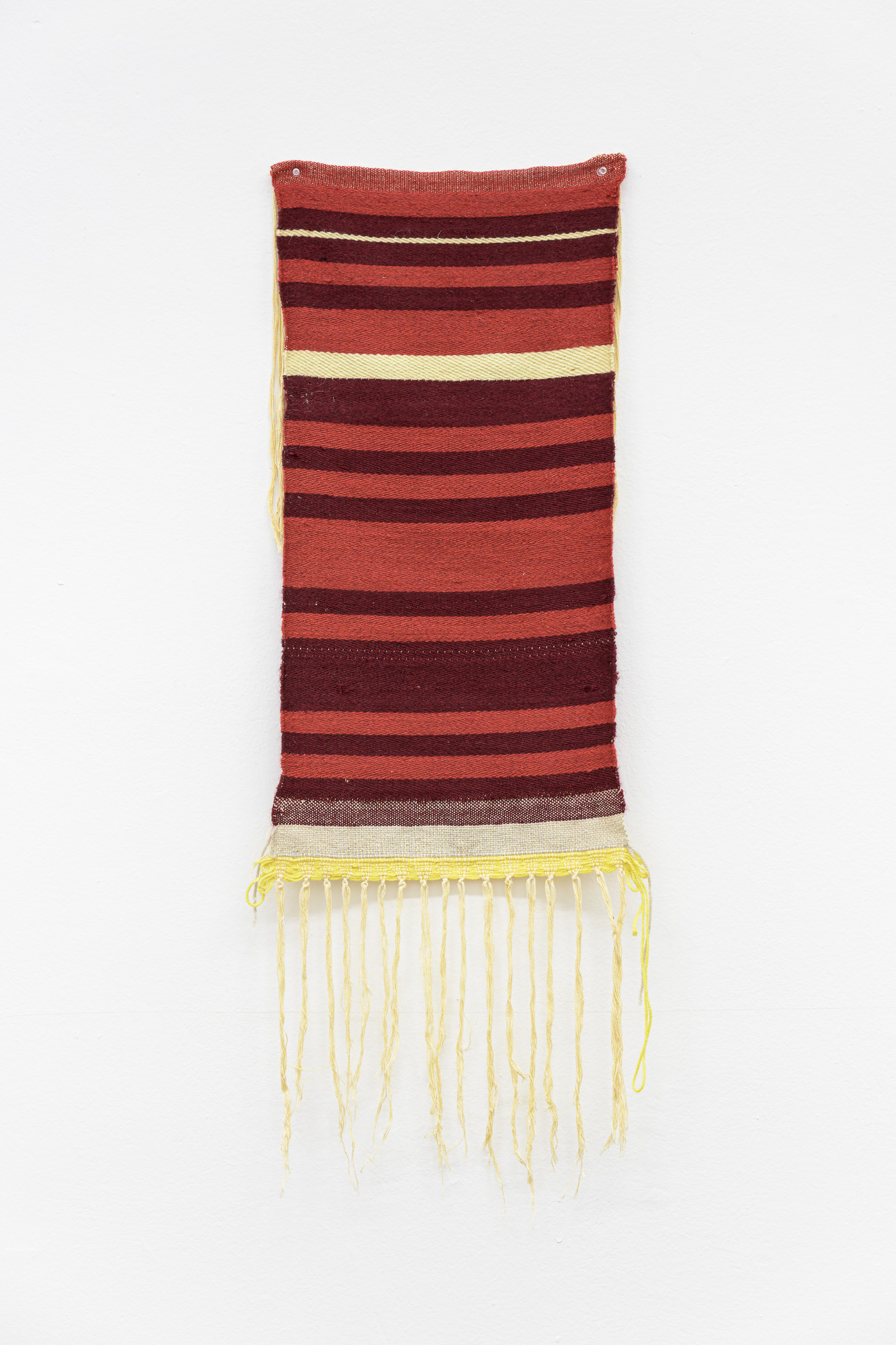
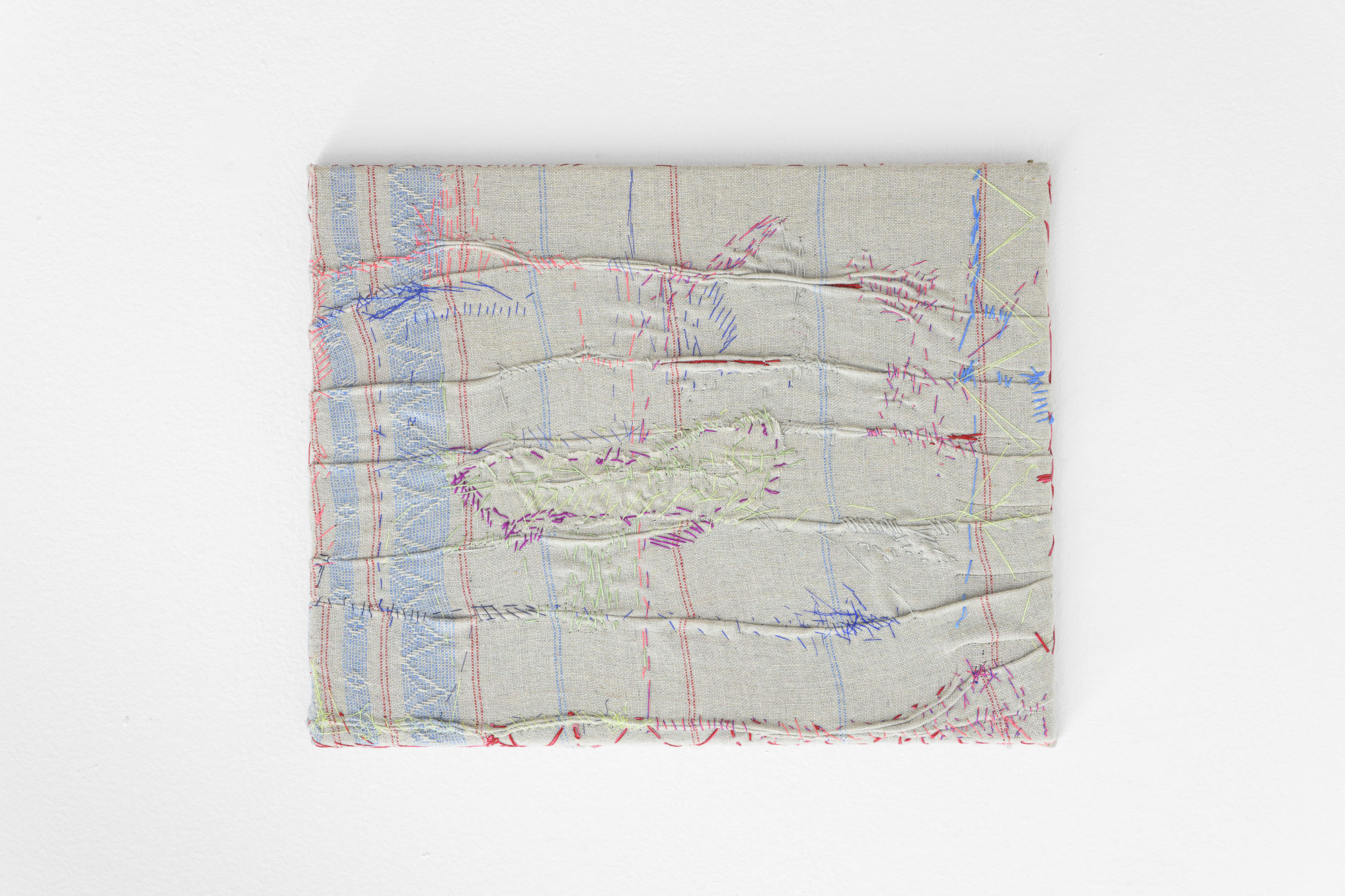
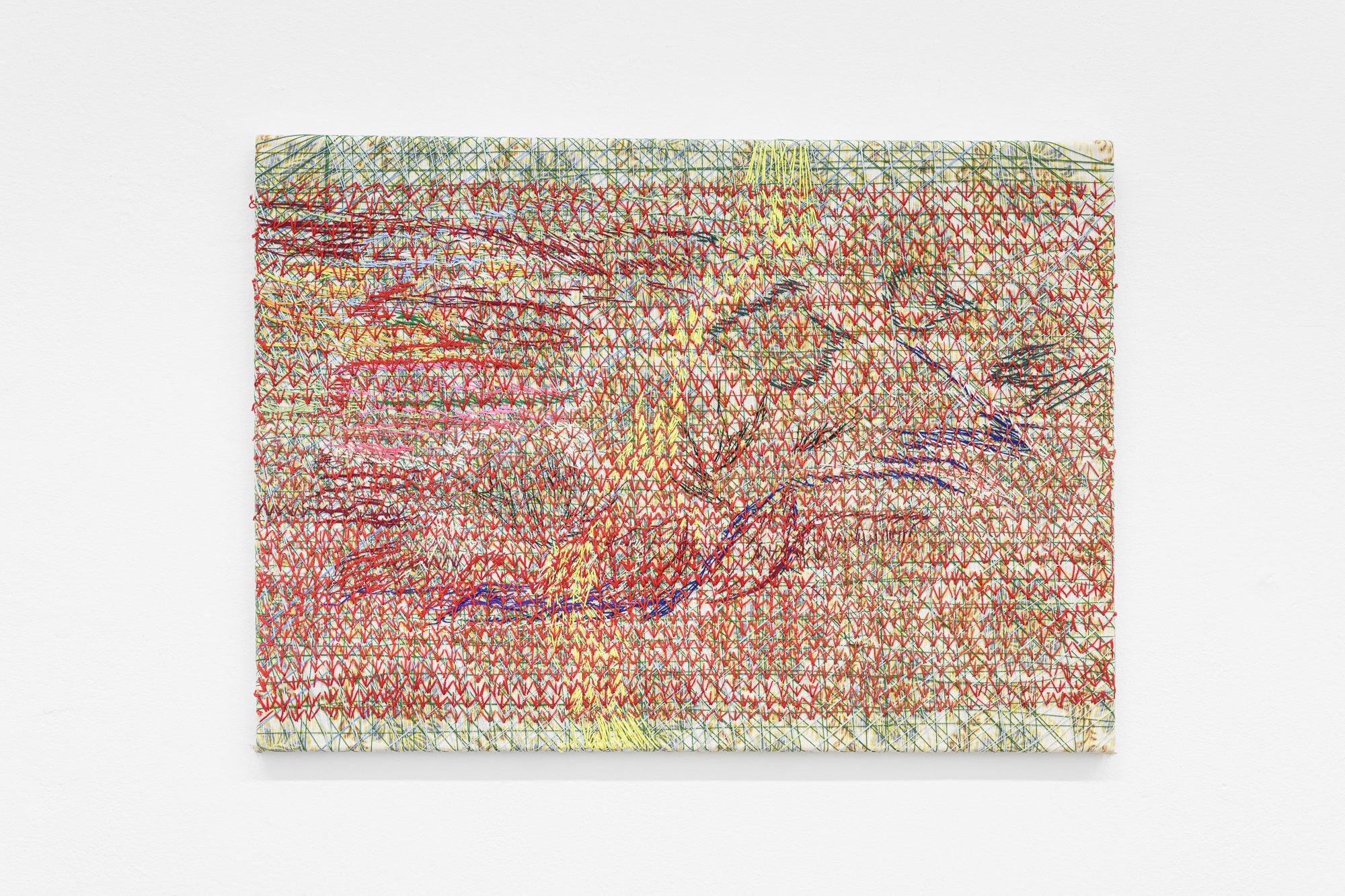
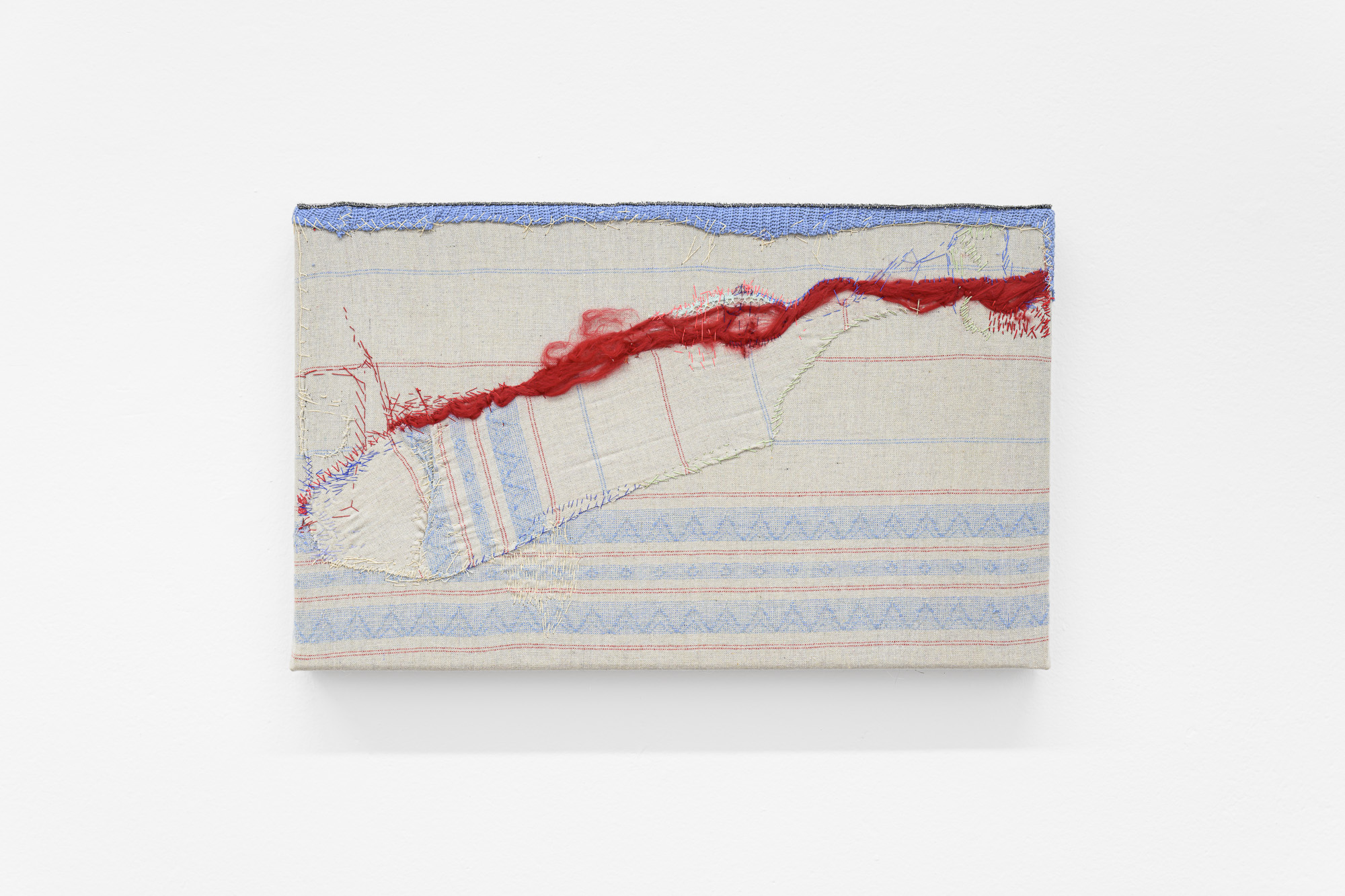
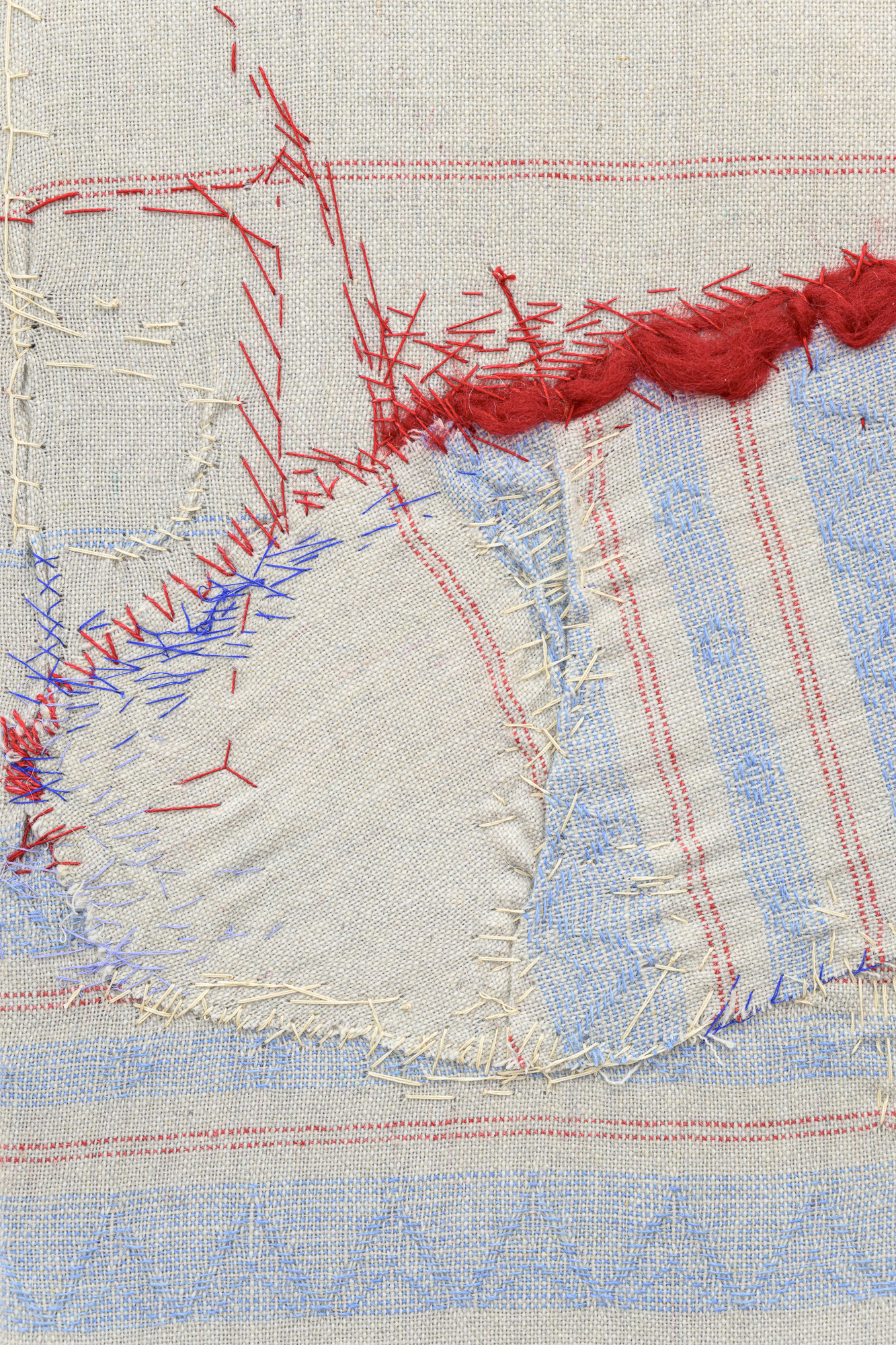
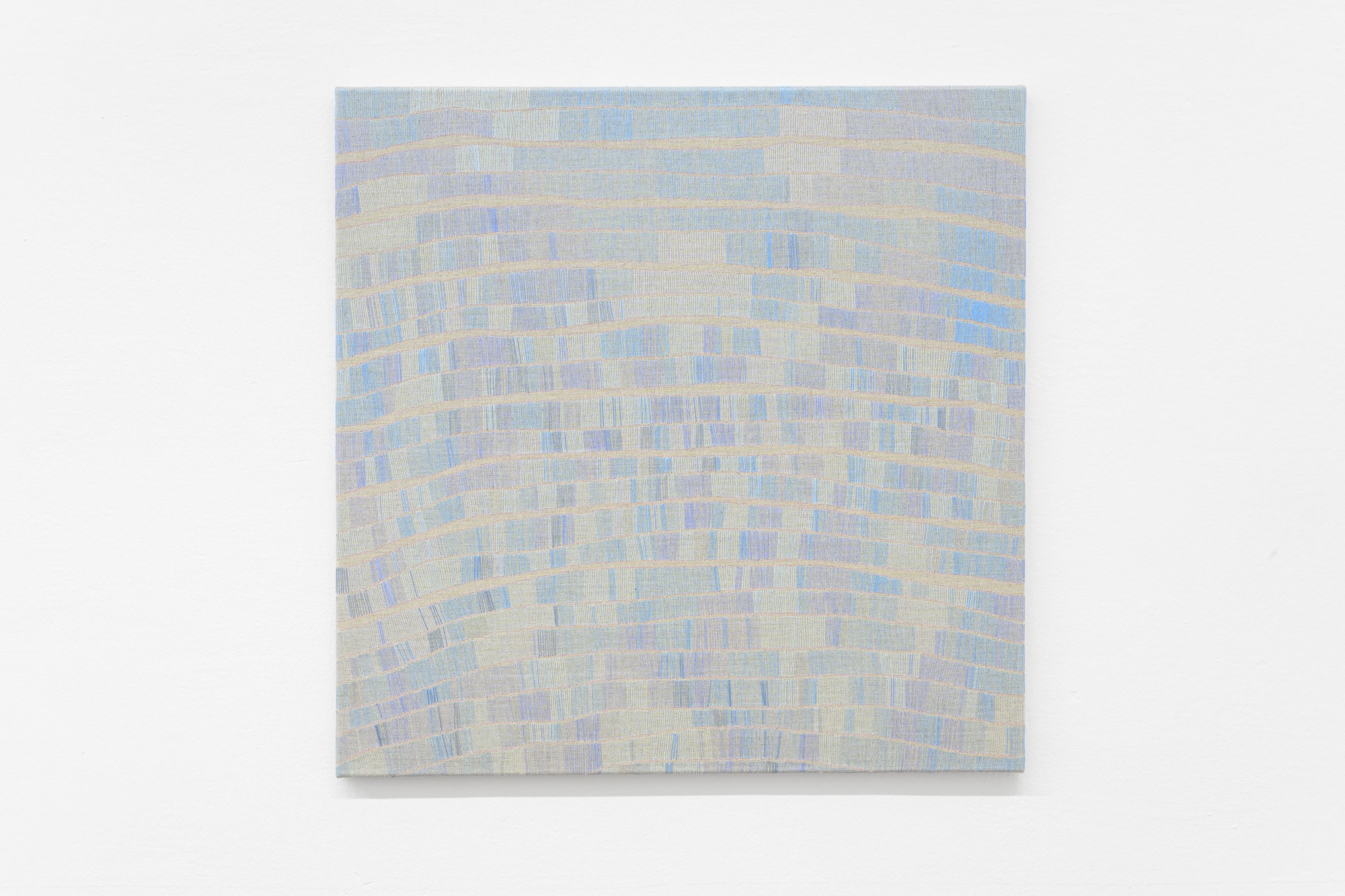
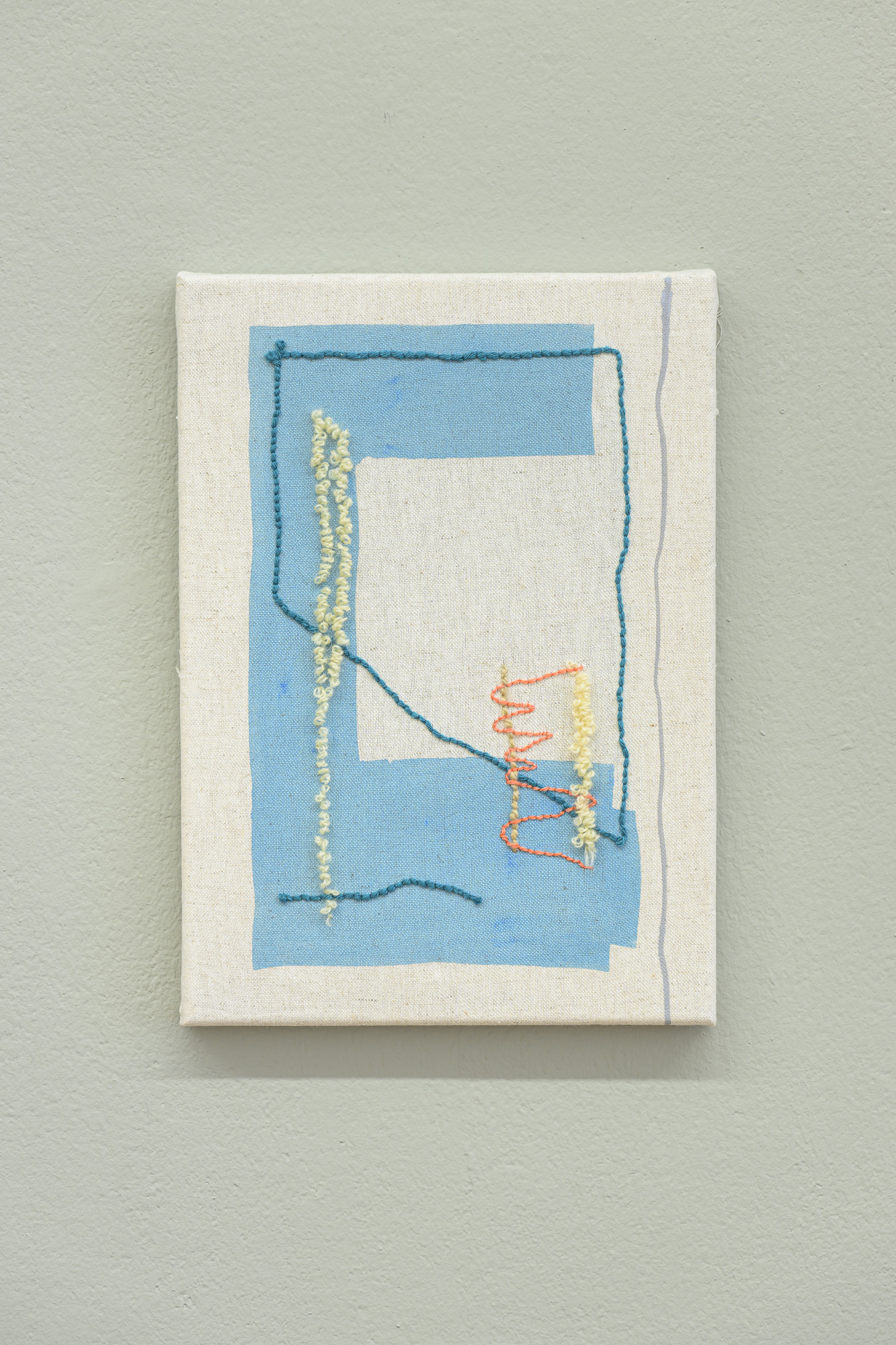
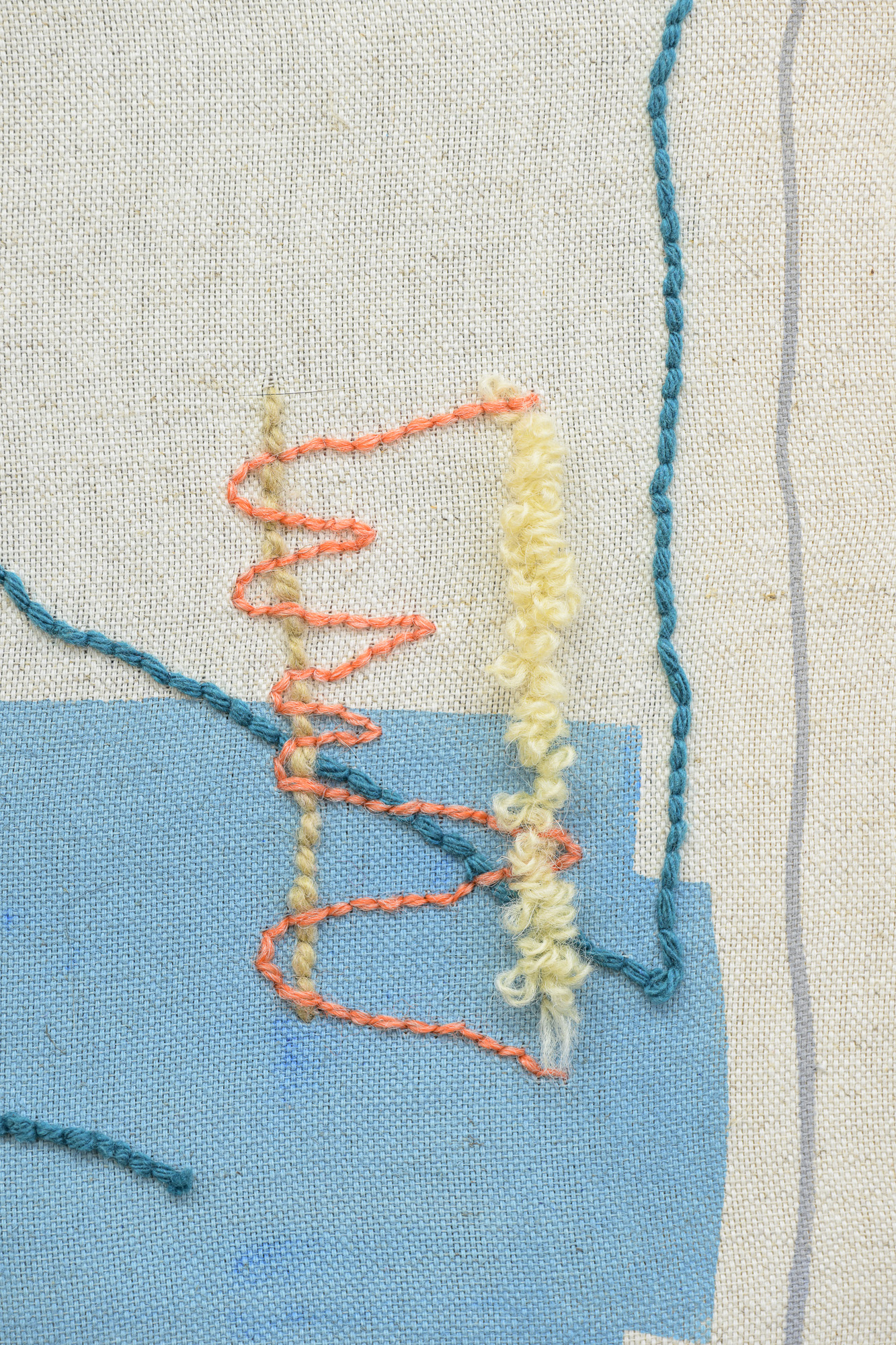
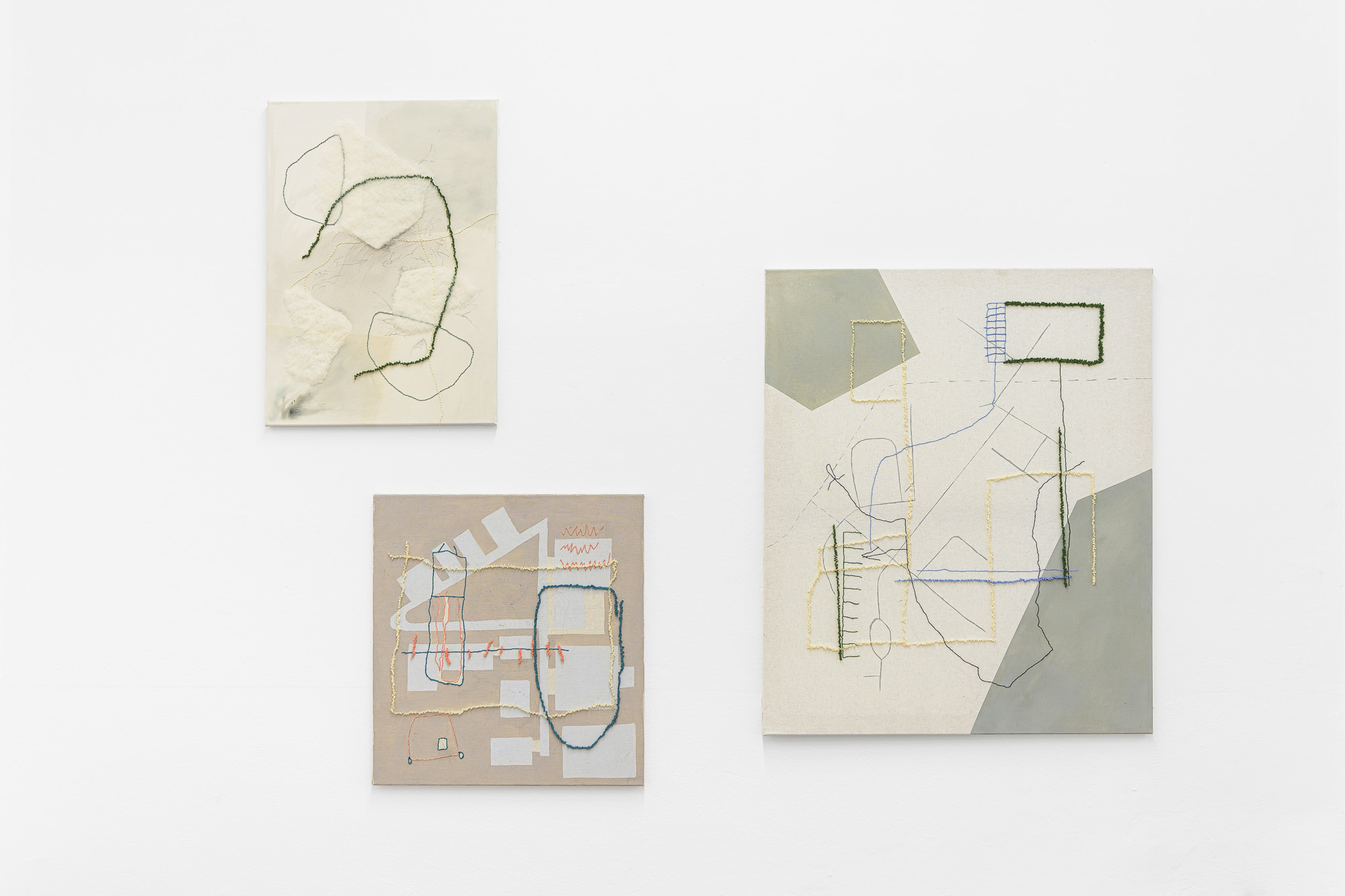
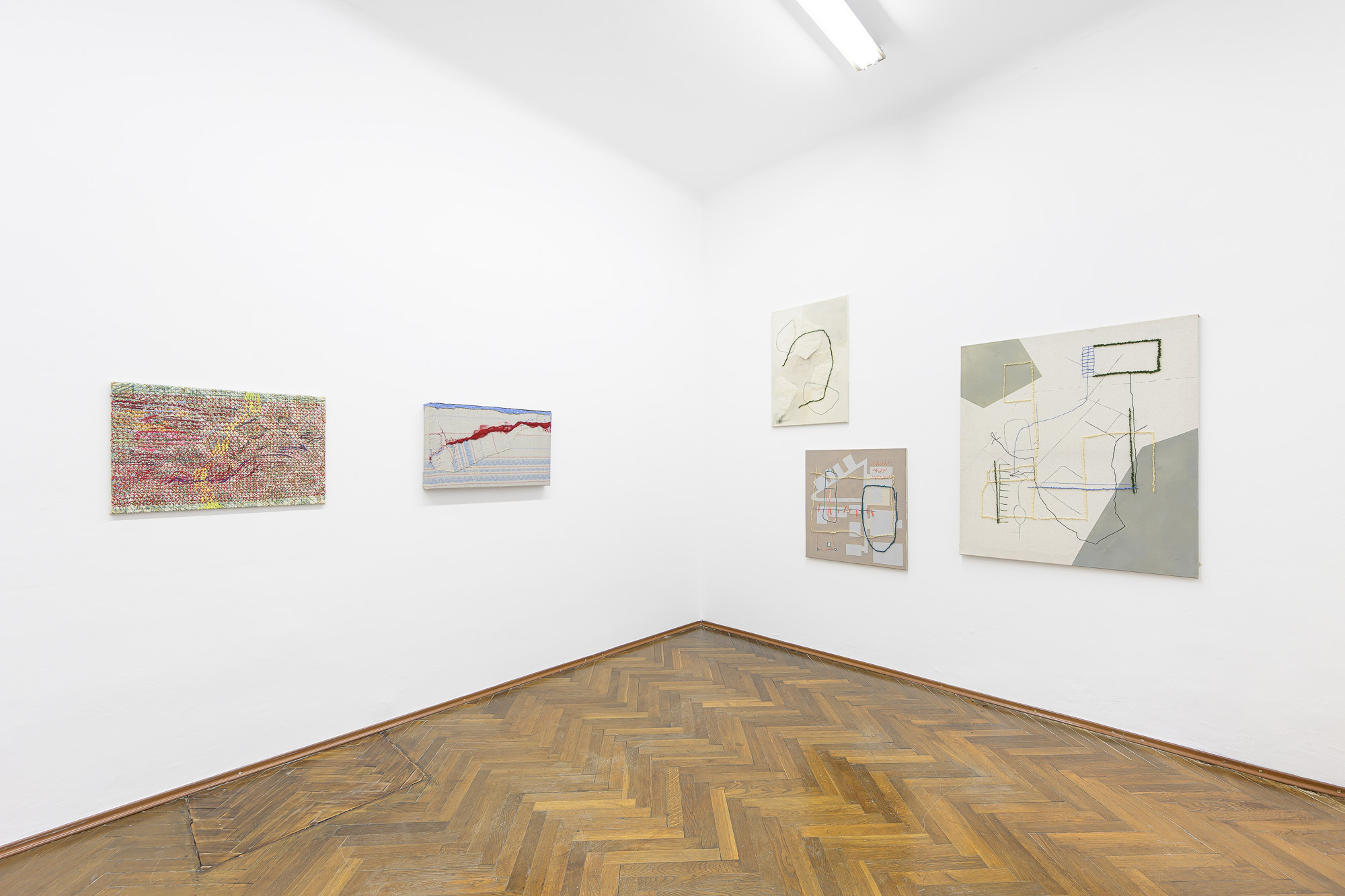
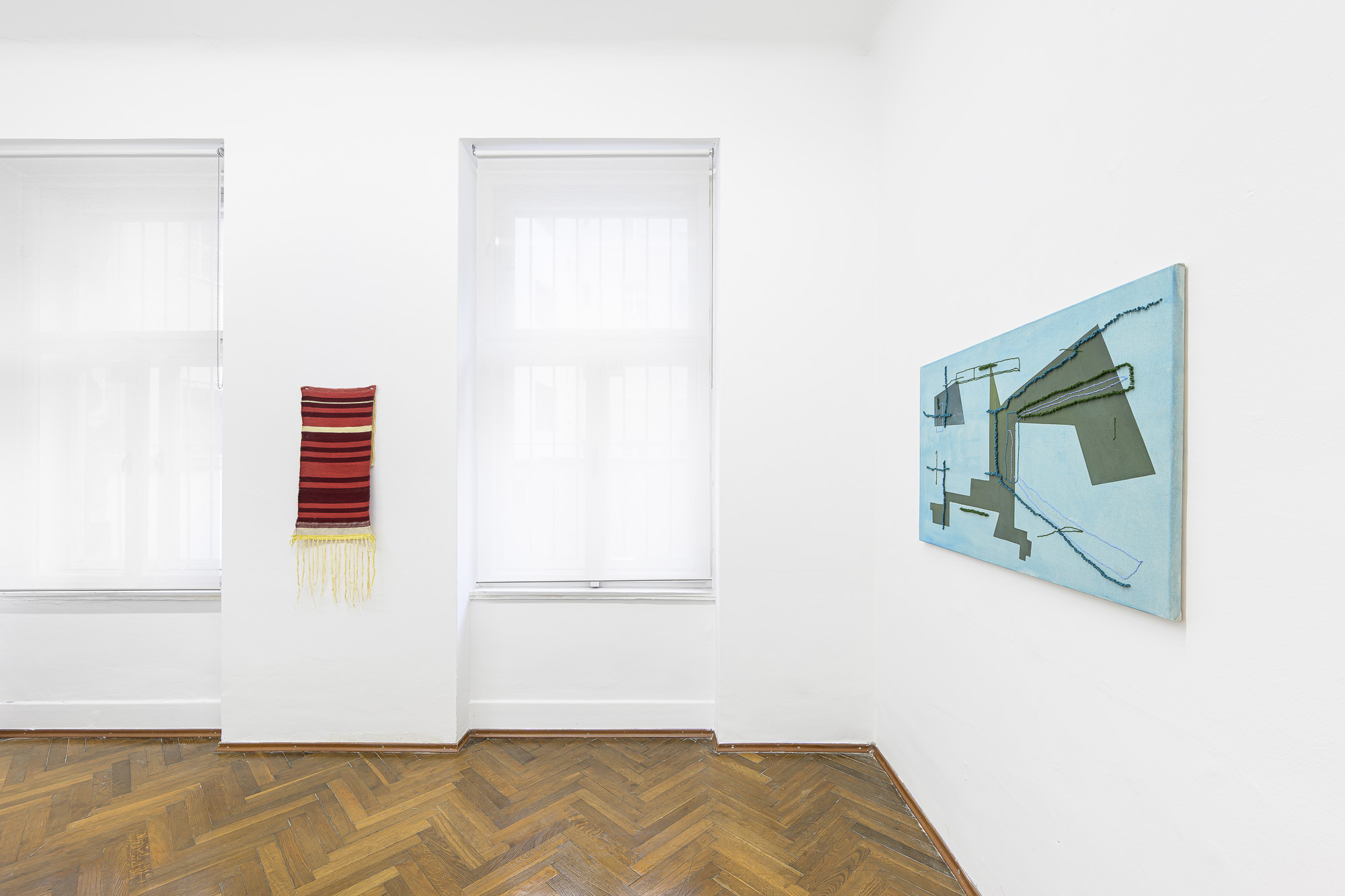
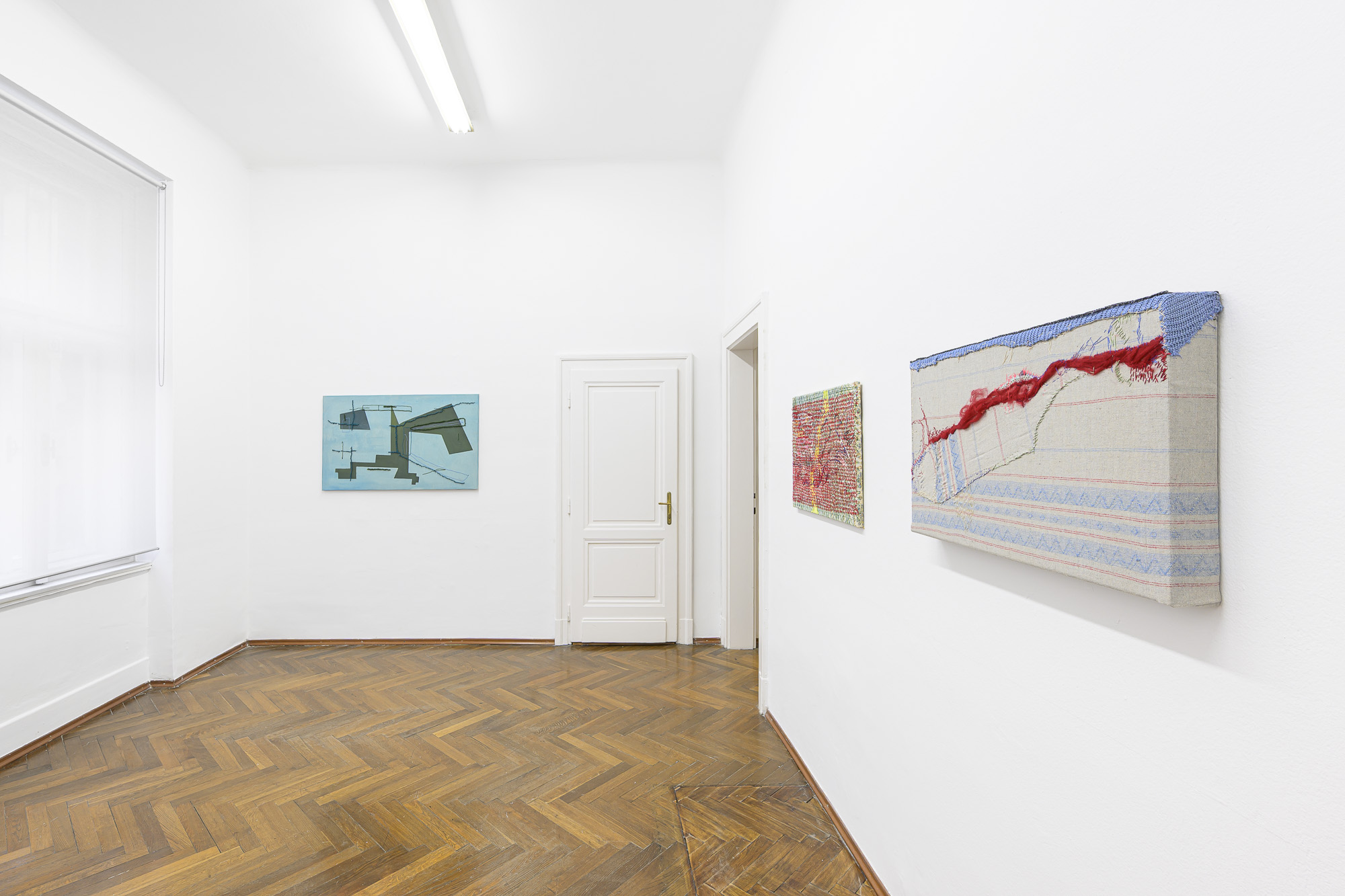
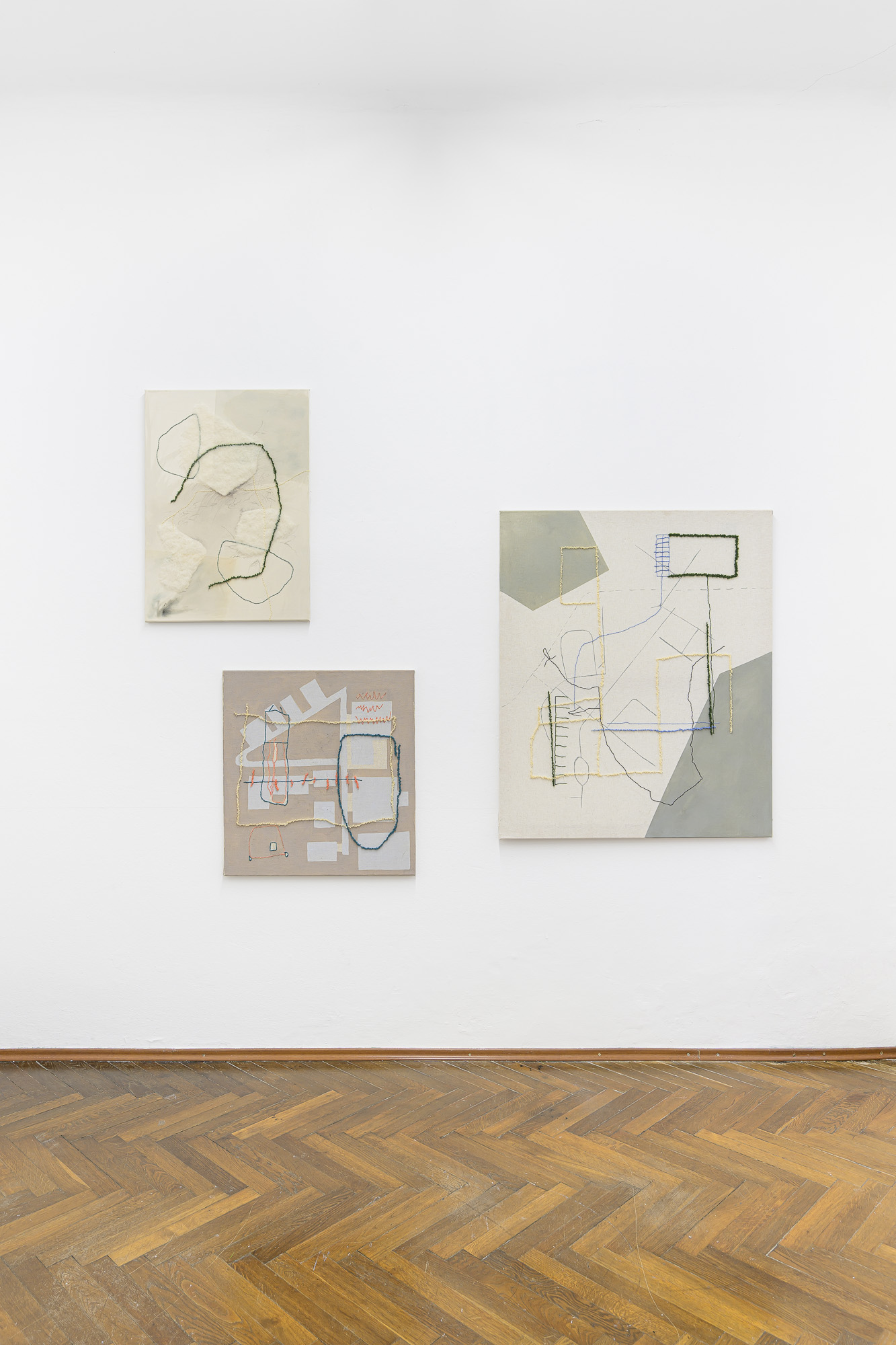
Bringing together matali crasset (France), Simone Fattal (Lebanon), Daniela Mikulášková (Czech Republic), Natasza Niedziółka (Poland) and Eva Vañová (Slovakia), the exhibition creates a dialogue between five singular artistic practices and distinct cultural geographies. Through textiles, fibres, forms, colours and repeated gestures, the artists explore the ways in which real or symbolic threads traverse territories — crossing borders, landscapes, bodies, histories and archives.
.Here, works are not merely materials: they become surfaces of memory, spaces of resistance and transformation, and instruments through which individual and shared histories can be rewritten.
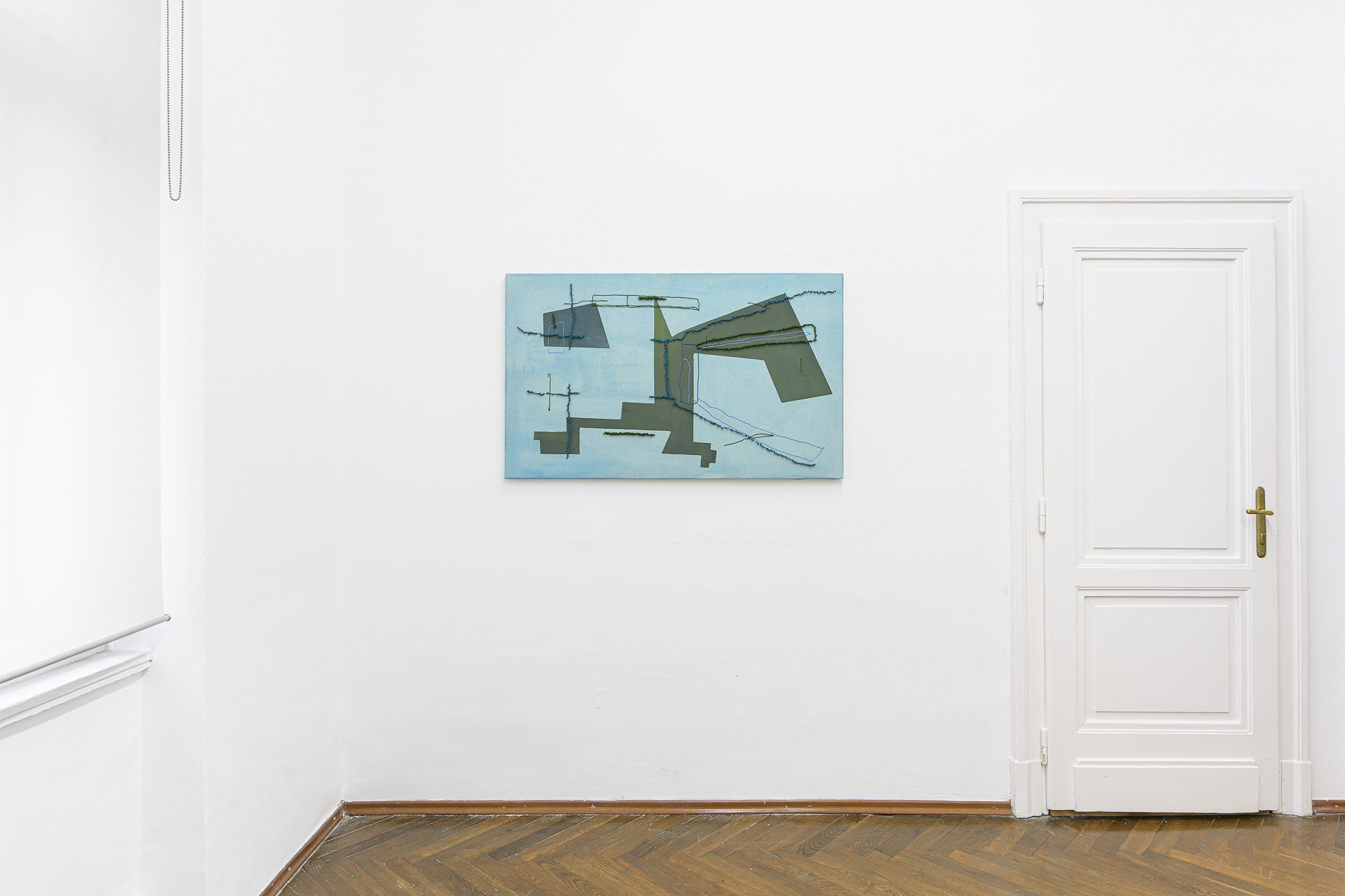
Works become maps, maps become narratives, and narratives unfold like lines in motion. Some works resonate with experiences of displacement, migration and diaspora; others trace inner, domestic or imaginary territories. Together, they raise a shared question: how is a territory constructed through traces, connections, ruptures and gestures repeated over time?
Between Thread and Territory invites visitors to move through these to follow the threads that connect one work, one place and one memory to another — and to consider territory not as a fixed boundary, but as a living fabric, continuously woven and transformed.
Exhibition plan [ PDF ]
List of works [ PDF ]
To rediscover the symbolism and patterns of thought that have been damaged by modernity.
To rediscover a sensory connection with that which transcends us, be it the sky or the mountains.
It is not a question of forgetting oneself, but of realising that we are part of a whole.
As Arne Naess' suggests, everyone should have access to the wilderness.
The relationship with the mountains is beneficial in that it allows us to remain active: the experience of nature engages us fully as human beings whilst being contemplative and attentive.
Replace the desire to conquer the mountain by absolutely insisting on reaching its highest point with the desire to be part of the mountain and ultimately become one with the rock.
Listen to what the mountain has to say
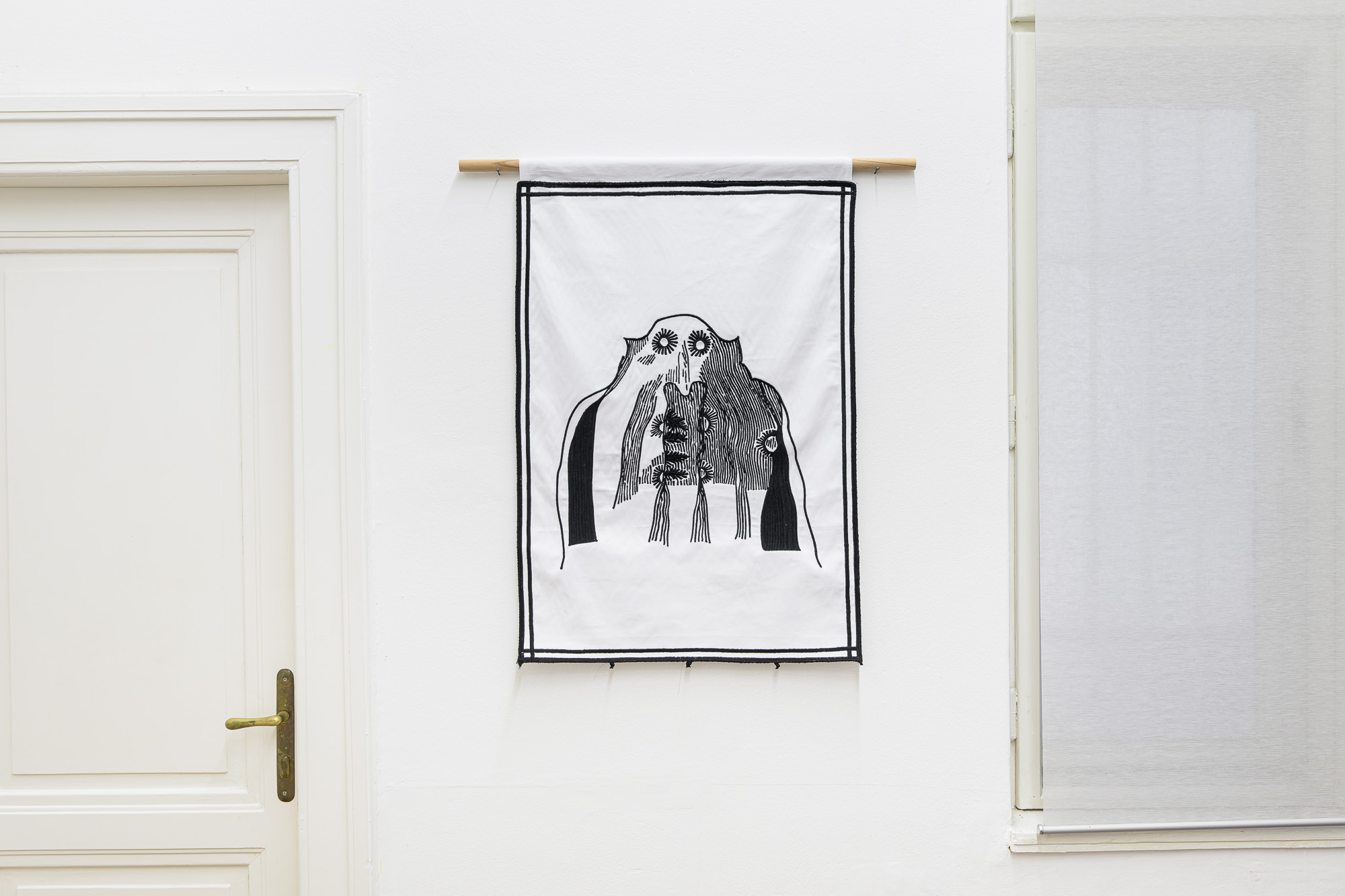
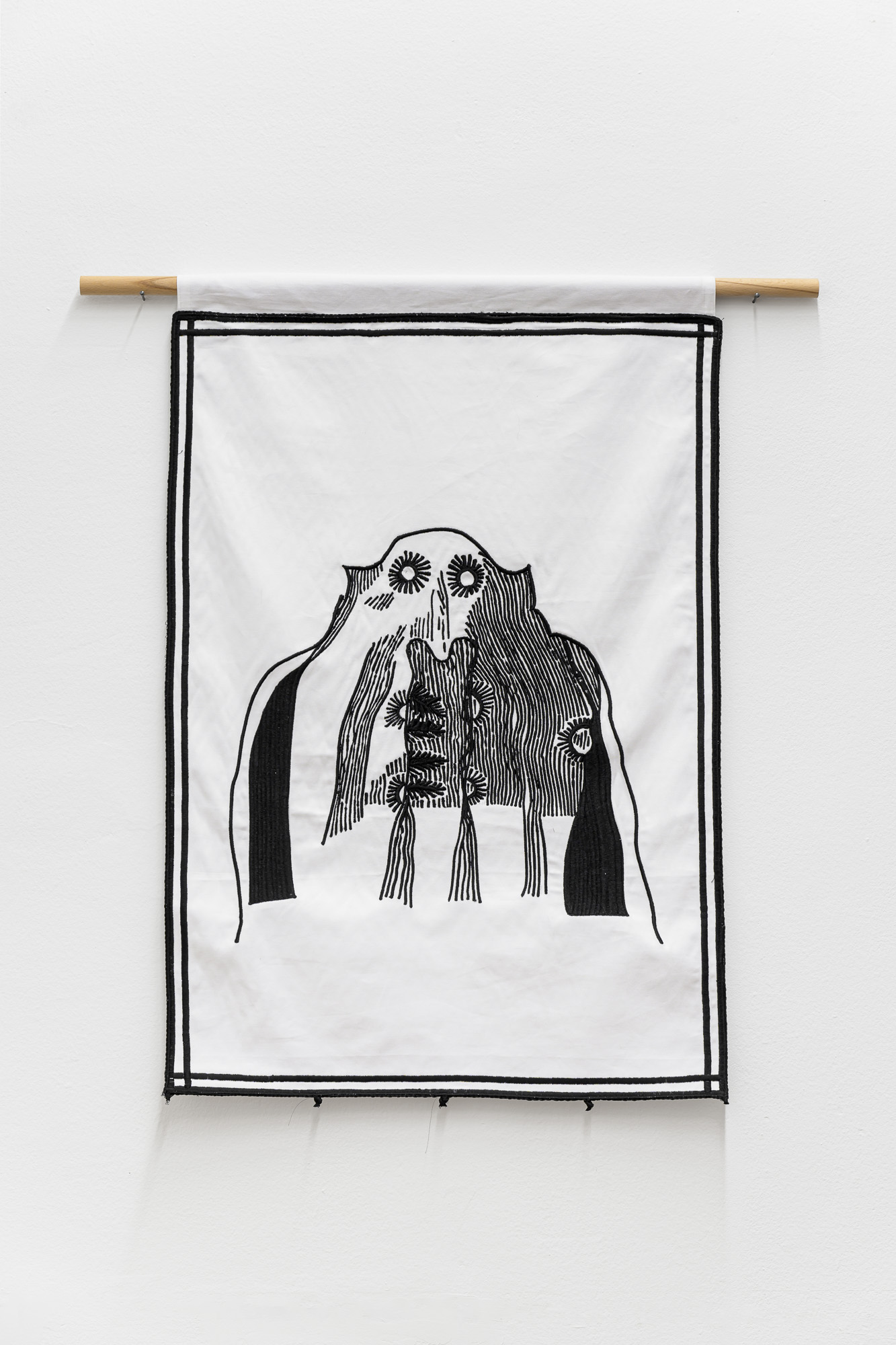
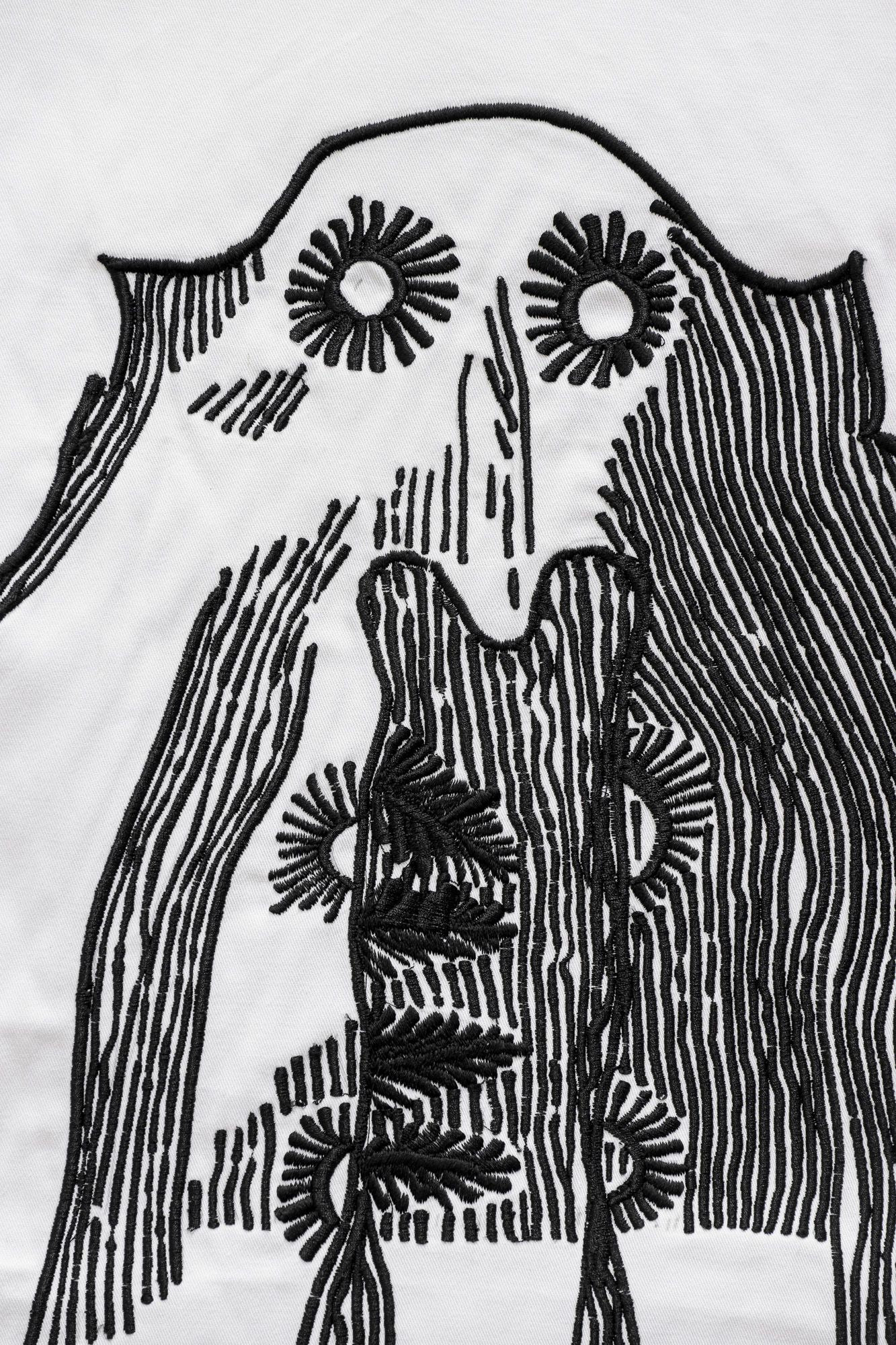
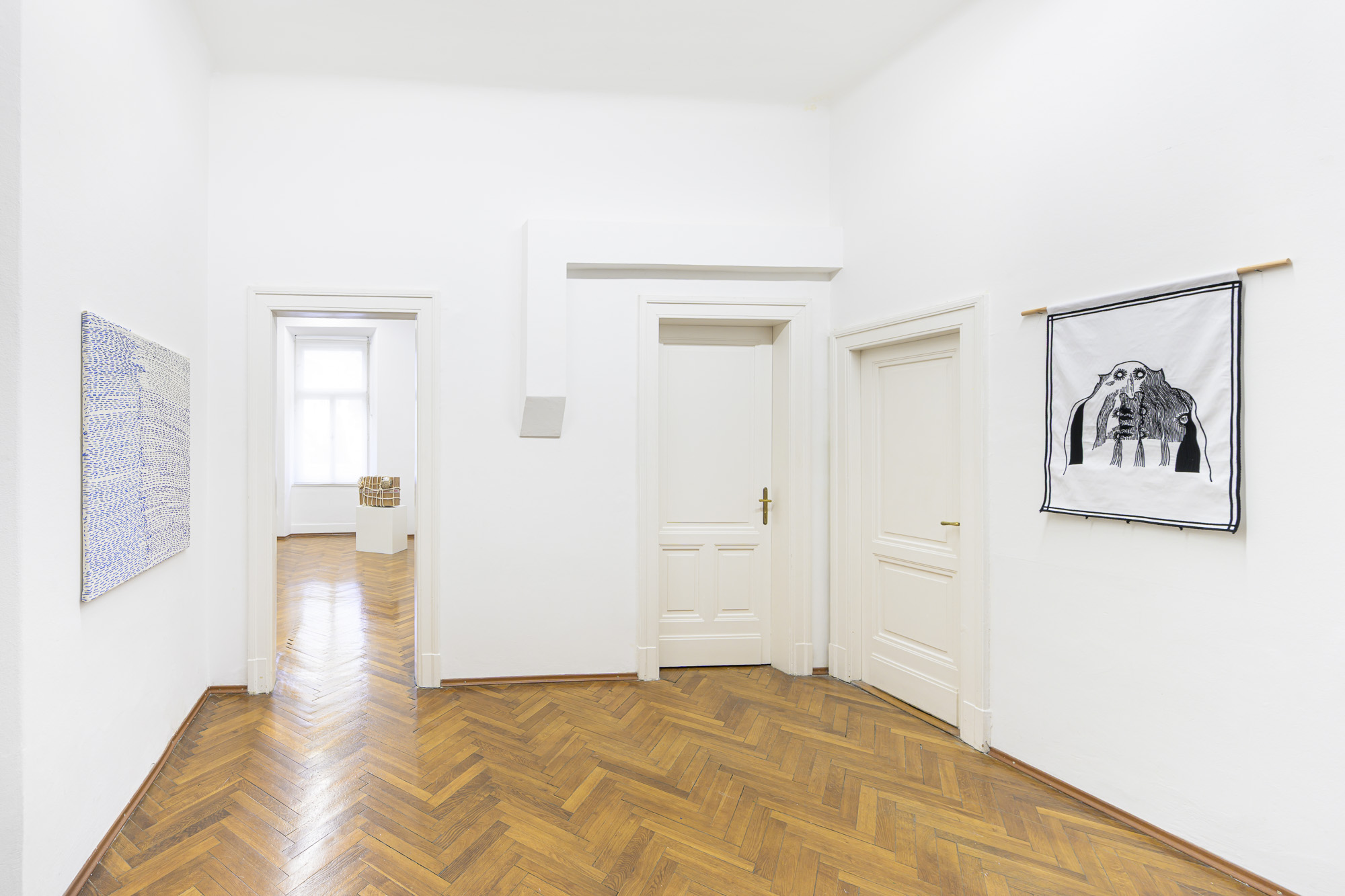
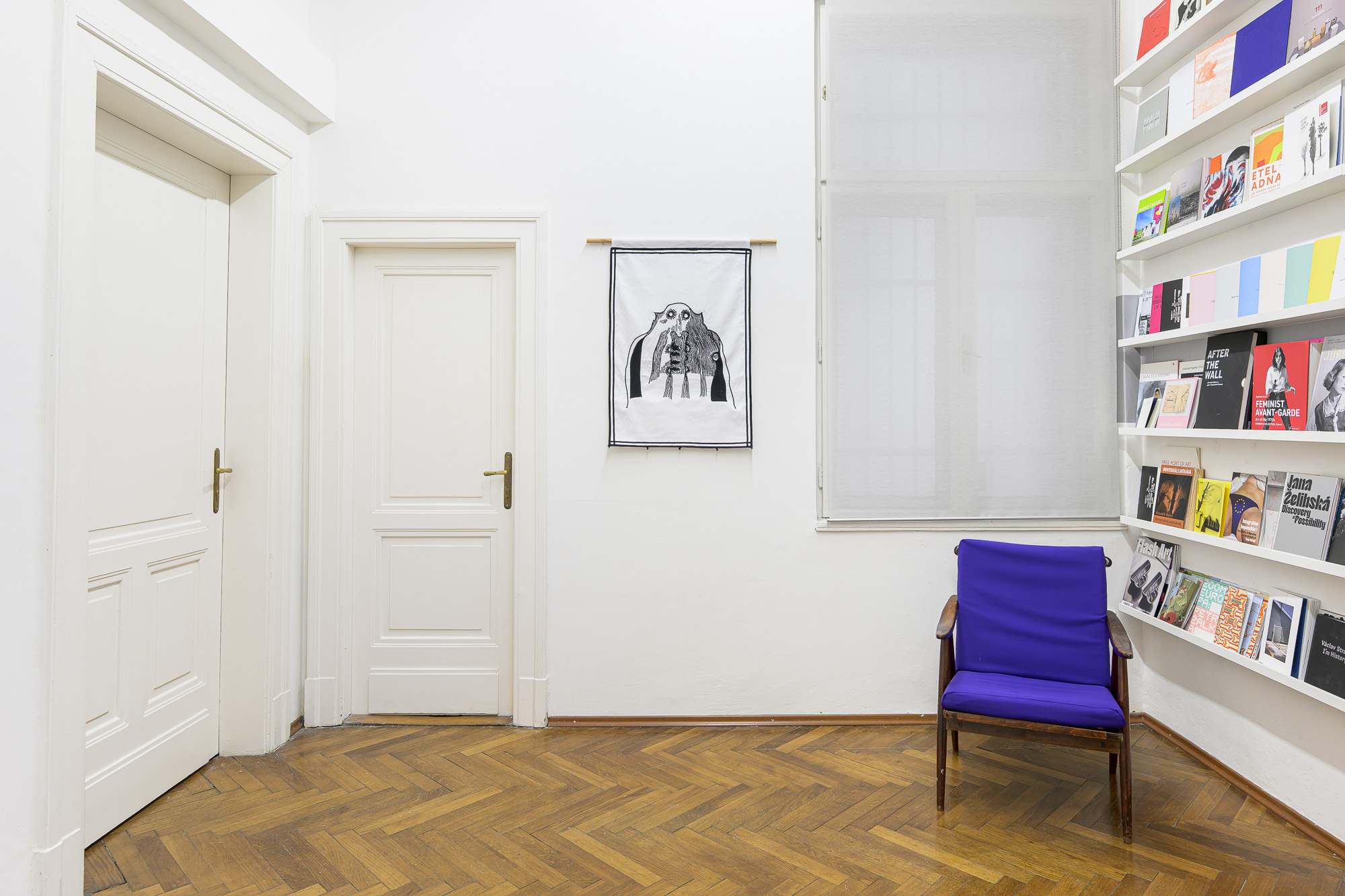
For the Kugis, the mountain is not merely a territory; it is a living "body", with which one must maintain a connection. "It is not people who make the laws and rules; it is the mountain that decides what must be done This drawing evokes the materialisation of a territory and its protector, a golem-like mountain that protects
1 Mathilde Ramadier, "Arne Naess, for a joyful ecology", Domaine du Possible collection, Actes Sud, 2017.
matali crasset was born in 1965 in Chalons en Champagne (France) and graduated at Les Ateliers Ecole Nationale Supérieure de Création Industrielle.
In agreement with one of her emblematic objets, the column of hospitality "When Jim goes up to Paris" , she puts a clean methodology in which she questions the evidence of the codes that governs our daily life to free oneselves better of it and to experiment. Thus she develops new typologies articulated around principes as the modularity, the appropriation, the flexibility, the network. Her work that has imposed itself from the years 90 as the refusal of the pure shape, conceives itself like a research in movement, made of hypotheses more than of principles. She collaborates whith eclectic universes, from the handicraft to the electronic music, from the scenography to the furniture, from the graphics to the interor architecture.
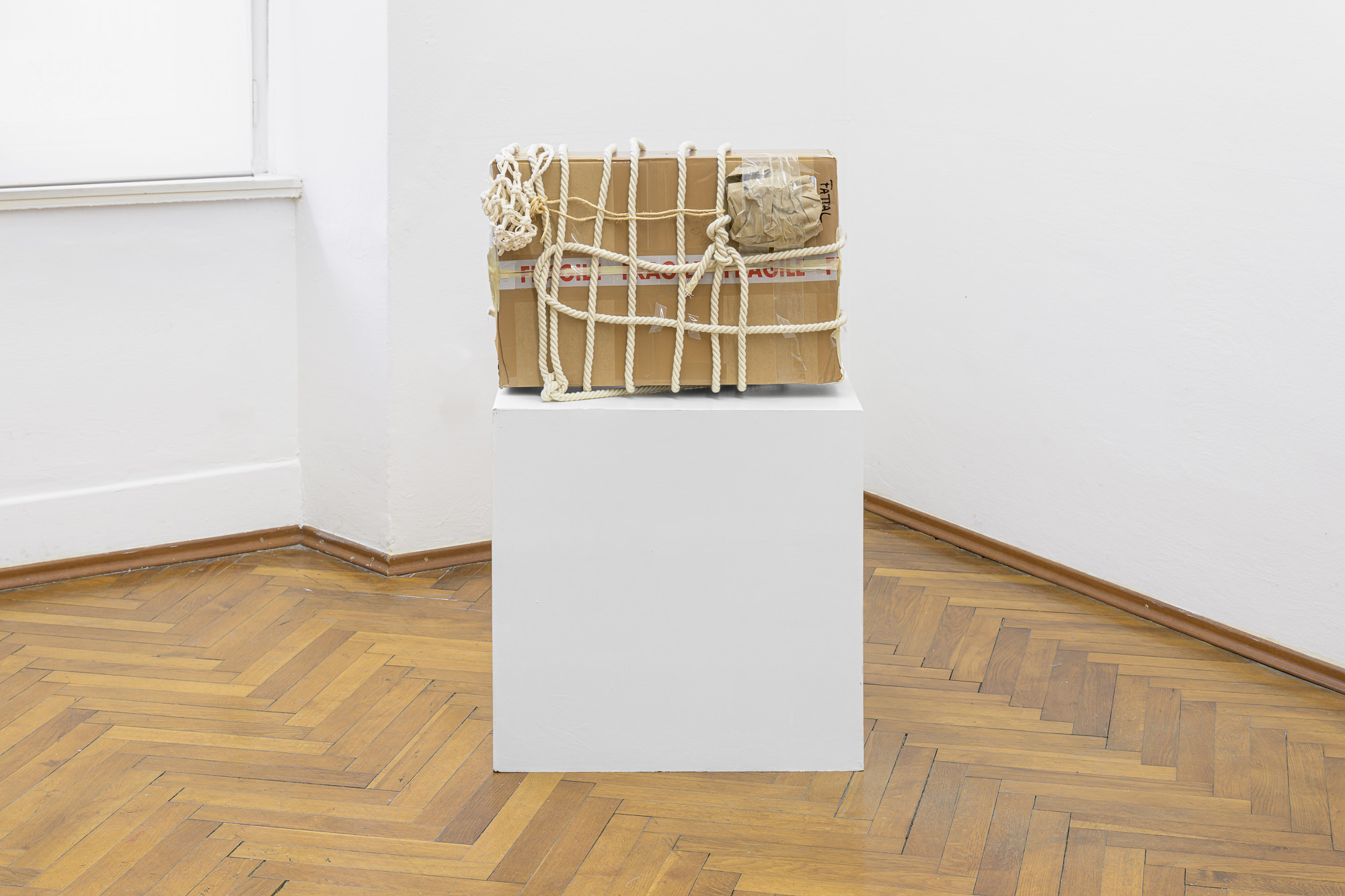
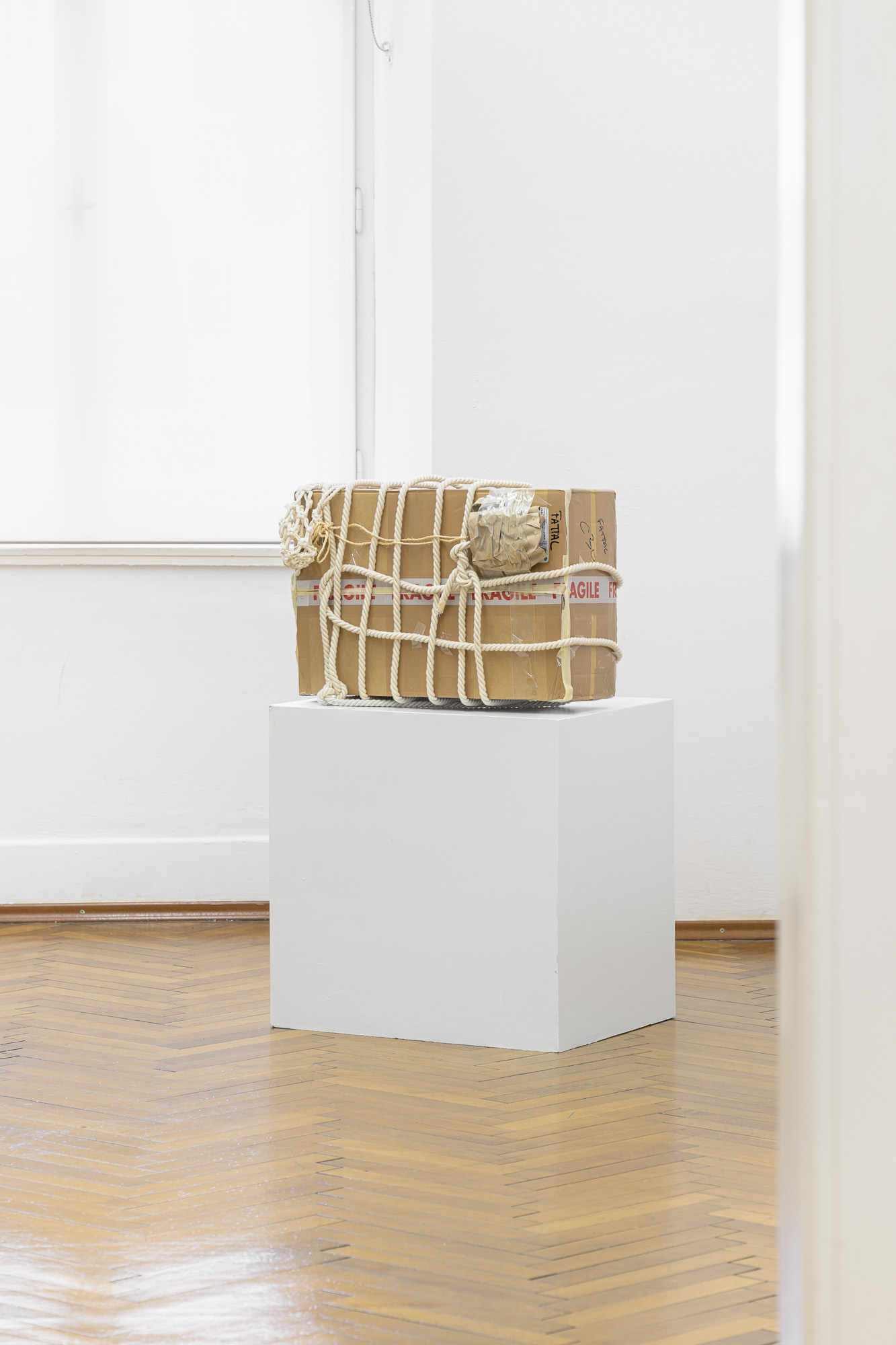
A suitcase
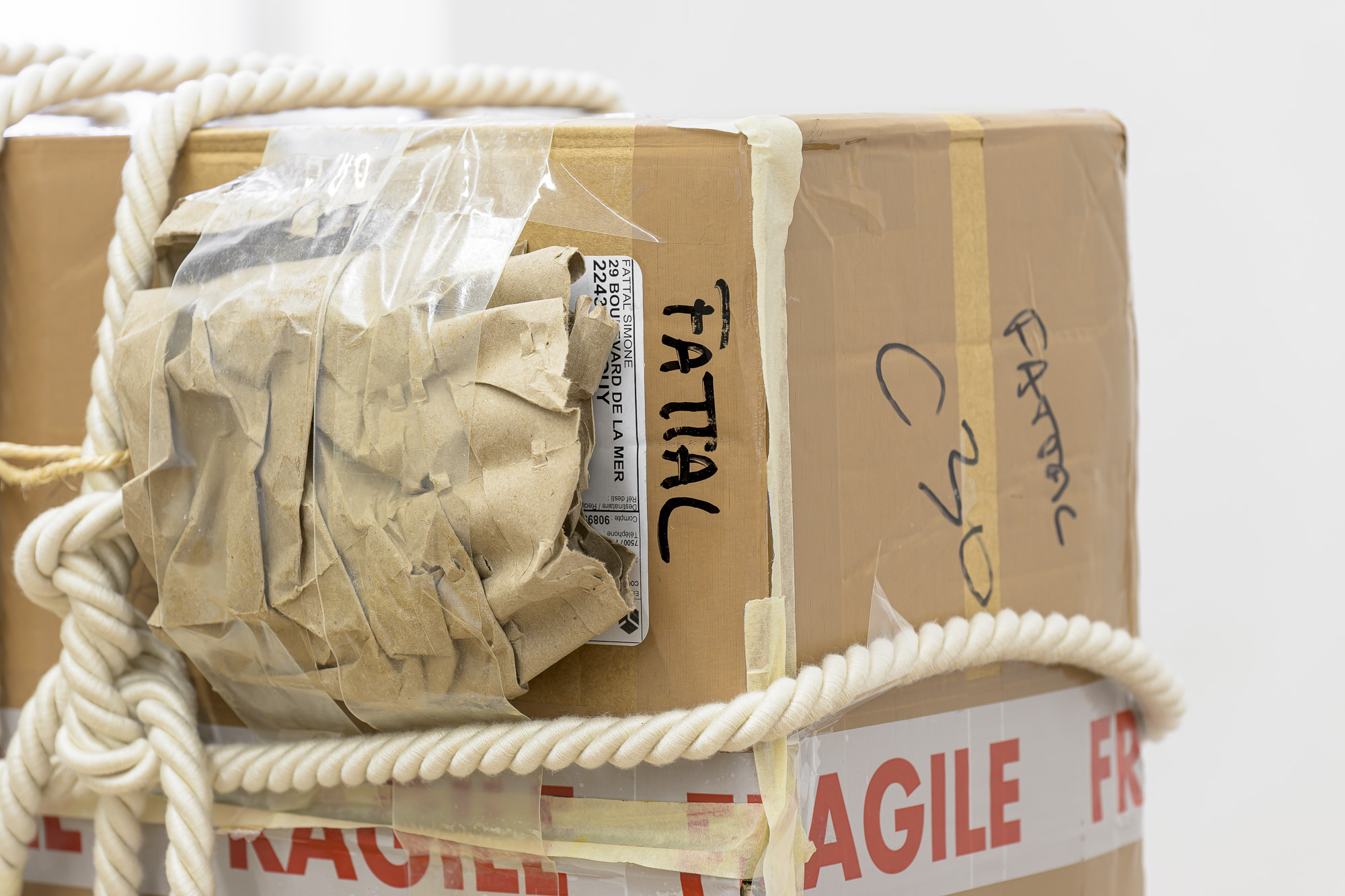
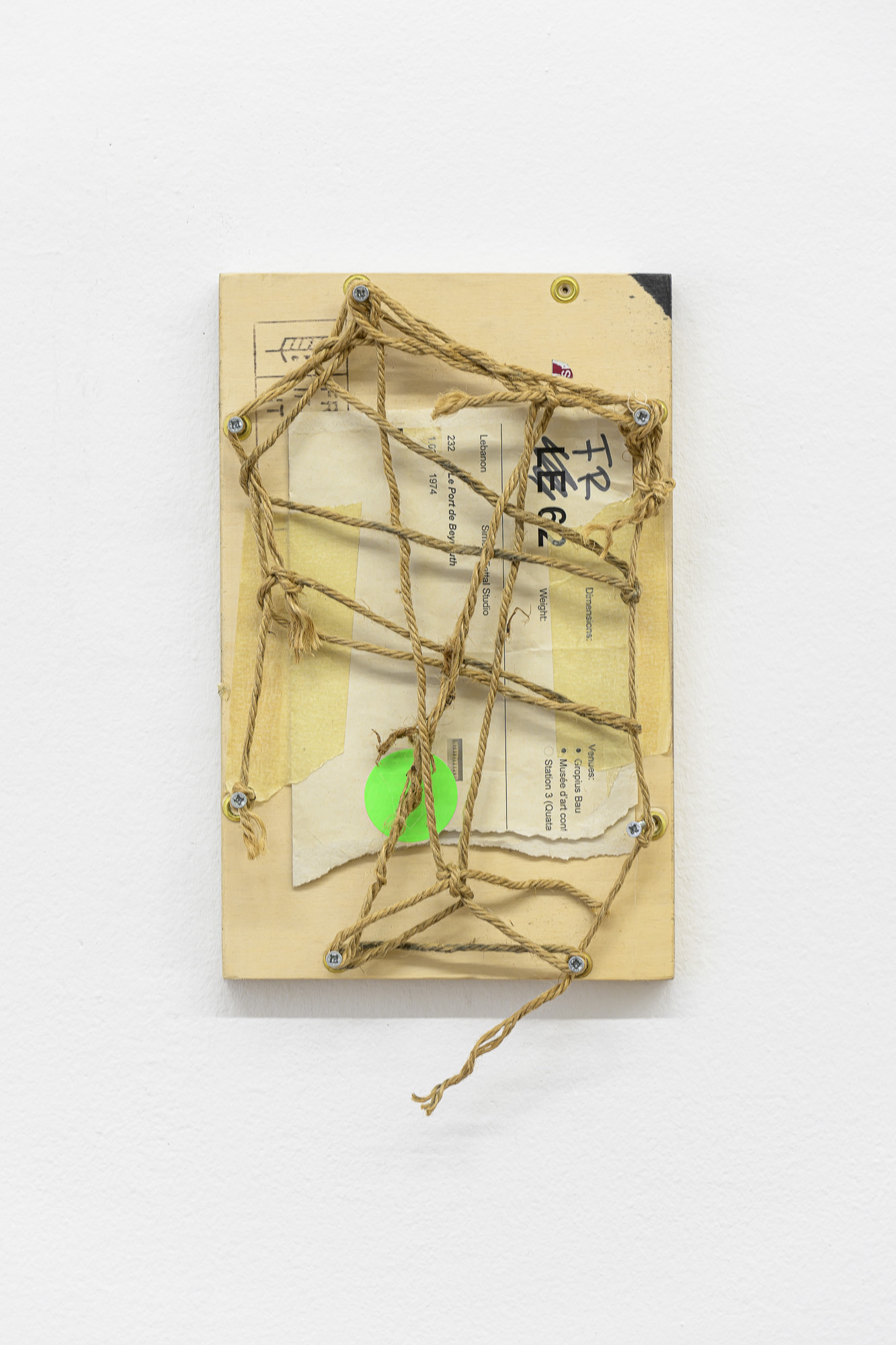
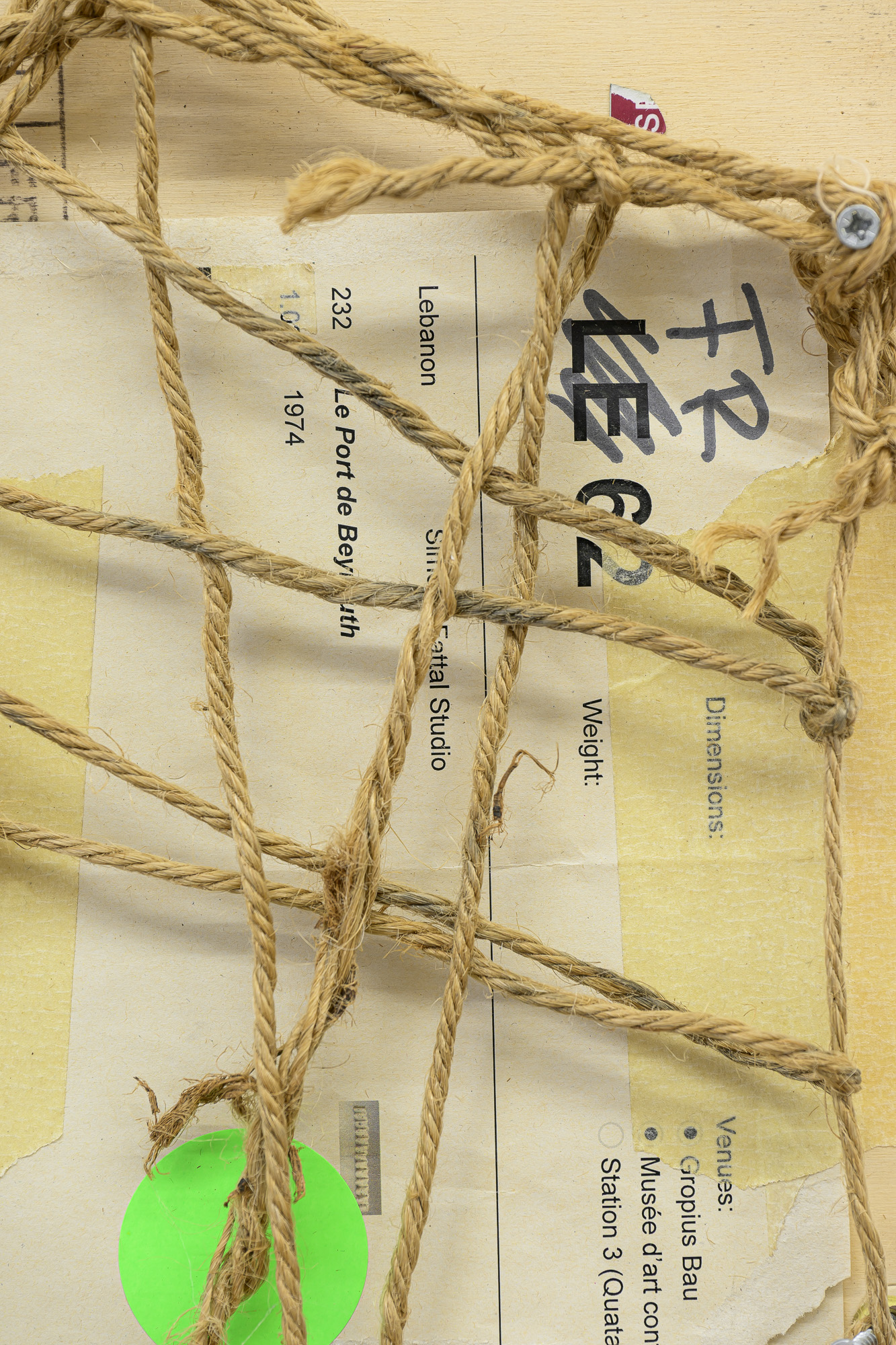
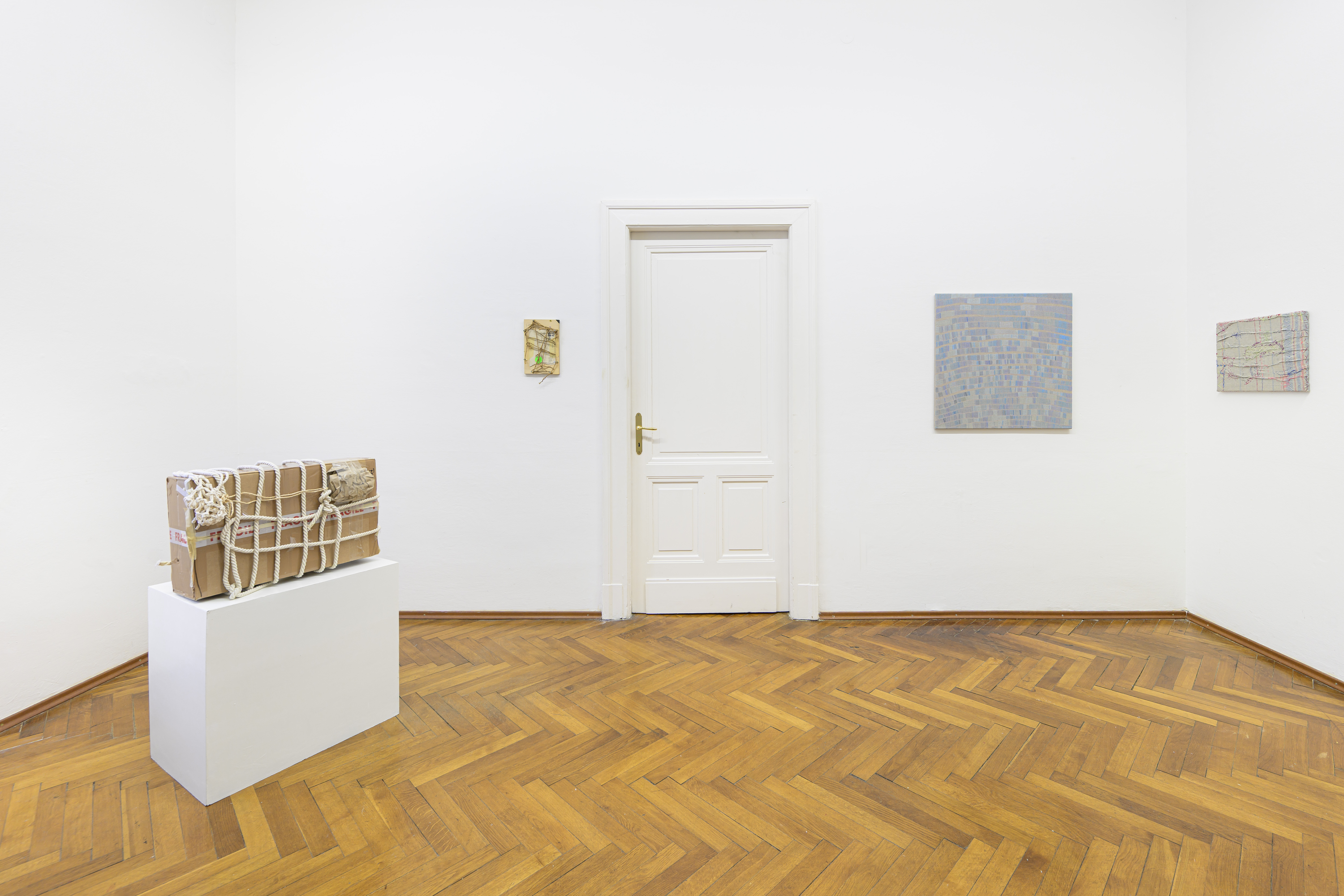
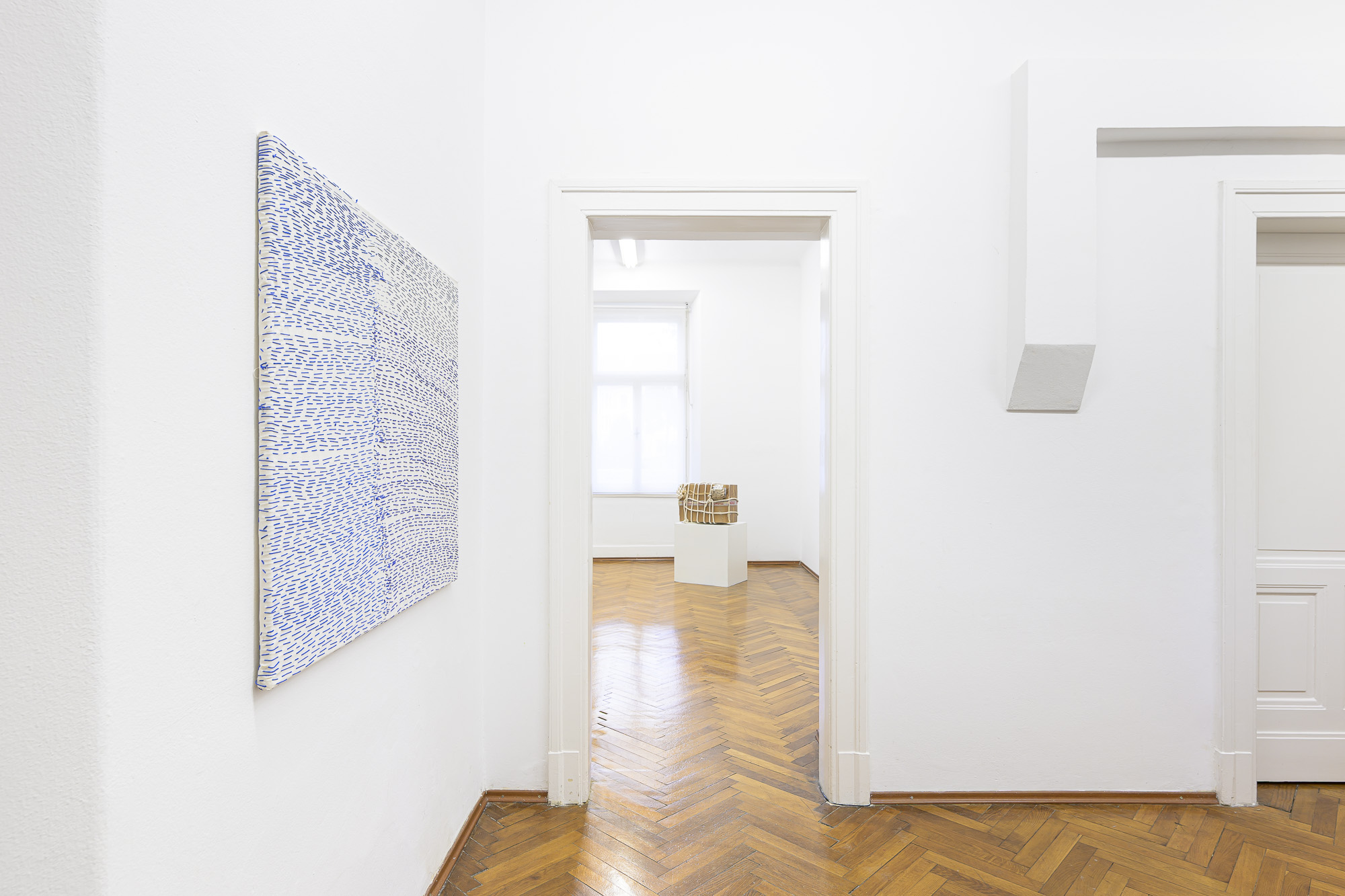
All My life, I have seen suitcases, bursting under the weight of clothes, of stuff, bound with ropes, to keep them shut.
It is a fixture of our landscape.
I used to go from Damascus to Beirut, and back once a week during all my childhood. My parents lived in Damascus, and I was in a boarding school in Beirut; in those days I was riding in my parents’s car. But if I looked out, the taxis, the taxis which did this line were used by many passengers at the same time; they very often transported their luggage, which invariably were too big, too heavy, improbable, suitcases, huge bundles of clothes tied together under a cloth, and a rope.
Later I did the same road, so very, regularly, so often always with those sights of taxis, and their various luggage. Back trunkshalf open, tied —again—with some kind of rope to keep them closed, other pieces on the car top. Equally harnessed to the structure.
Why did people move with all their meagre belongings, of course not all, what they could gather, forgetting the most essential.
I have spent my life sorting out objects packing , transporting, taking, leaving, what do we hold on?
Simone Fattal, august 2026
Simone Fattal was born in 1942 in Damascus (Syria) and grew up in Lebanon. She first studied philosophy at the Ecole des Lettres of Beirut and then at the Sorbonne in Paris. In 1969 she returned to Beirut and started painting. She participated in numerous shows during the ten years when life in Lebanon was still possible. In 1980, fleeing the Civil War, she settled in California and founded the Post-Apollo Press, a publishing house dedicated to innovative and experimental literary work. In 1988, she returned to artistic practice by doing ceramic sculptures after enrolling at the Art Institute of San Francisco. Since 2006, she has produced works in Hans Spinner’s prestigious workshop in Grasse, France. In 2013, she released a movie, Autoportrait, which has been shown worldwide in many film festivals.
The Mountain was my Mountain
The Mountain – a longing, a challenge, an obstacle, a mother, a teacher, a reflection of reality, a memory of the landscape in which I grew up, a task to be understood.
It appears in my paintings of recent years: steep cliffs reaching up to the sky, the Mountain shrouded in mist in the distance, the Mountain that inevitably lies ahead of us, The Mountain – the summit; the Mountain that inspires fear; the Mountain that would be nothing without the clouds above it; the Mountain we know nothing of, yet sense its presence before us; the Mountain that teaches us patiently yet sternly.
It is set within the landscape. Clouds hang above it. Its horizon is the sky, which begins just as the earth does; it is both above and below. The ascent is too much for the memory to bear; every single step becomes a point on the path, and with each subsequent step we forget the one before. As we climb, we look at the ground and walk. Towards the Mountain? From here, it is no longer possible to descend. Here, the summit itself ceases to exist, and there is only the very same ground from which we set out.
The ascent itself then loses its meaning, as do our exhaustion, our will, our fear and our courage. Everything dissolves into nothing but what we are and where we stand now.
Firmly rooted in the earth, we know that Silence is, the Wind is, the Sun is, that We Are.
The landscape is my lifelong theme and always will be…
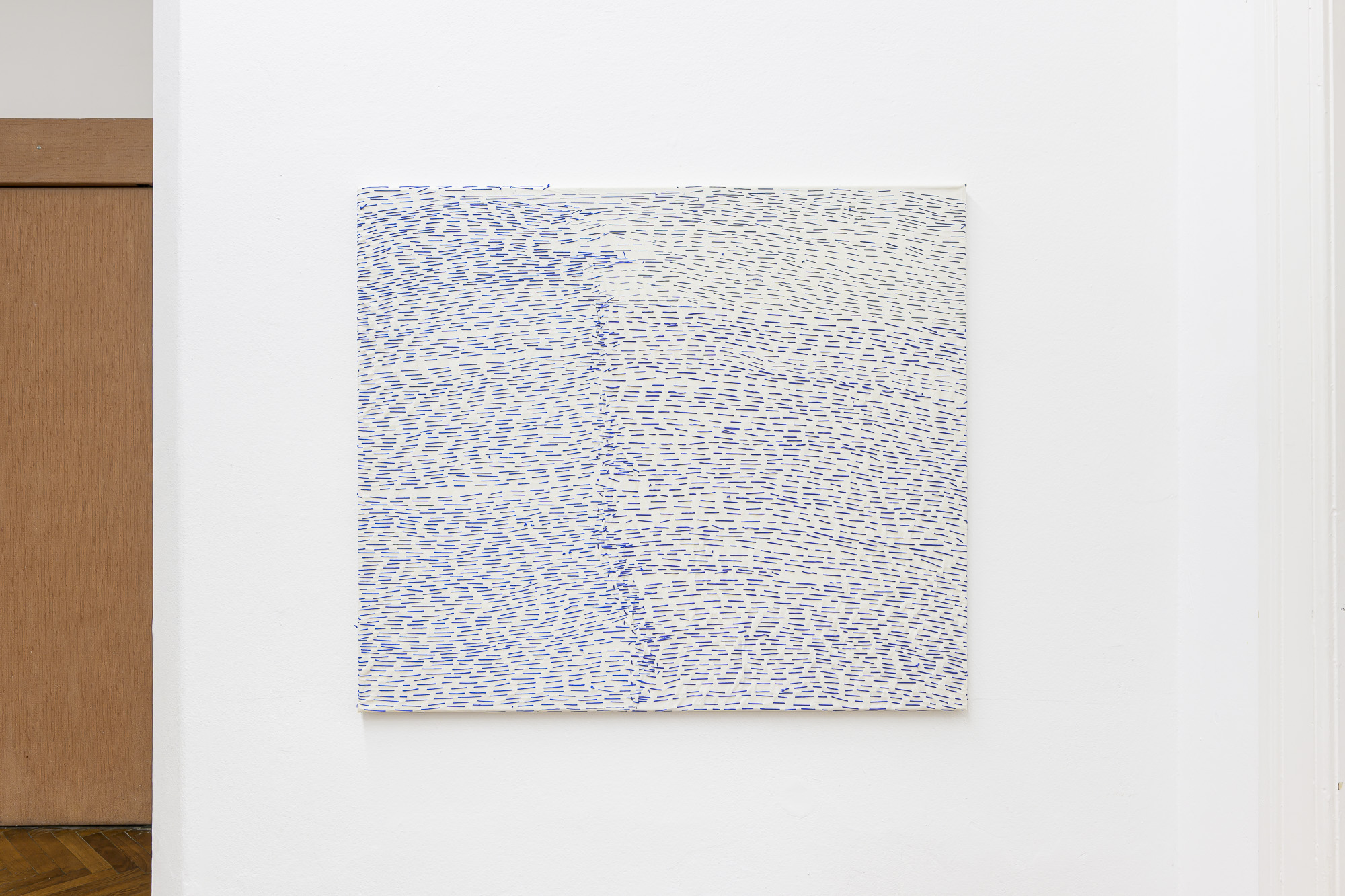
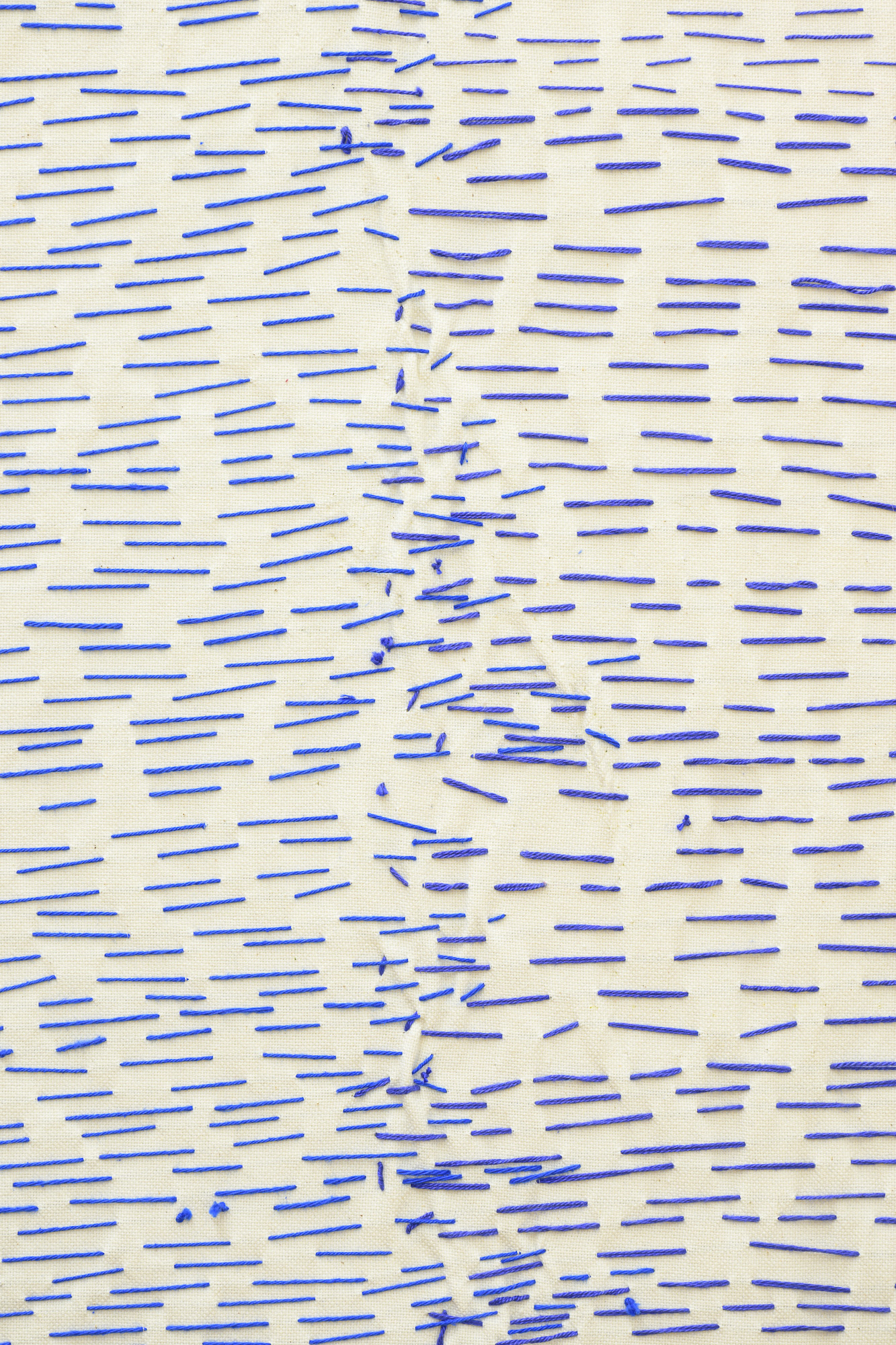
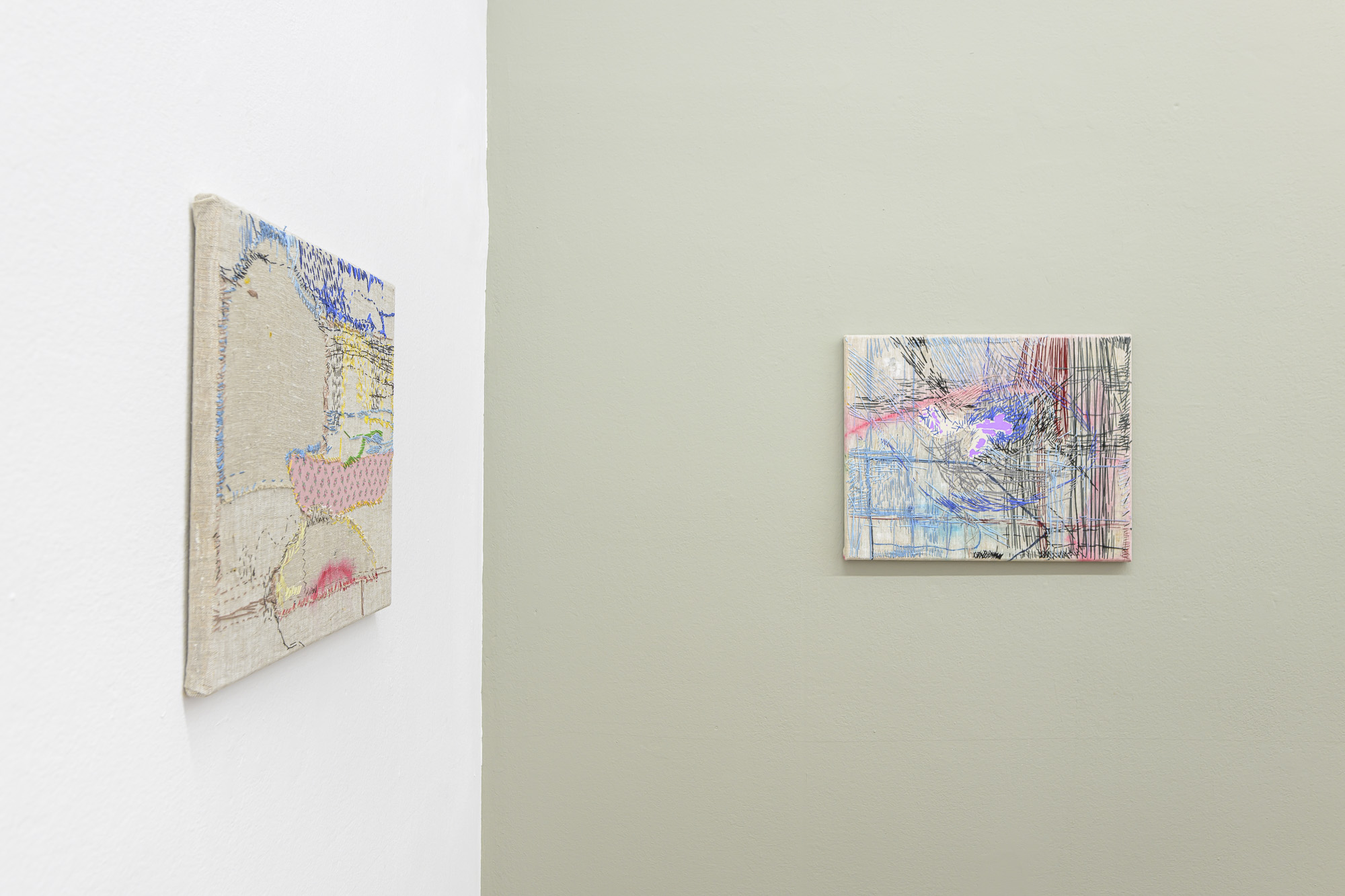
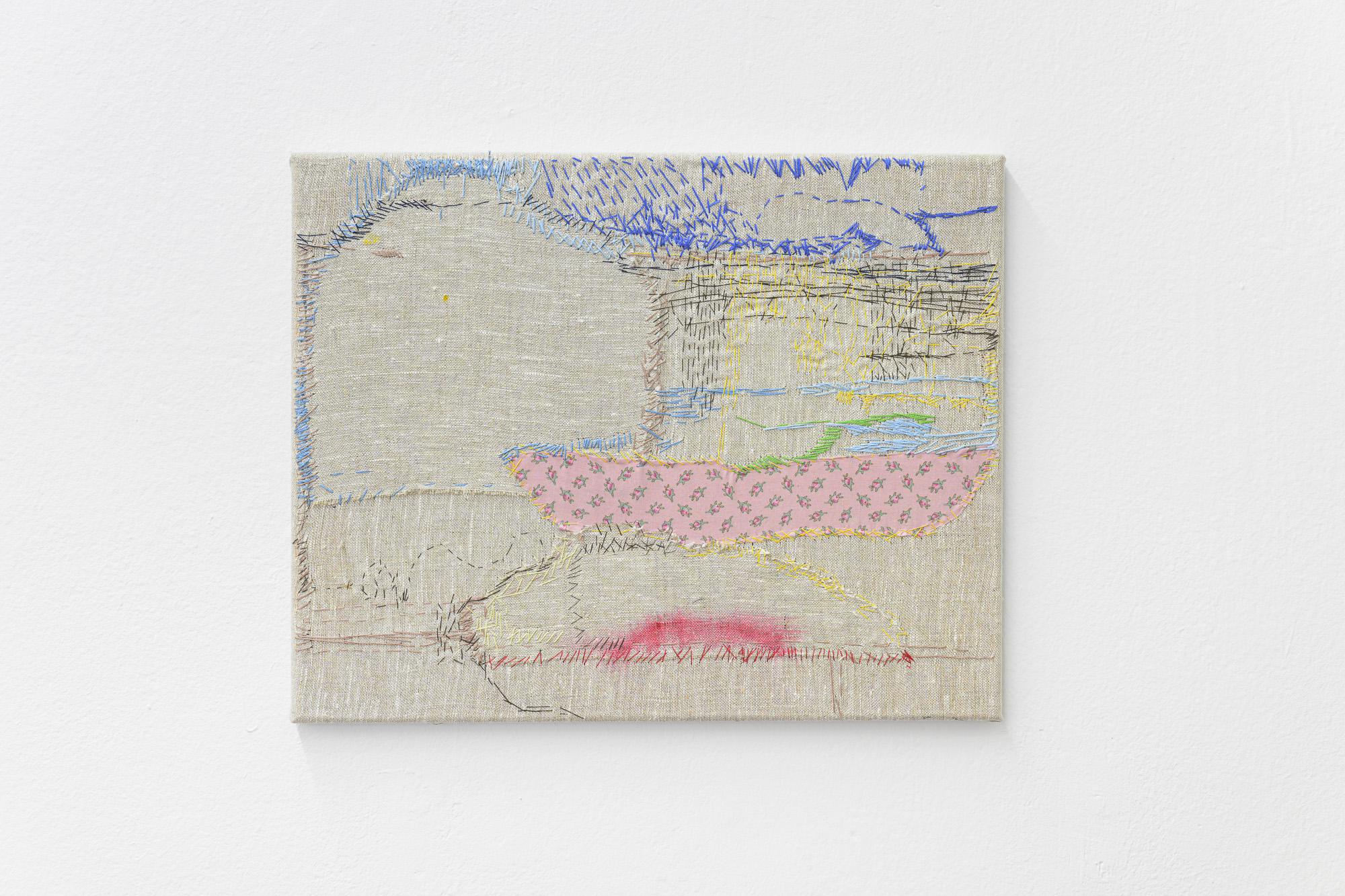
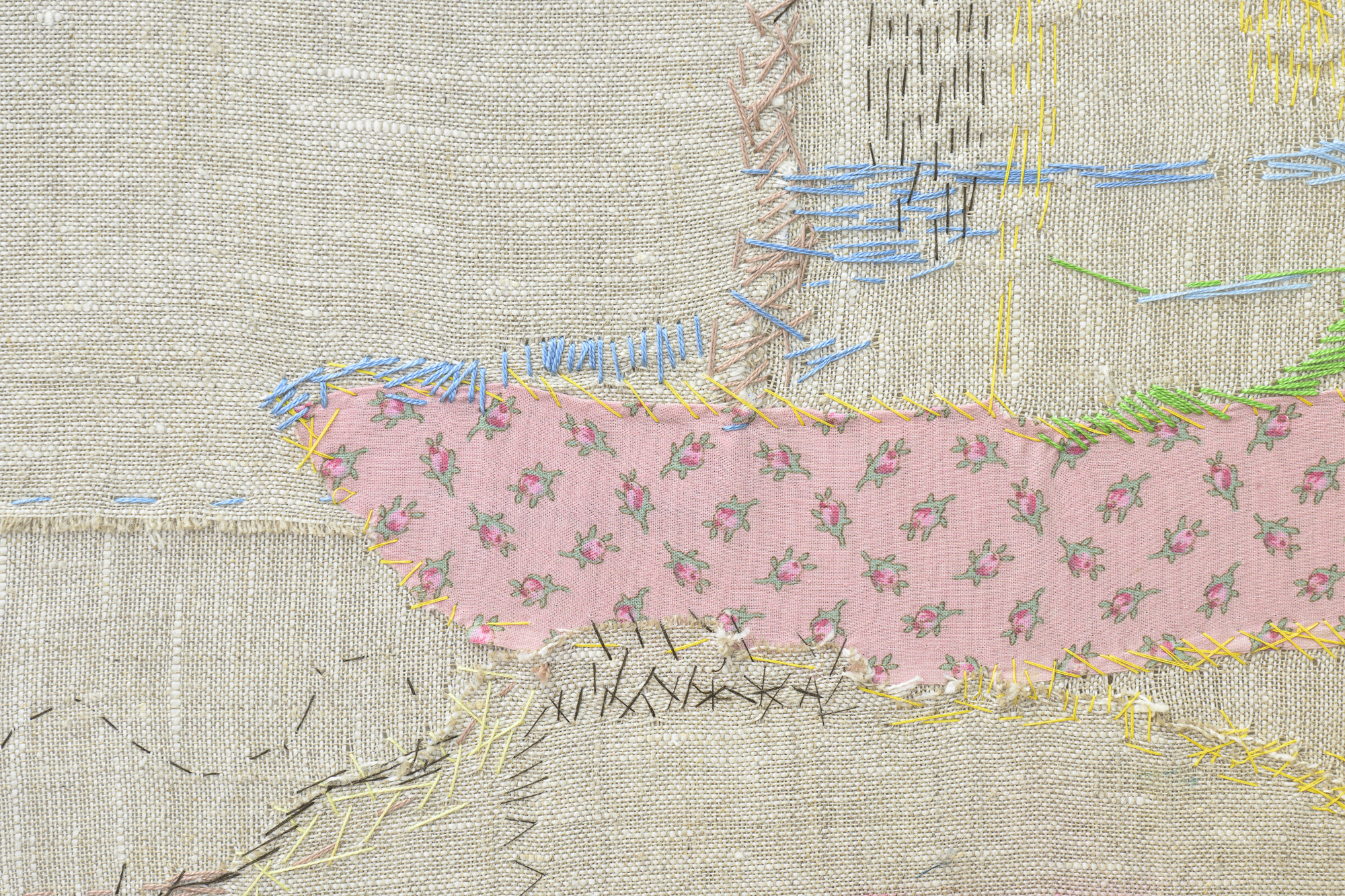
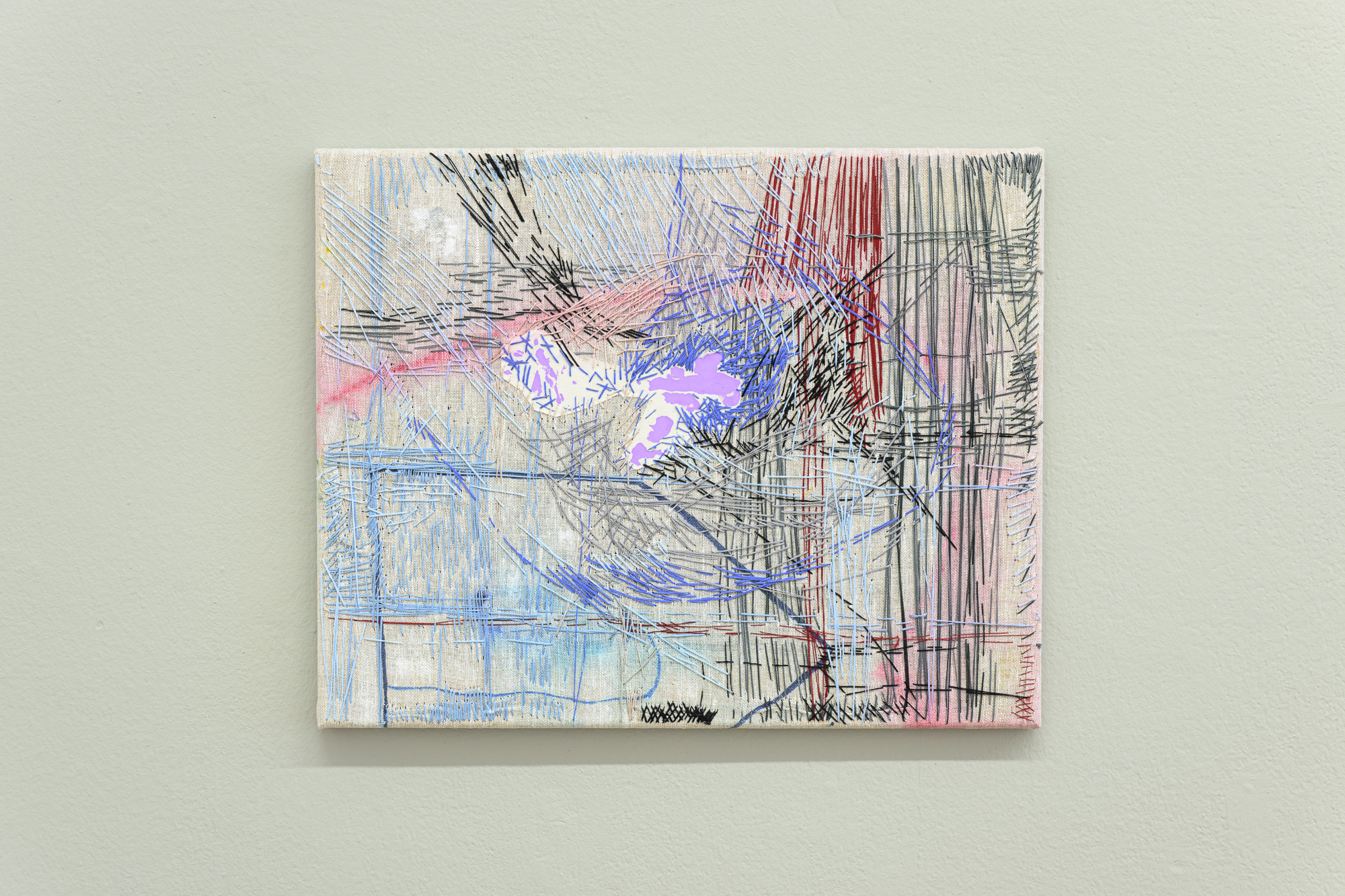
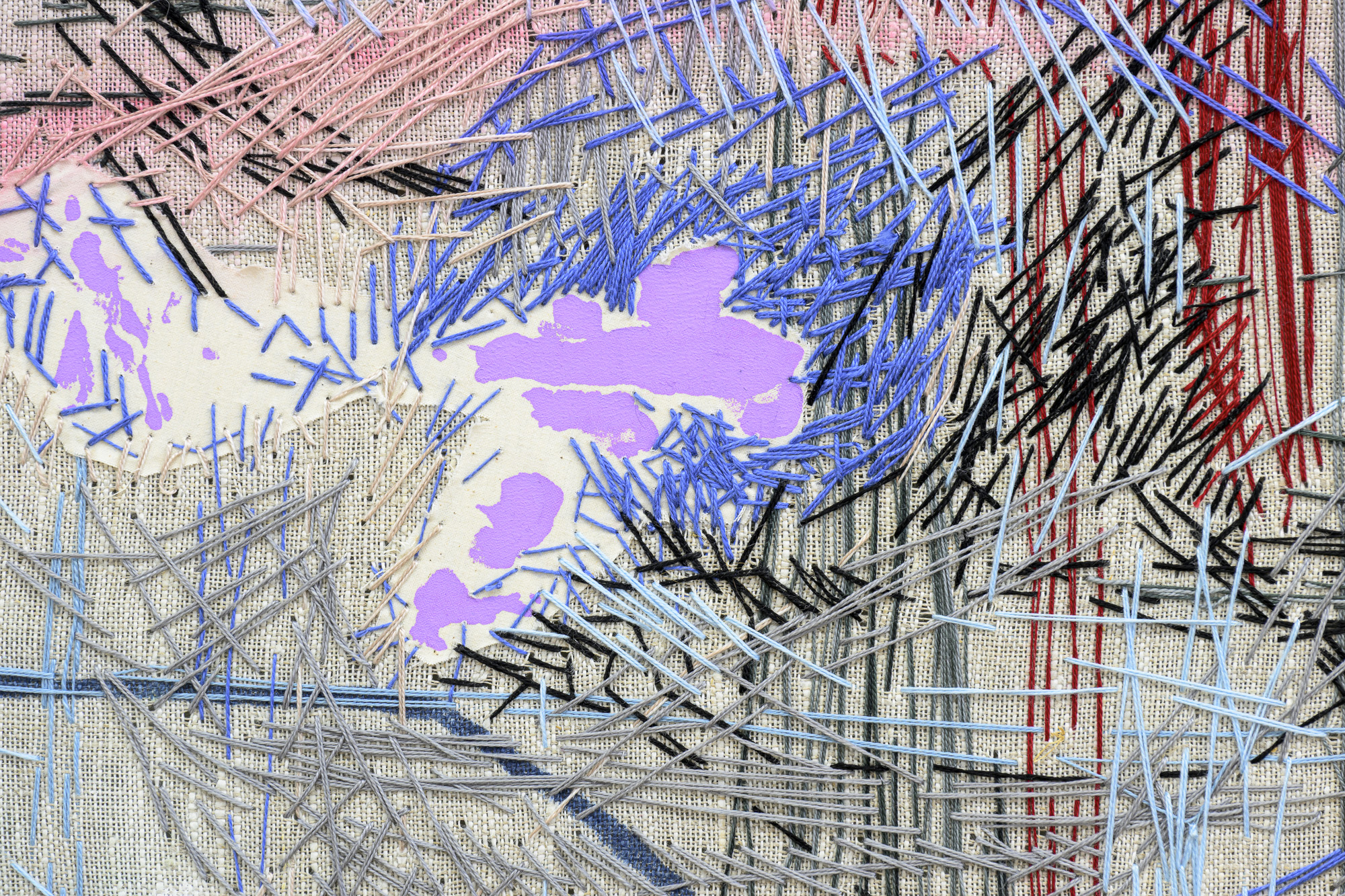
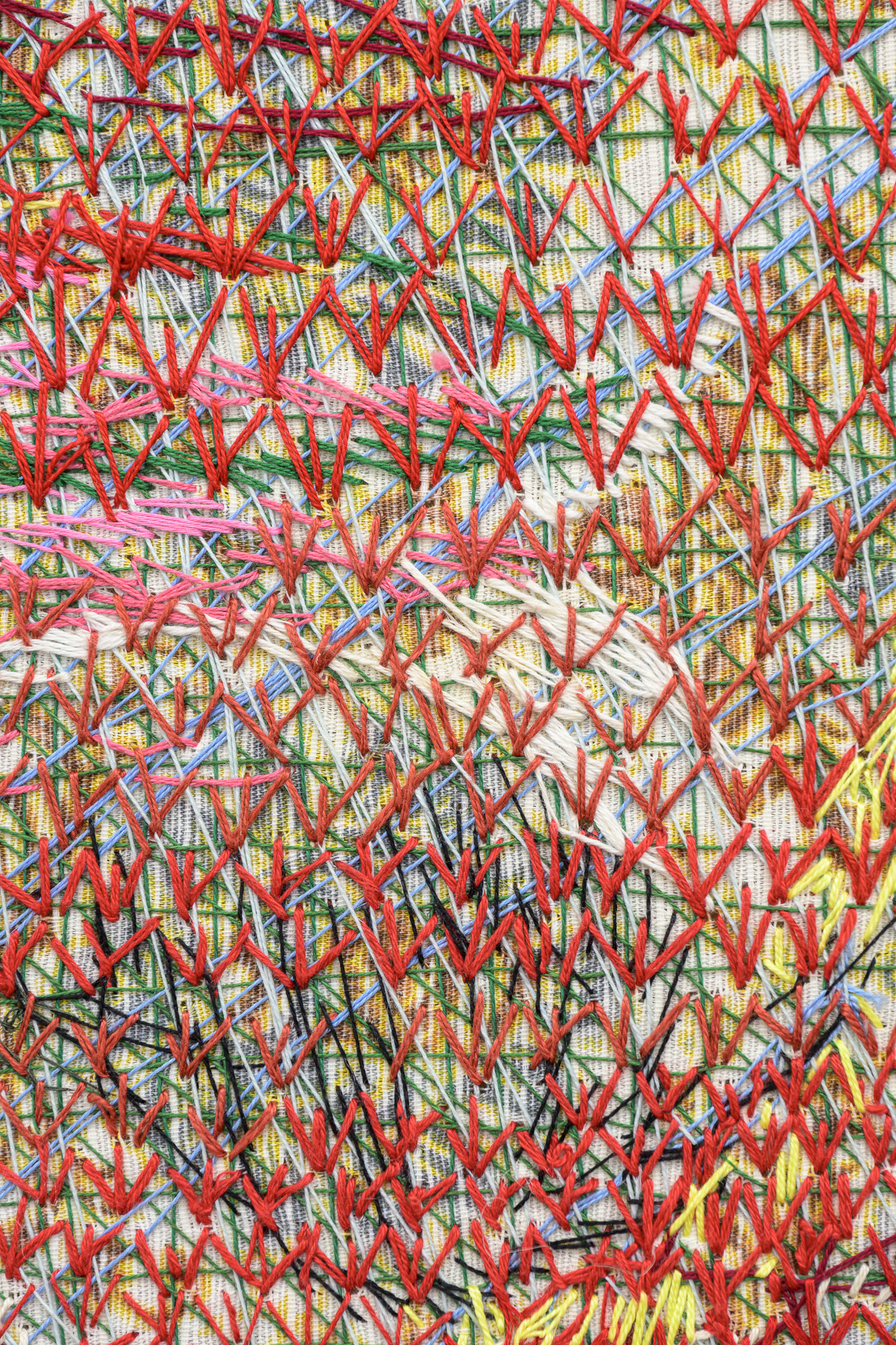
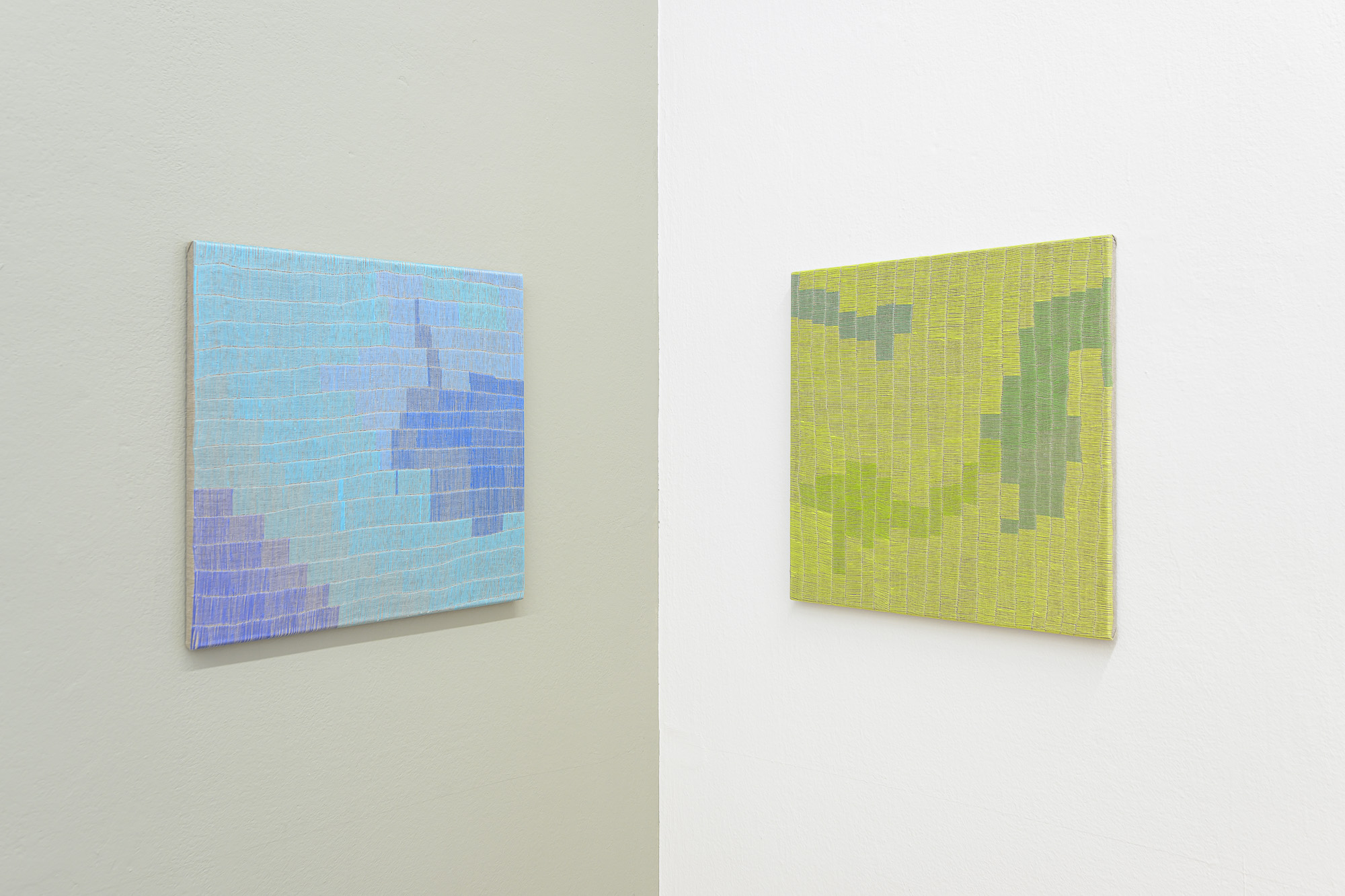
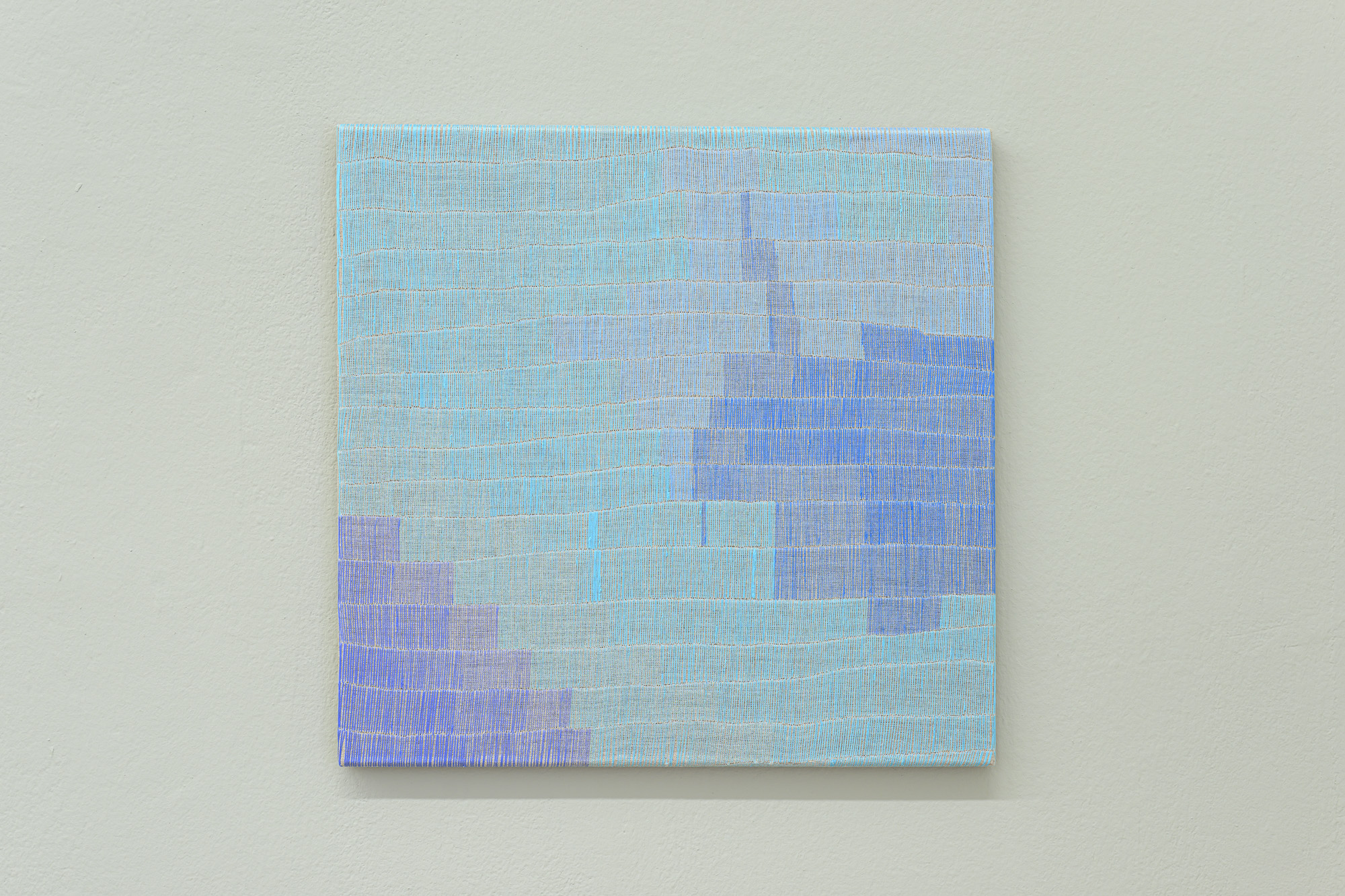
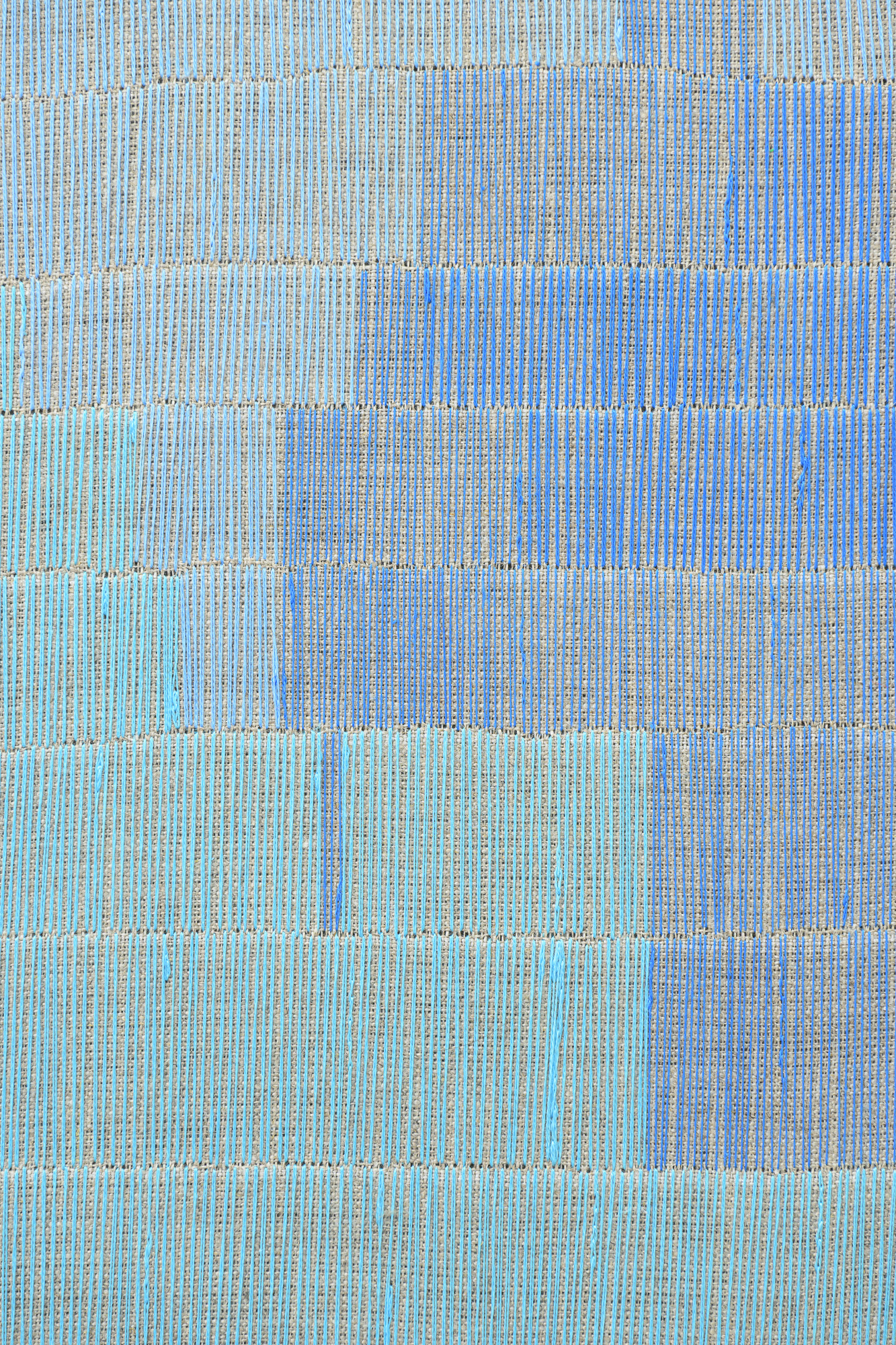
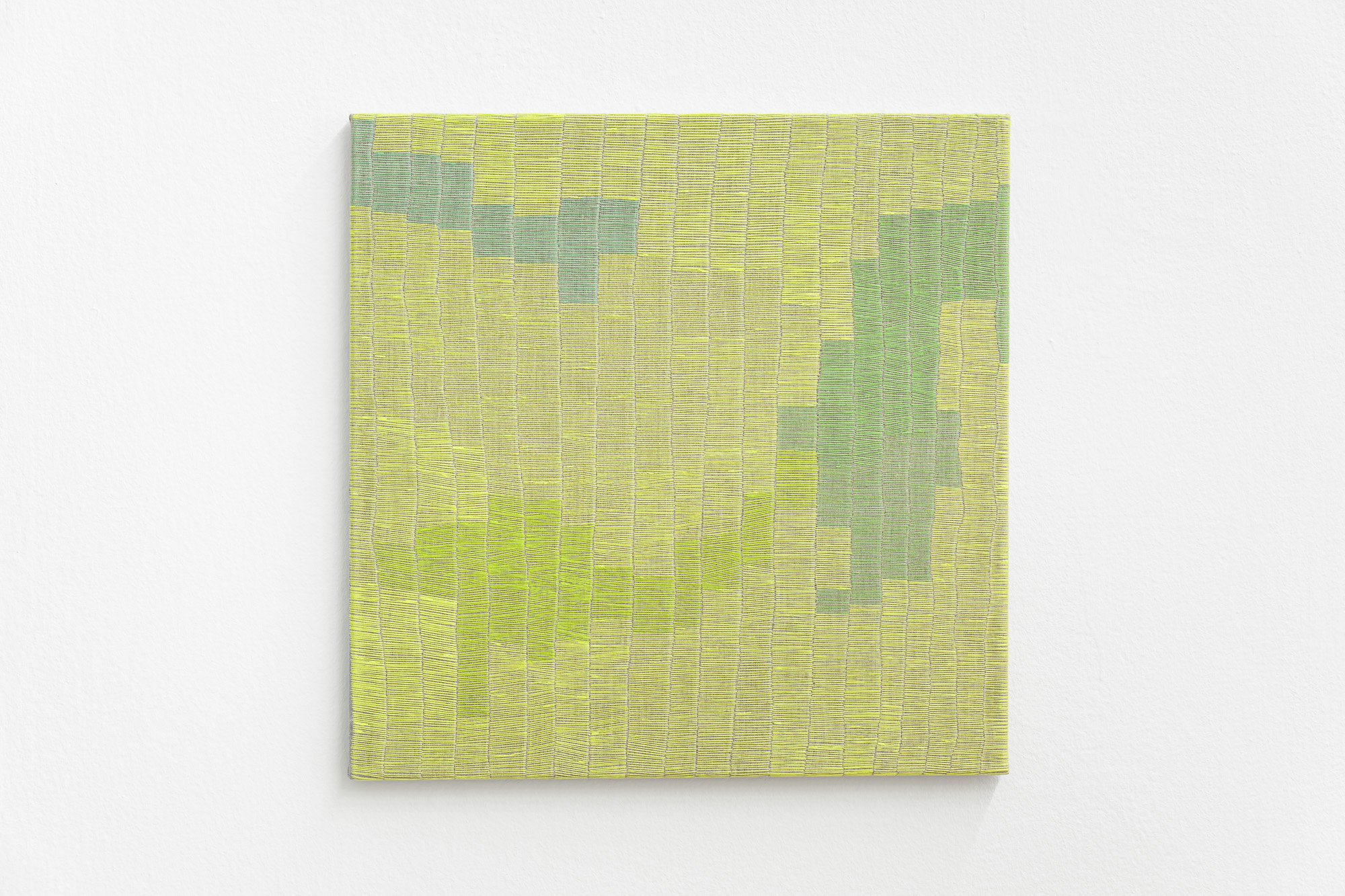
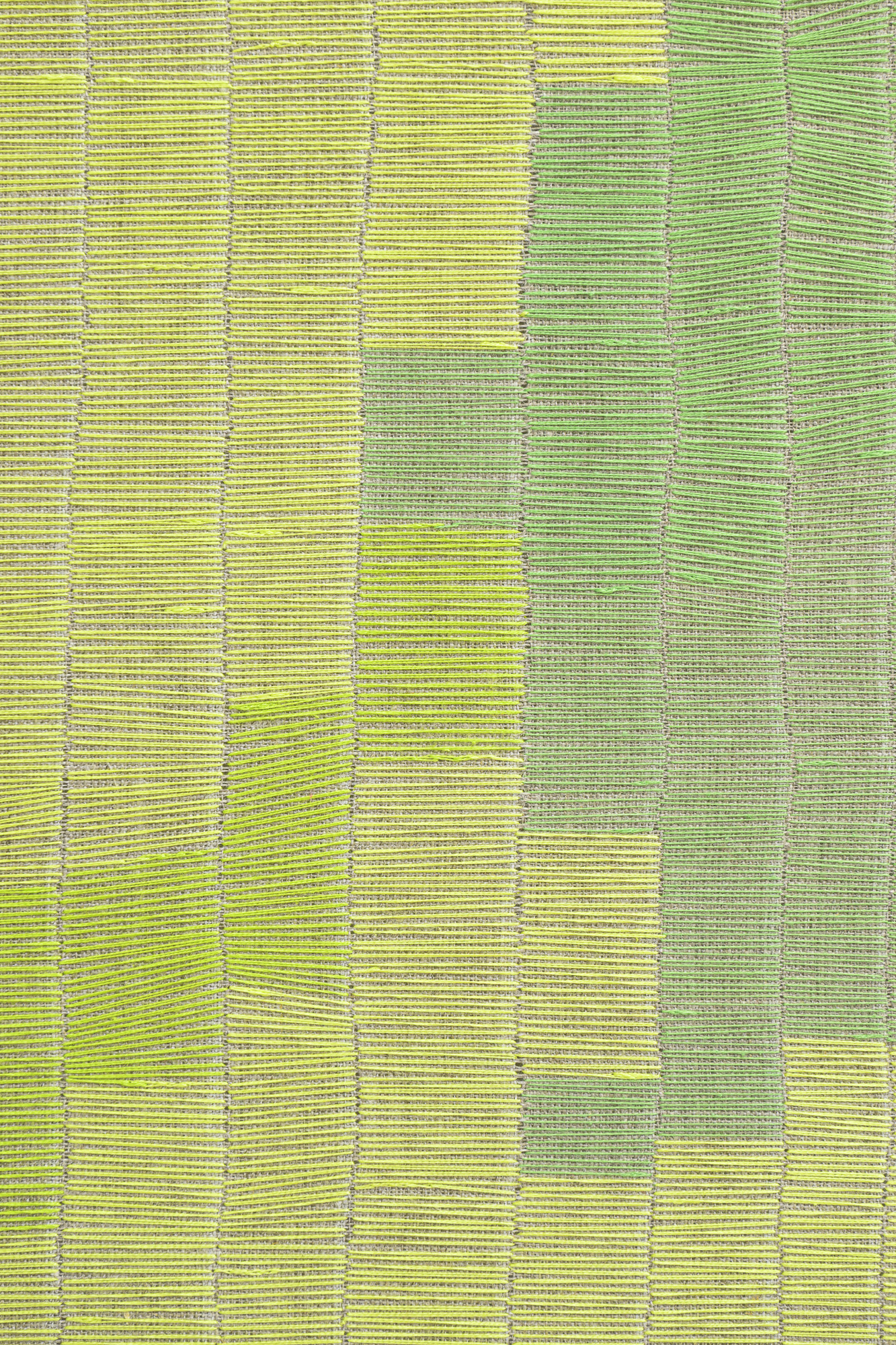
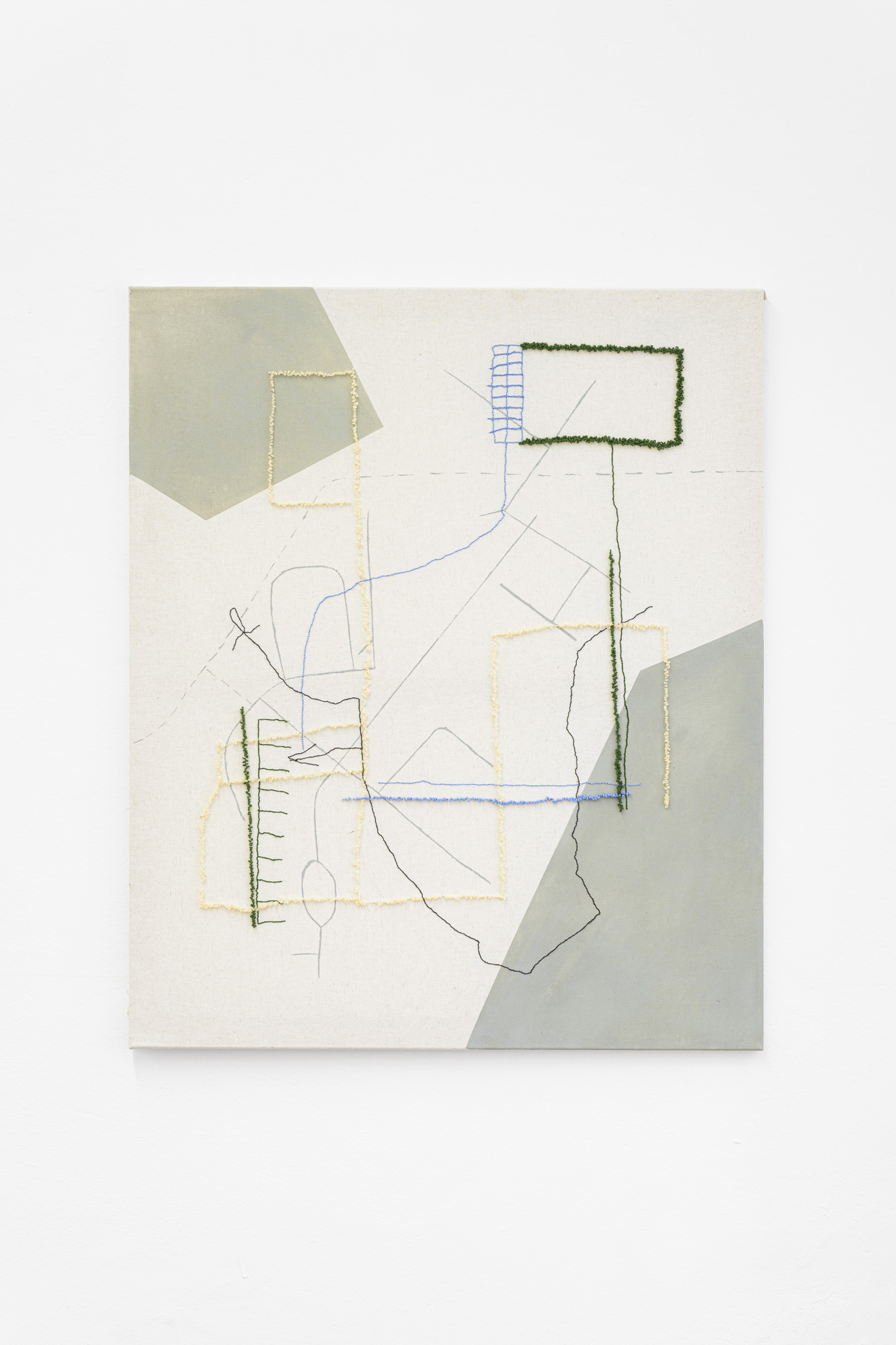
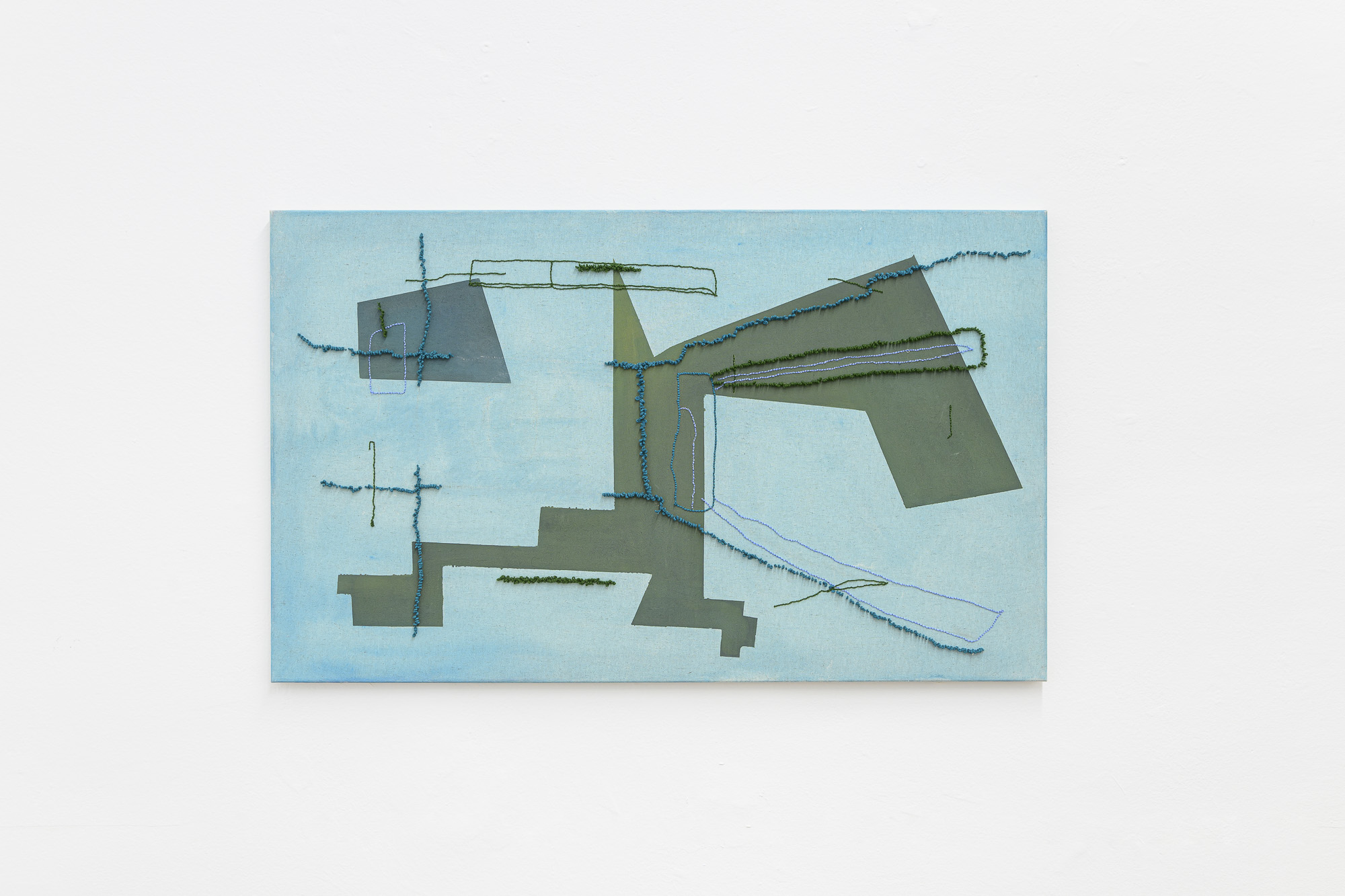
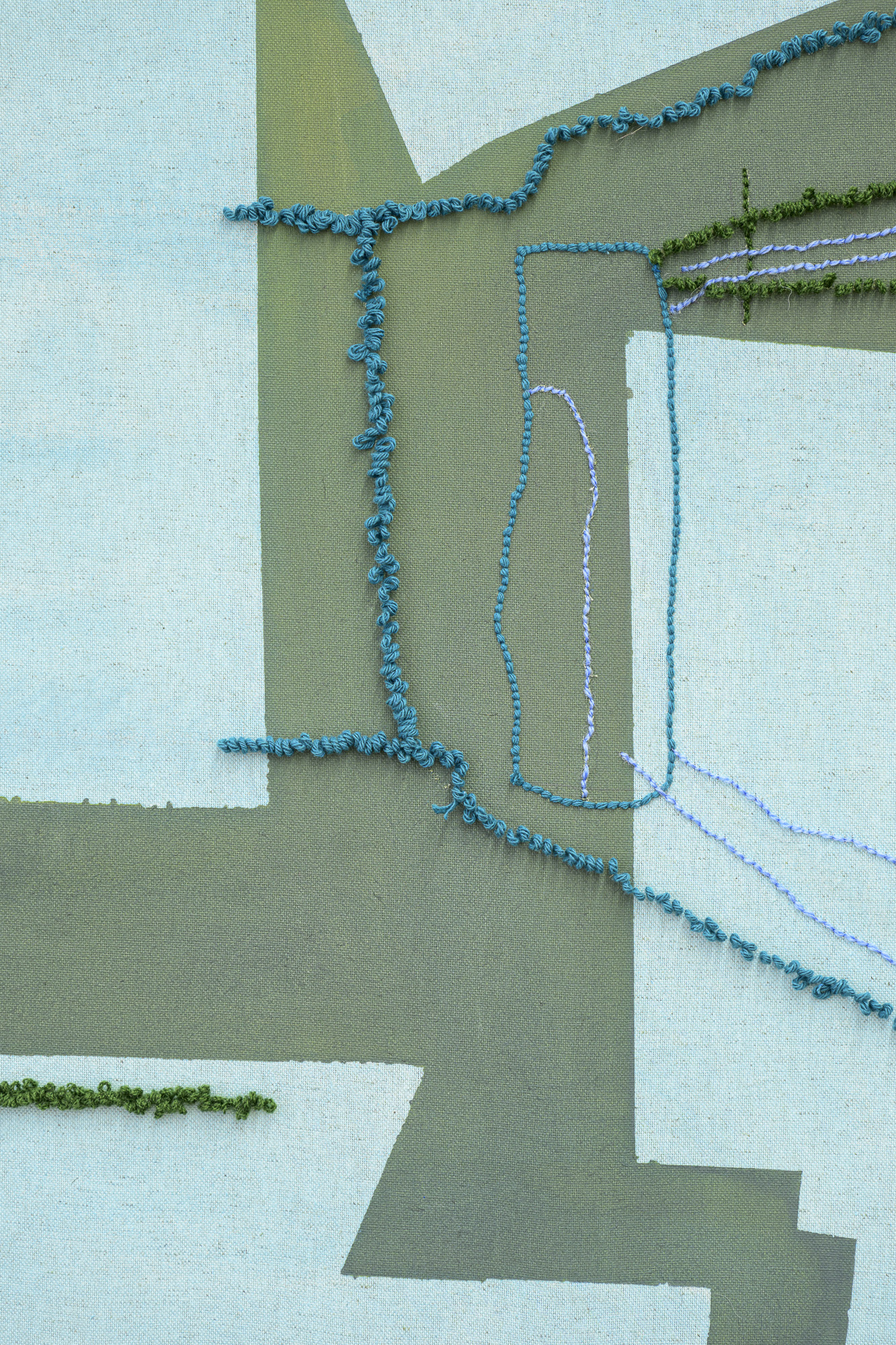
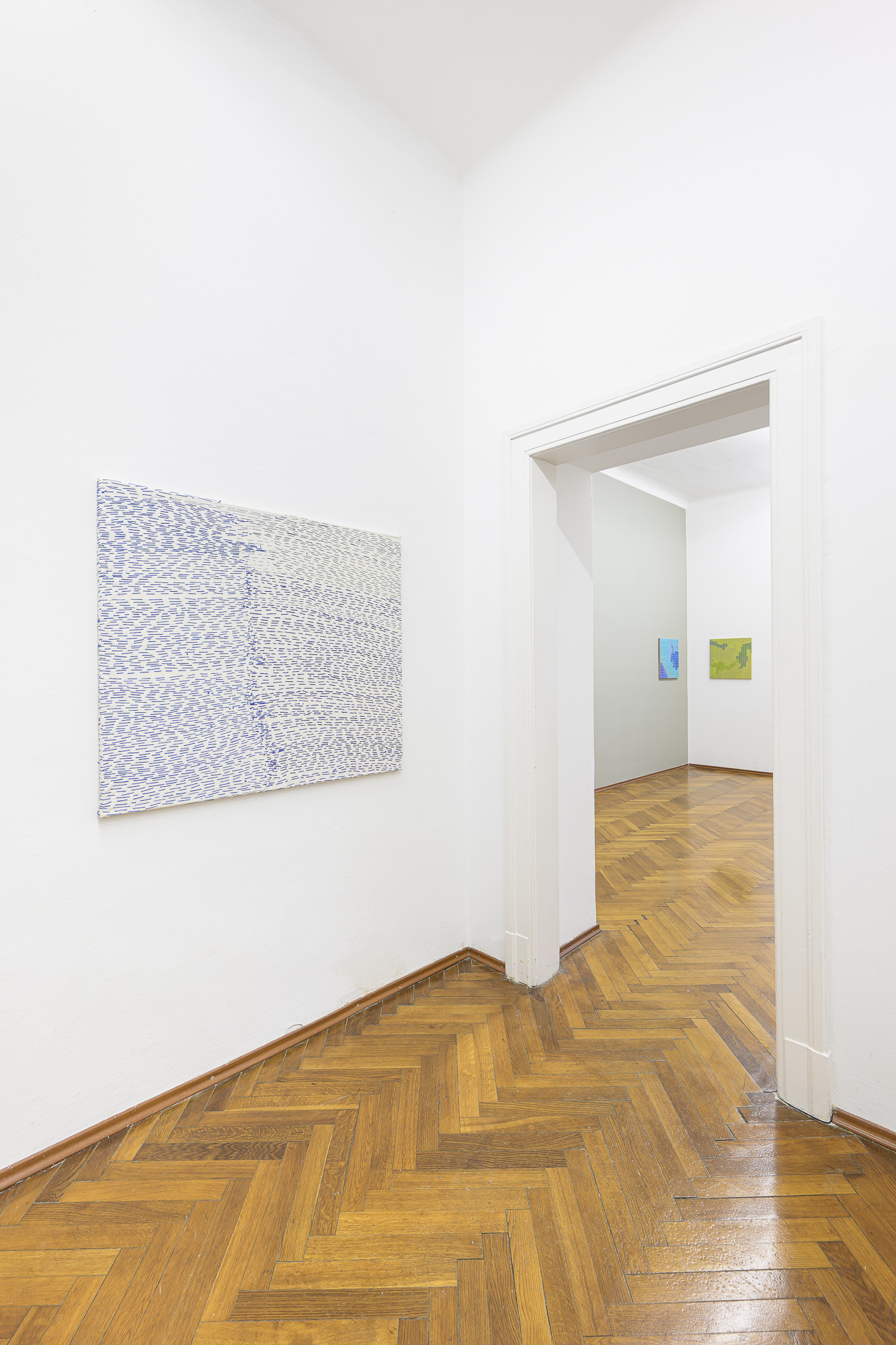
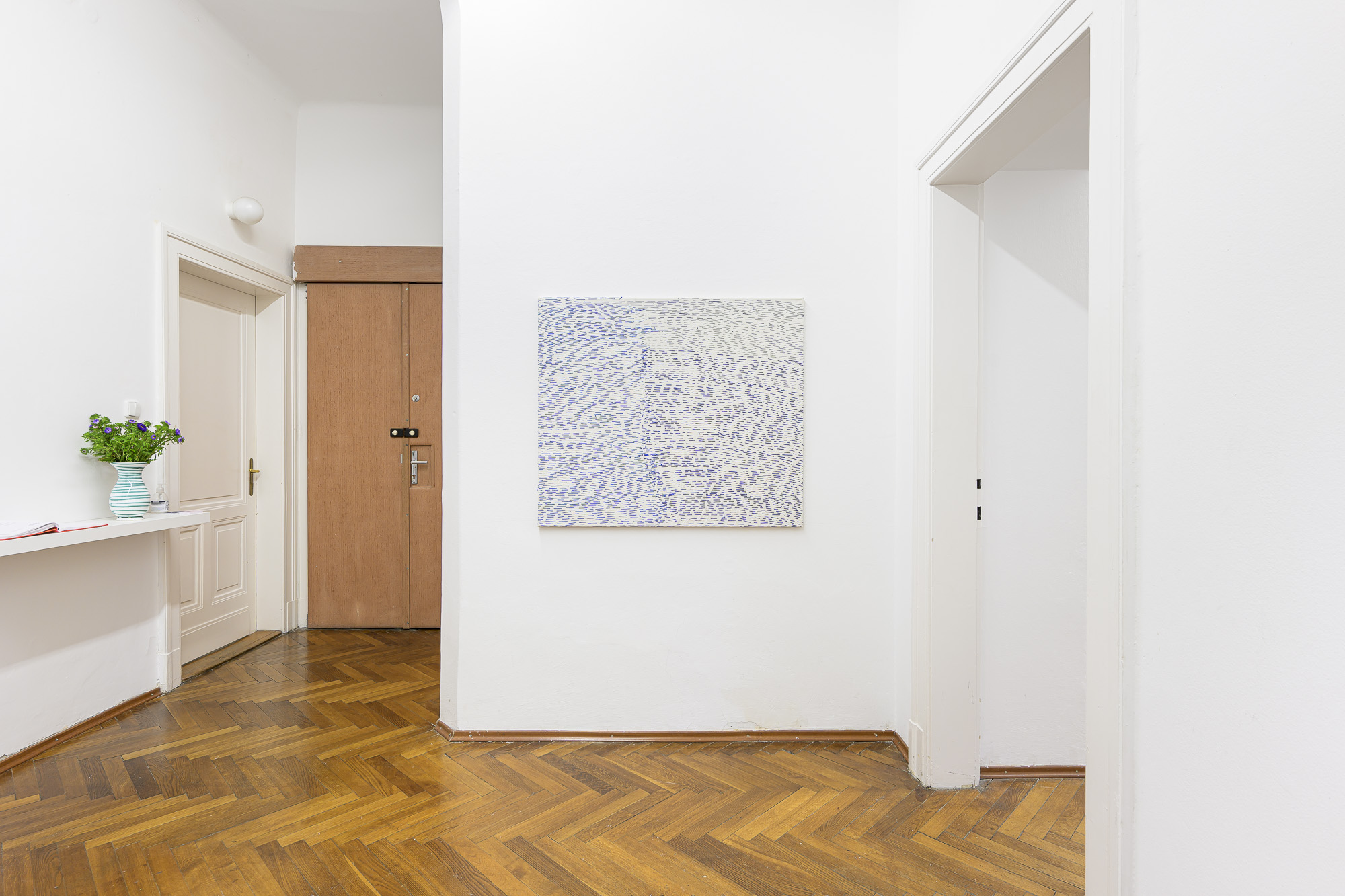
From the outset of my artistic practice, my medium of expression was classical oil painting, but gradually I began to replace oil paint with layers of cotton fabric. For me, the principle is the same as in painting itself; it is just that sewing slows down the hand and replaces brushstrokes… I have now used ink in some of my paintings. For 25 years I have been immersed in threads and cotton, and I am moving from dense, full canvases to gentler, simpler ones – perhaps a natural progression. In my most recent landscapes, I inevitably felt the need once again to make a few quick brushstrokes – in ink, this time; I needed to take a risk again and not think, to not see and to trust in the sincerity of the connection between heart and hand (the cotton thread became merely the final stroke in the creation of the painting). Thus, paintings emerged which I call Mountains, Clouds…, Lakes.
Daniela Mikulášková was born in 1974 in Bruntál (Czechoslovakia). Her work has long been associated with Brno. She is a painter and draftsman who creates her paintings using threads. She has been exhibiting her work independently since 1999.
She is a graduate of the Faculty of Arts and the Faculty of Education at Palacký University in Olomouc (1992–1998), the Faculty of Fine Arts at Brno University of Technology, and the Environmental Art Studio led by academic painter Vladimír Merta (1999–2001); in the meantime, she studied Hebrew during a study abroad program in Israel. In 2008, she won first place in the JungART competition for young artists under 35.
In 2019, she defended her dissertation on the topic of embroidery in contemporary art, titled “The Message of Embroidery in Contemporary Art and Art Education.”
I believe that an artwork has a deeper meaning that goes beyond its mere materiality. What I can say is that staying in the Menri Monastery in Dolanji gave me solitude and concentration. While I worked, I listened to the voices of the monks, the singing, chanting, and repeating of mantras. All of this influenced my work in a very unique way that could only have happened there. Every day, I lived according to this rhythm and worked on small segments of canvas. Being in the monastery and sharing daily life in Menri fulfilled my wish for simplicity. It connected me with the original idea of my Zero piece and the decision to work with needle and thread.
N. N.
Natasza Niedziółka was born 1978 in Międzychód (Poland), currently lives and works in Berlin.
She studied painting with Tal R at Kunstakademie Düsseldorf.
In 2020 Niedziółka received a grant from the Pollock-Krasner Foundation and she was an artist in residence at the Gyeongju Art Centre in South Korea in 2018.
Natasza Niedziółka’s recent exhibitions include her solo show at Sean Kelly Gallery, New York (2024) and the group shows To Weave the Sky: Textile Abstractions from the Jorge M. Pérez Collection, El Espacio 23, Miami (2023); Time. From Dürer to Bonvincini, Kunsthaus Zürich, Zurich (2023), and Push + Pull at Mai 36 Gallery in Zurich.
In my work, I navigate between participation and its artistic interpretation. I am interested in how the artistic process can serve as a shared space for collective memory, play or trauma
As an artist, I see my role as that of a bridge – not as a representative, but as someone who connects intuitive expression with professional artistic form, and a given community with the wider public. For me, the resulting work is a poetic gesture that bears the imprint of a shared experience, yet remains autonomous and artistically comprehensible.
Eva Vaňová was born in 1999 in Košice (Slovakia). In 2020–2024 she studied Free Visual Art at the Faculty of Arts of the Technical University of Košice from 2020 to 2024. From 2024 to 2026, she continued her studies in the Environment Studio at the Faculty of Fine Arts of Brno University of Technology. In 2024 and 2025, she was a finalist in the Painting of the Year competition.
Vaňová specializes in working with marginalized groups and has long been involved in inclusive projects focused on different communities.
Her art and work serve to overcome social and cultural barriers, often in combination with education.