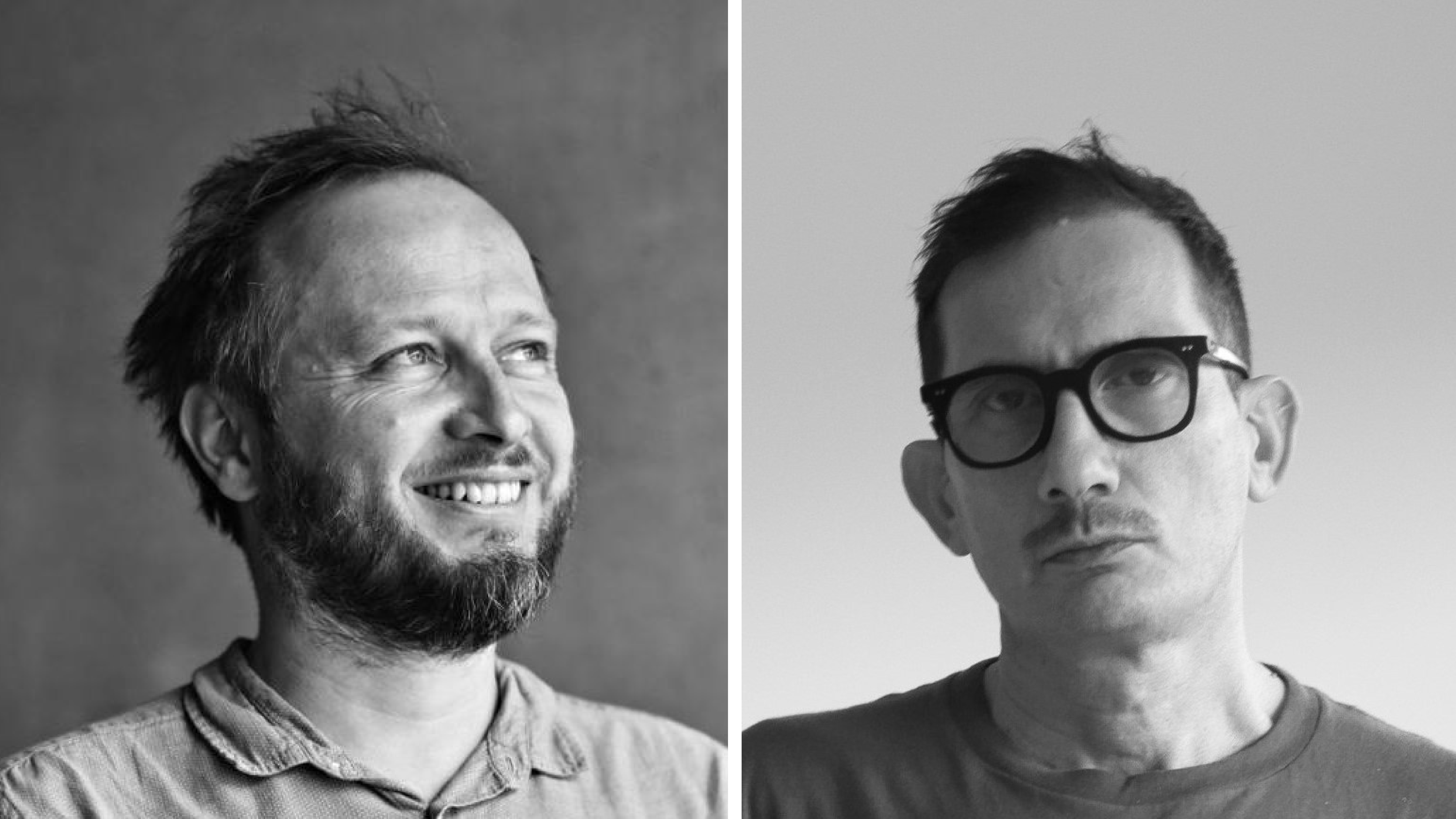
Zbyněk Baladrán and Vangelis Vlahos are key figures in Eastern European contemporary art, among the leading practitioners of research-based art and what has come to be known as the archival turn in art. Over the last 20 years, they have been in sustained dialogue with each other and in active dialogue with other European and post–Eastern Bloc artists who have faced the challenges of the post-communist, post-colonial era and peripheral, struggling economies within globalisation, and who have made revisiting history a central aspect of their work. These artists introduced archival art almost as a (situated) genre, the formation of which was strongly linked to the parameters of these specific geographies.
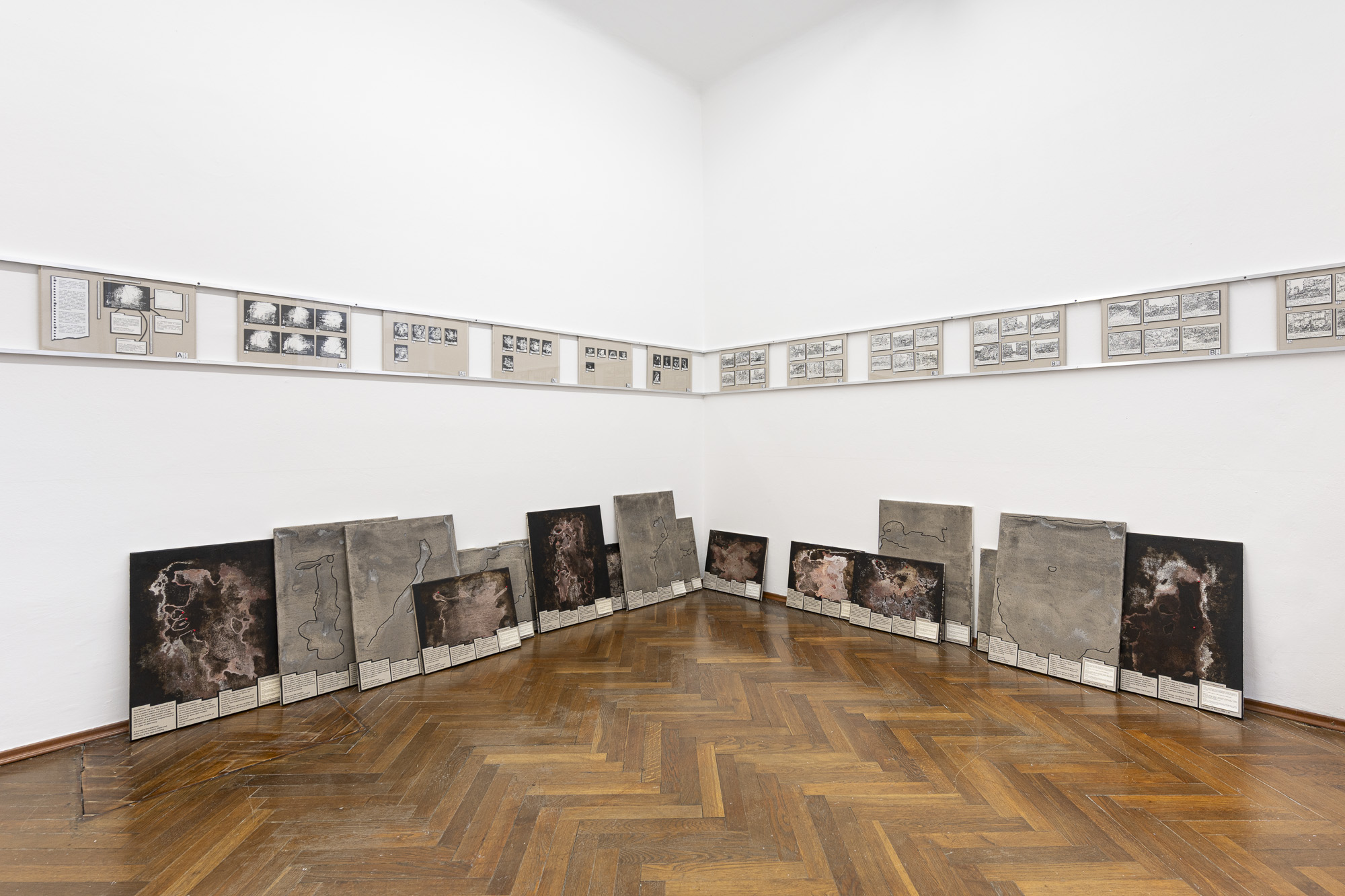
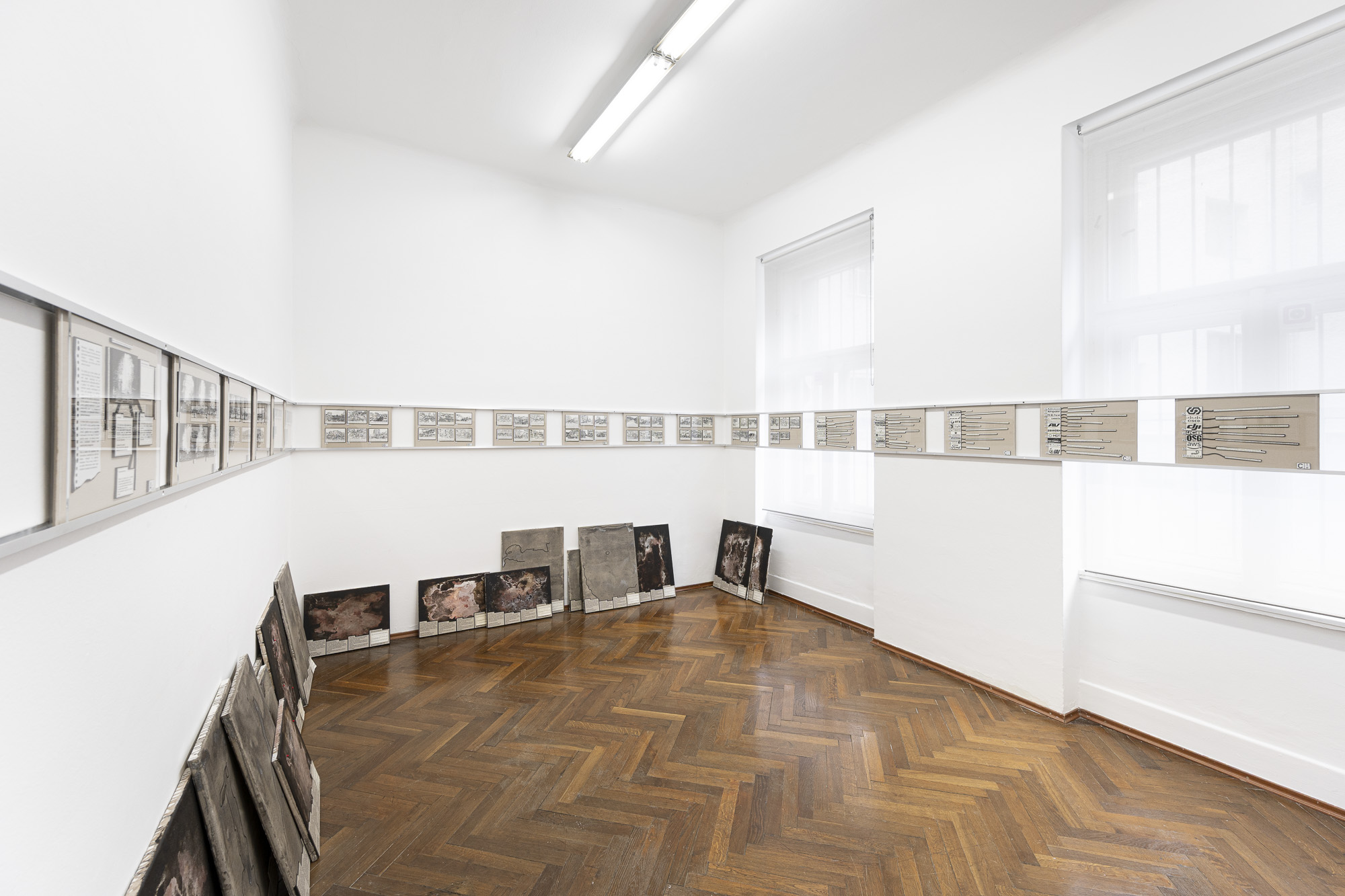
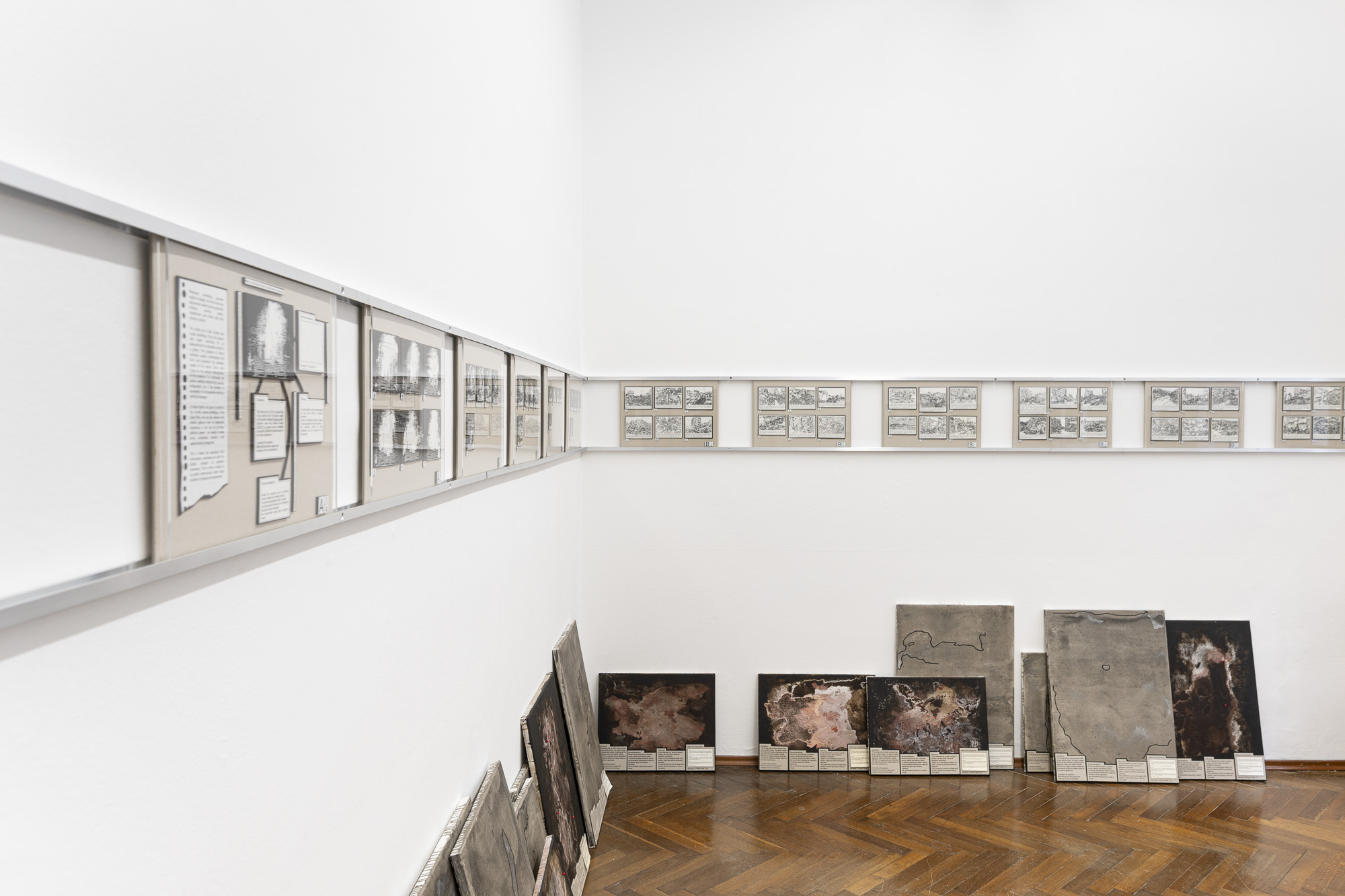
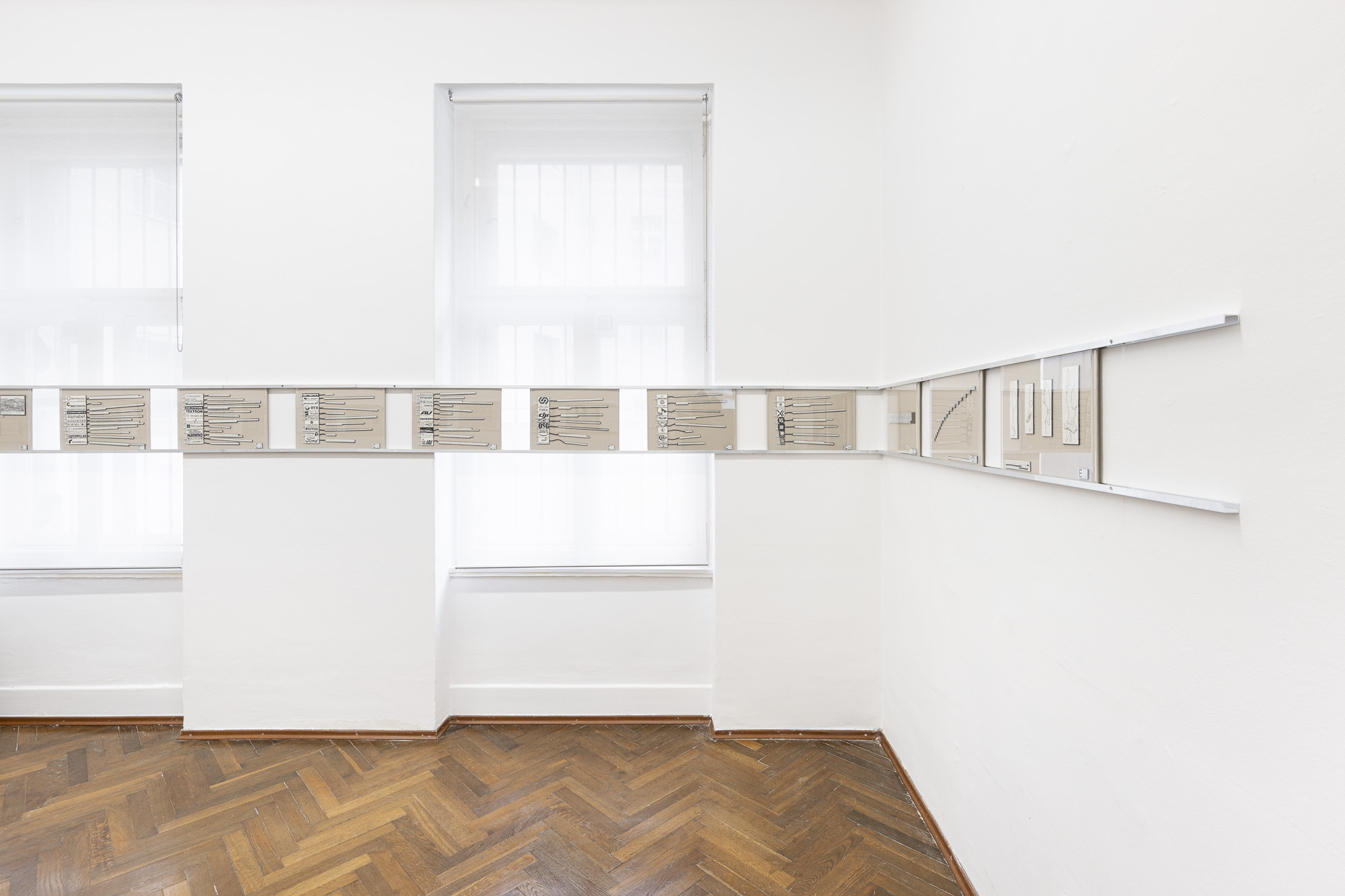
The Workshop of Events is a workspace of procedures rather than objects, a method rather than a theme. History is not fixed but continually assembled, a site of active making. Treating “events” as constructs mediated by images, archives, and algorithms, Vlahos’s timelines and data-driven visualizations and Zbyněk Baladrán’s linguistic and diagrammatic trials operate as tools, testing how meaning is produced, circulated, and contested. In this workshop, the artwork is a proposition: a set of operations that turns evidence into thought and returns thought to the public sphere.
The exhibition foregrounds a shift in both artists’ practices, presenting studies on how specific events are inscribed in public space and on what lies behind the vagueness and banality of signs. Vangelis Vlahos demonstrates, with precision, the importance of attending to the nuances of images and algorithmic data that seem to surround us innocently. Zbyněk Baladrán, by contrast, searches for a language that can restore art’s political relevance, asking whether significant matters can be addressed through artistic means—and for whom they are actually intended.
List of works and exhibition plan (PDF)
Interview in NERO Magazine (link)
Zbyněk Baladrán (b. 1973 in Prague, Czechoslovakia) is a visual artist, curator and exhibition designer. He focuses on the contradictions of the contemporary world and the possibilities of understanding them through art and artistic practice.
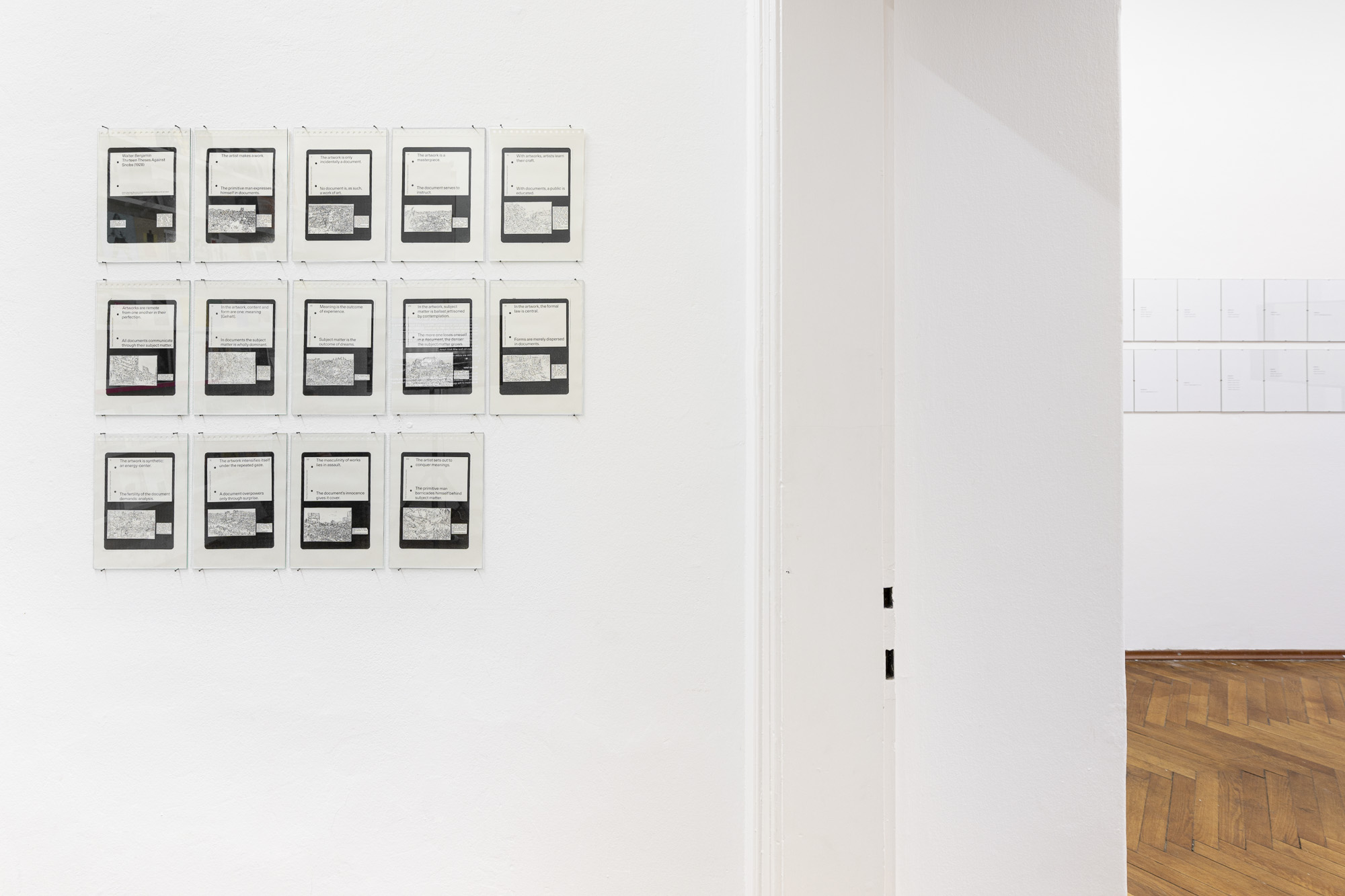
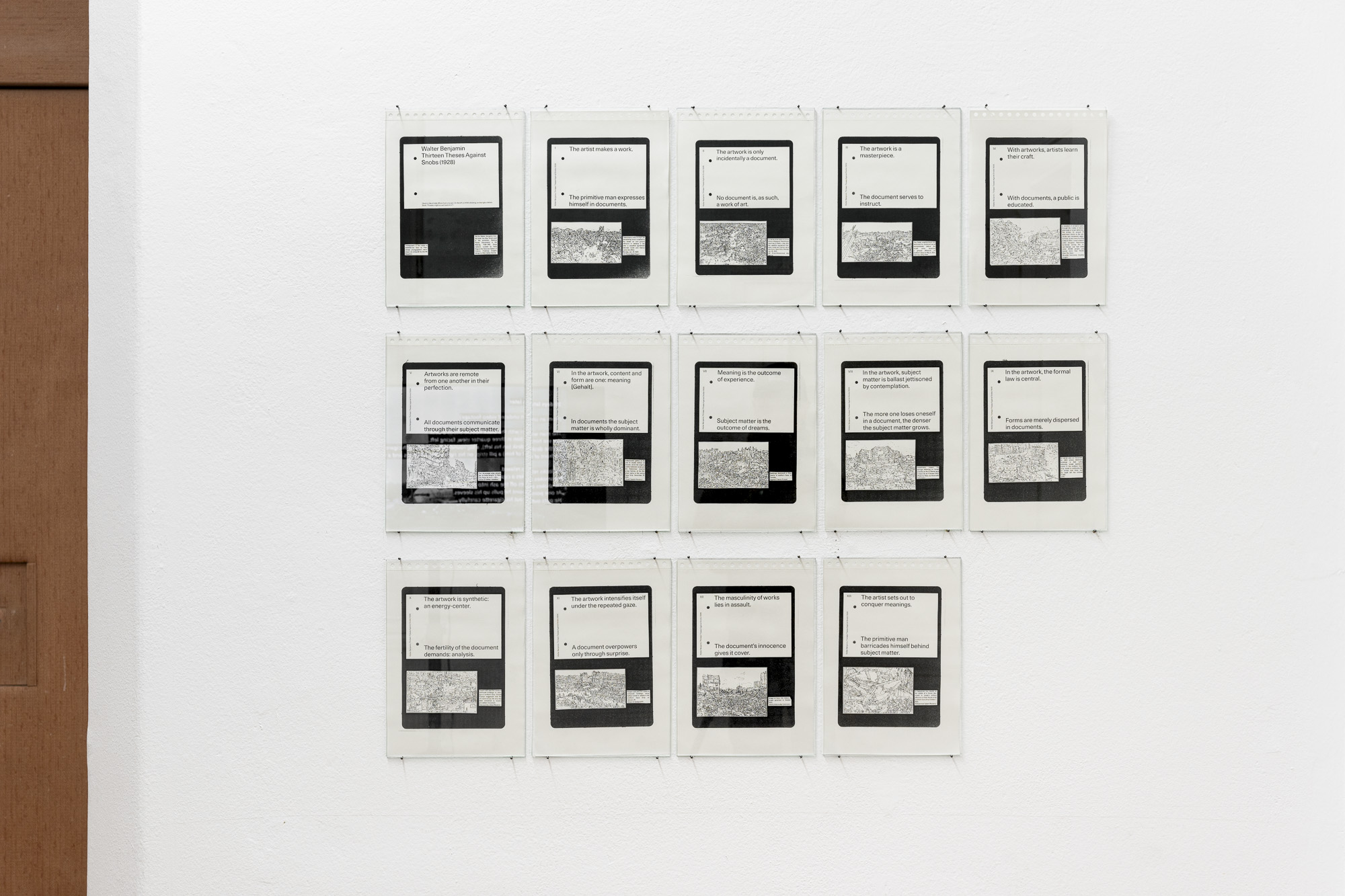
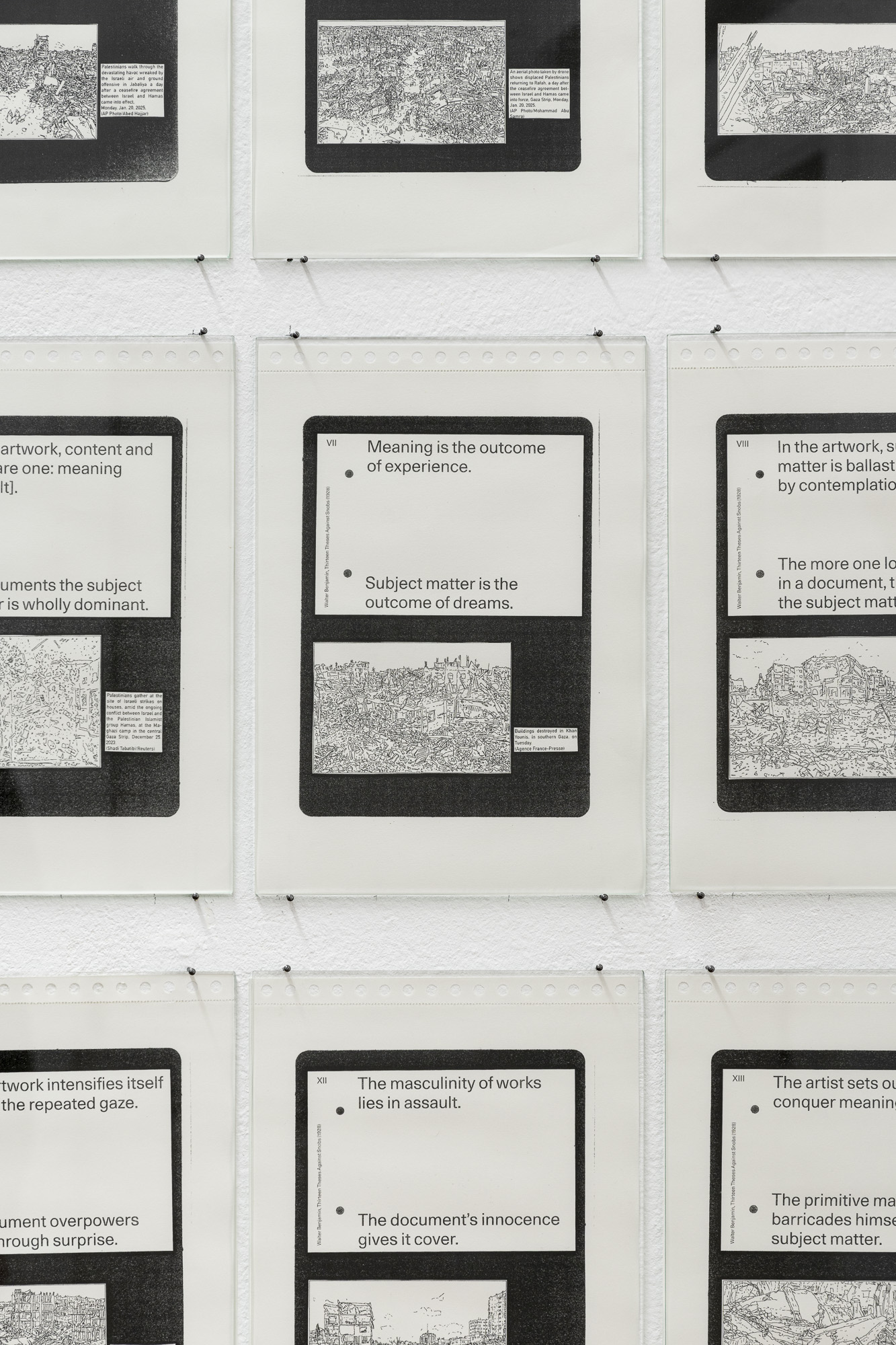
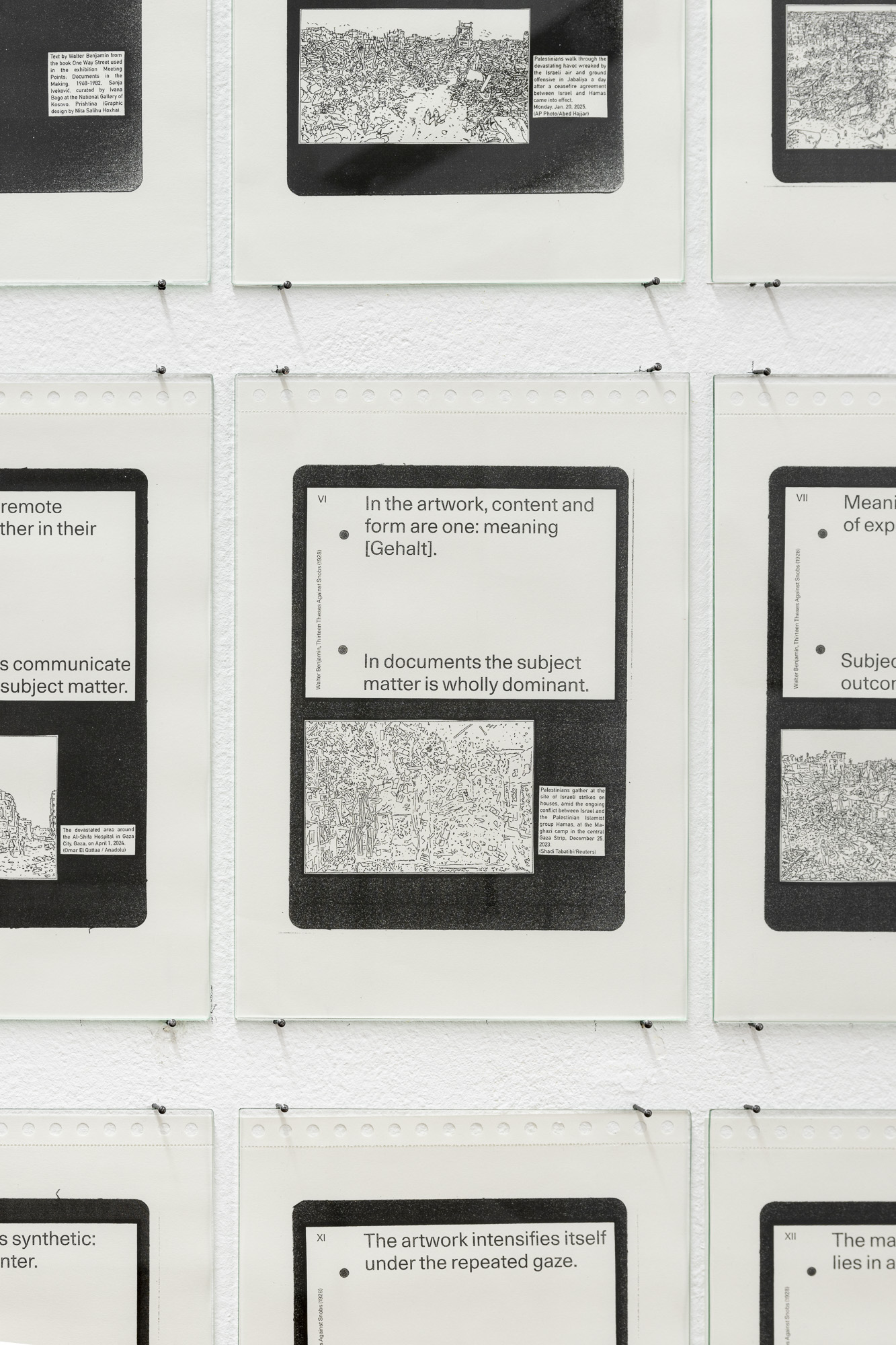
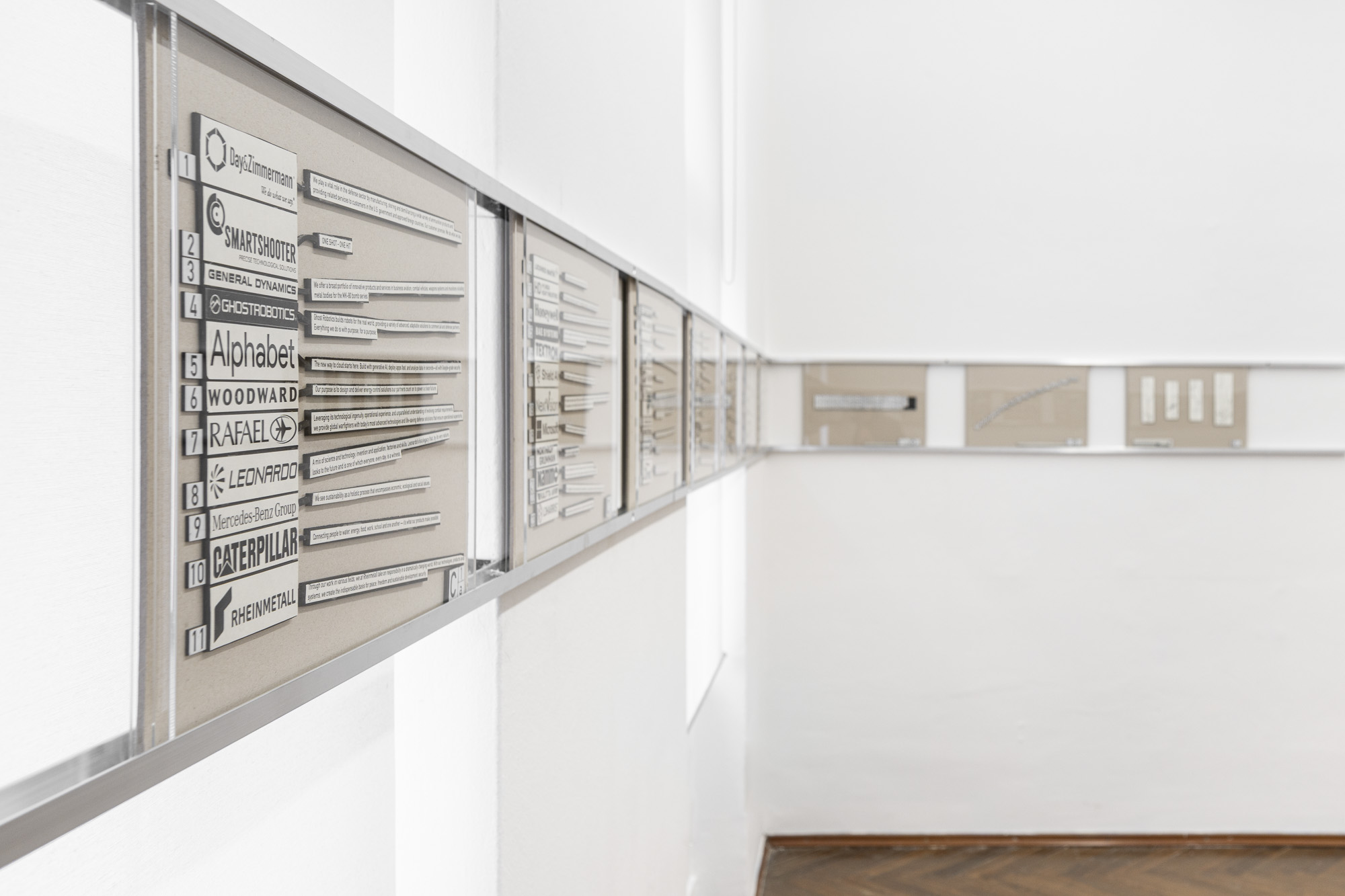
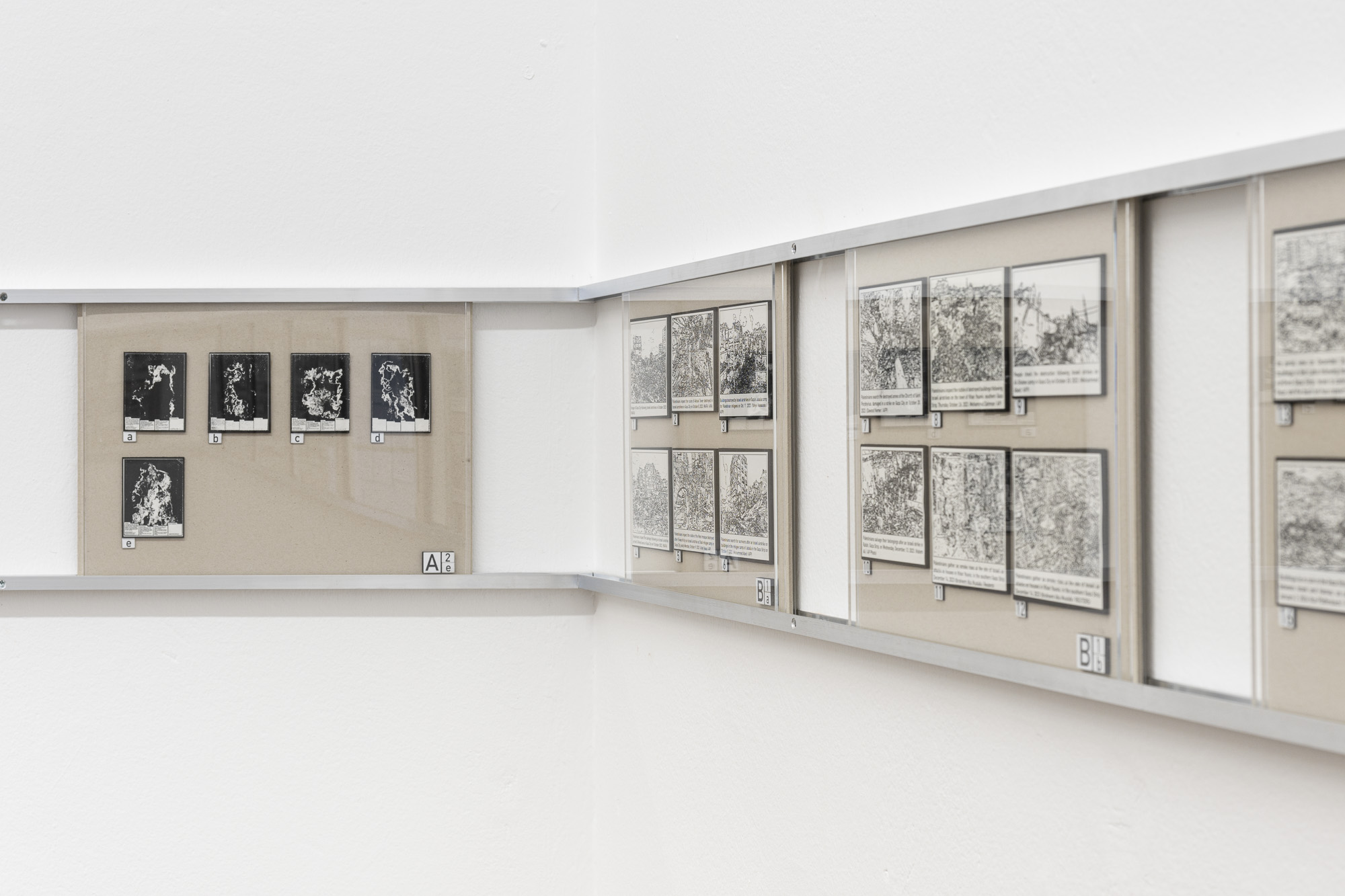
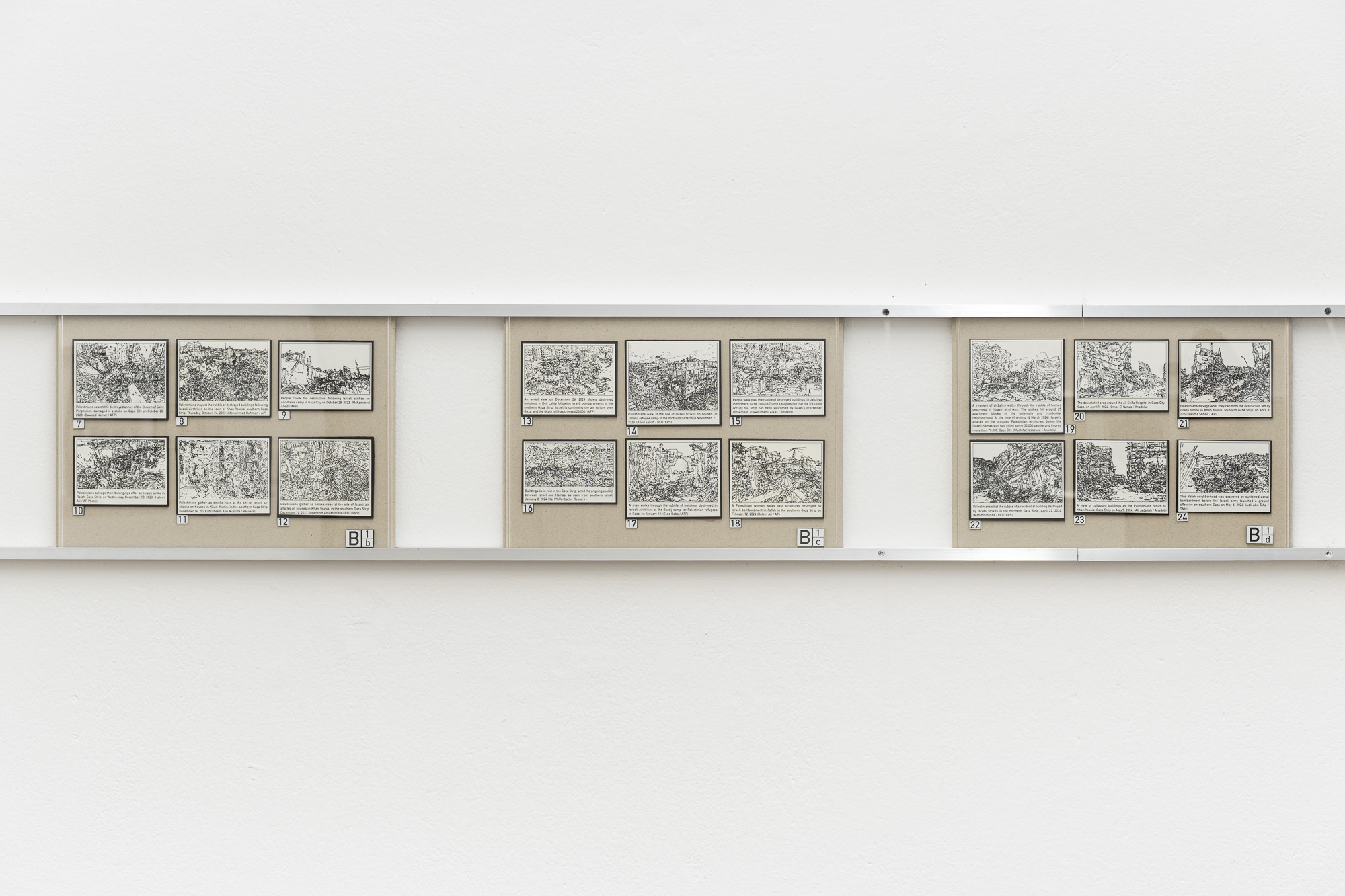
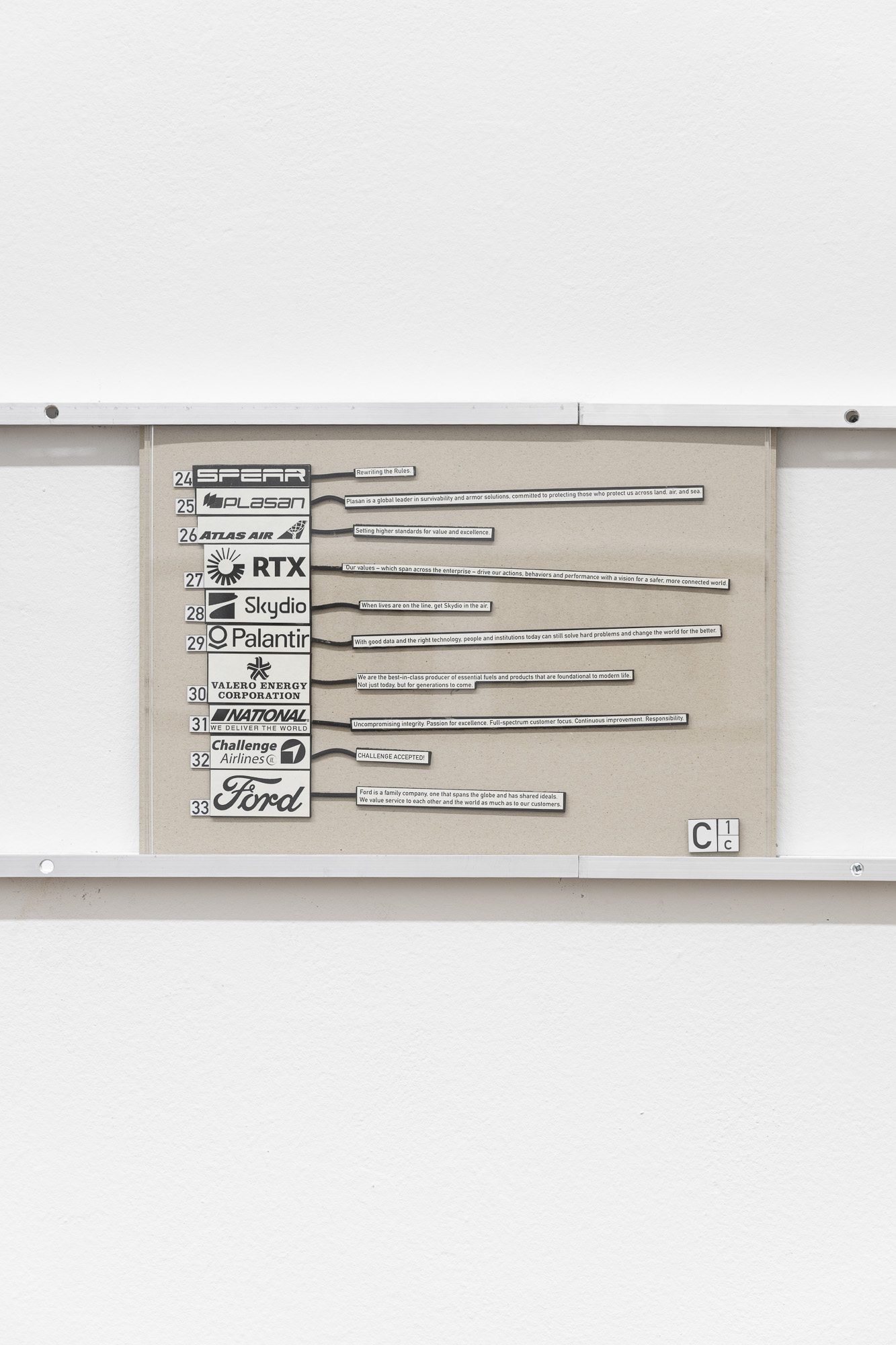
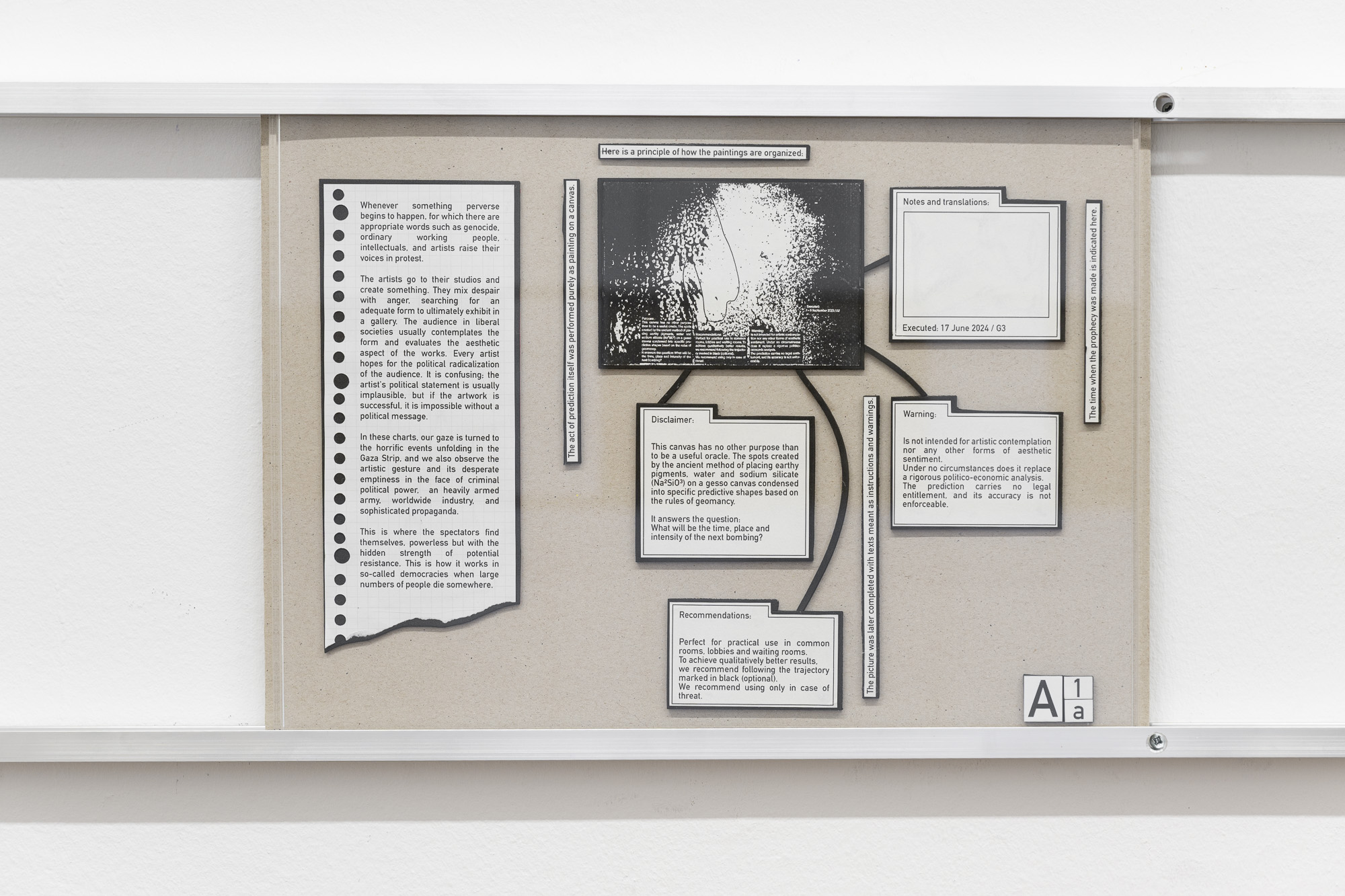
The exhibition features two projects, or rather studies. Both are based on research into current conflicts that define or are symptomatic of the global order. After the horrific attack by Hamas, the response of the Israeli government and army is one of the most terrifying manifestations of state violence. In general, the bombing of civilian targets has been excellently described in Sven Linquist's book History of Bombing. But how can such a terrifying reality be dealt with through artistic means? A difficult task for artists.
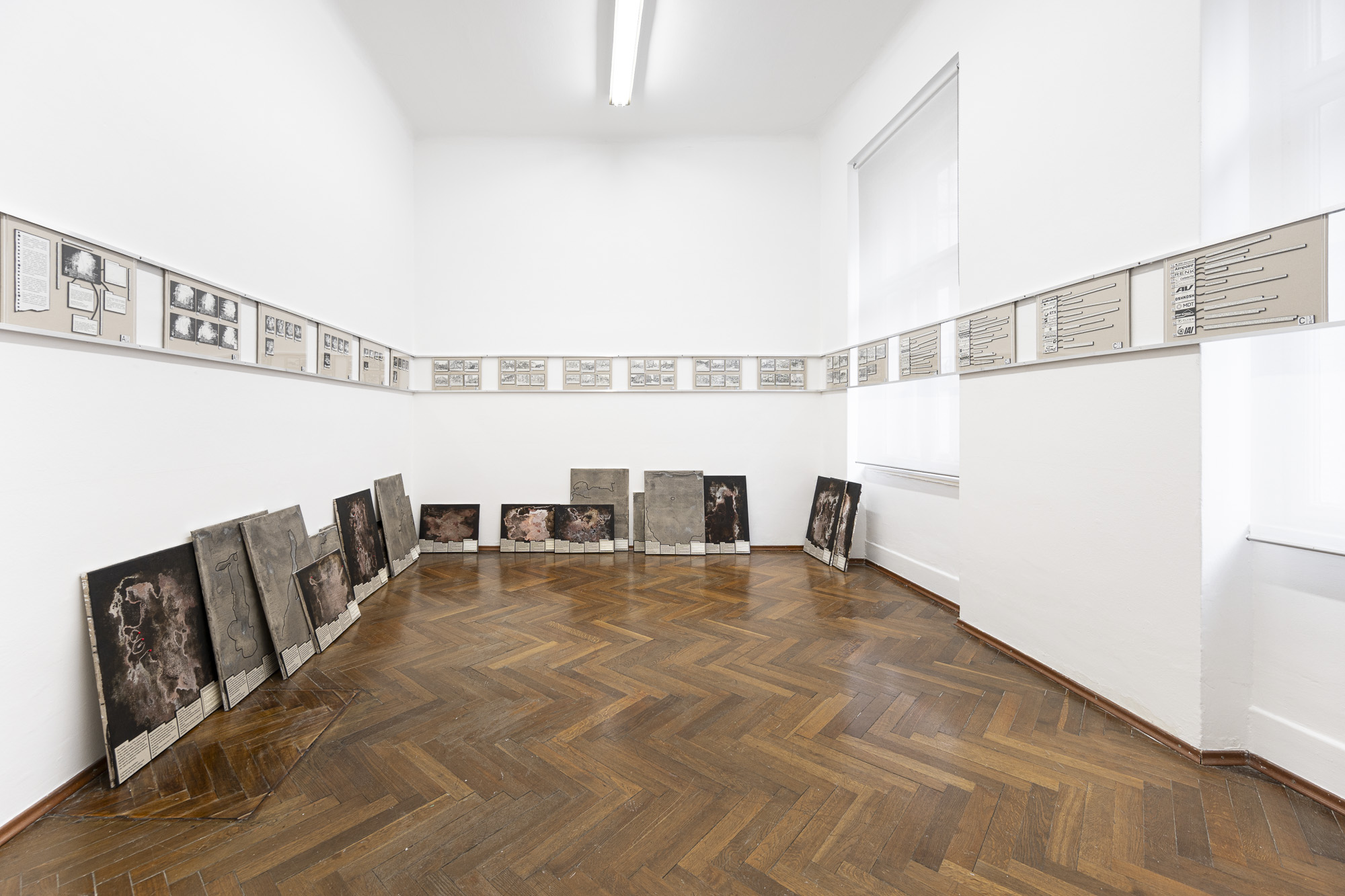
The first project, based on Walter Benjamin's Thirteen Theses Against Snobs, is a reflection on how to think about such destruction and how to depict it. Where does art fail, or on the contrary, where are its possibilities stronger than in documentation? Isn't art too isolated in its institutions and without social influence? Why then make art?
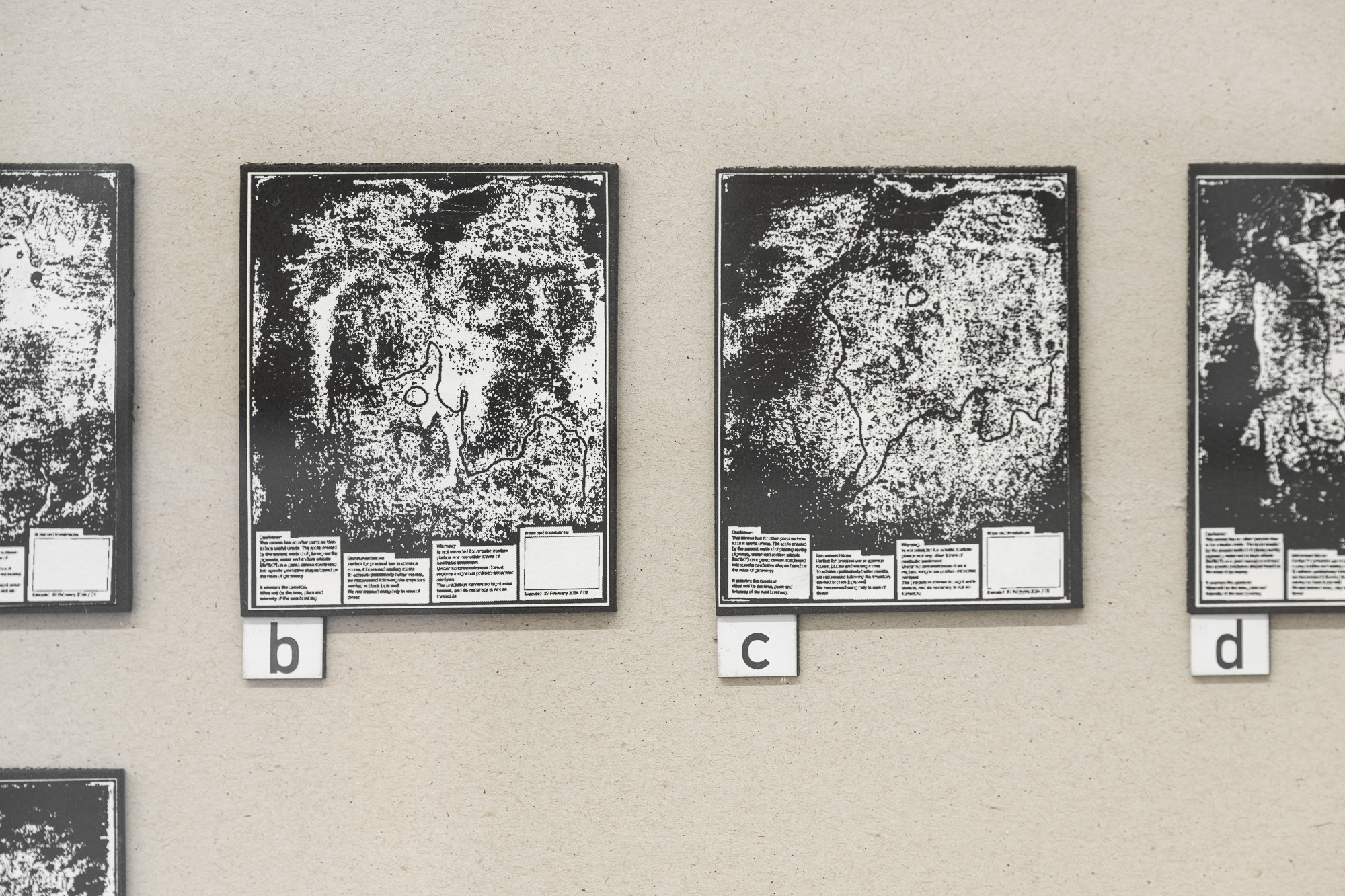
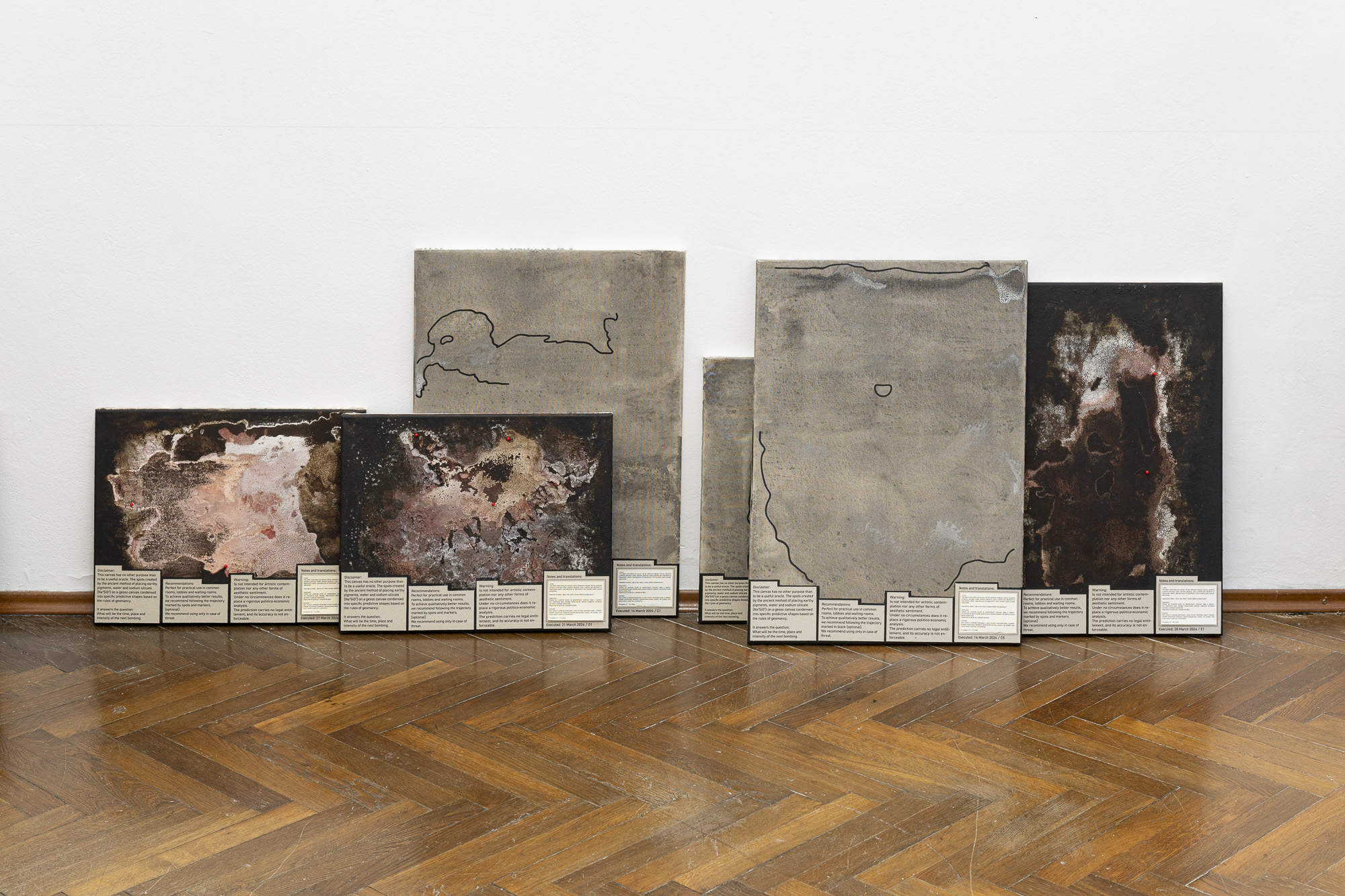
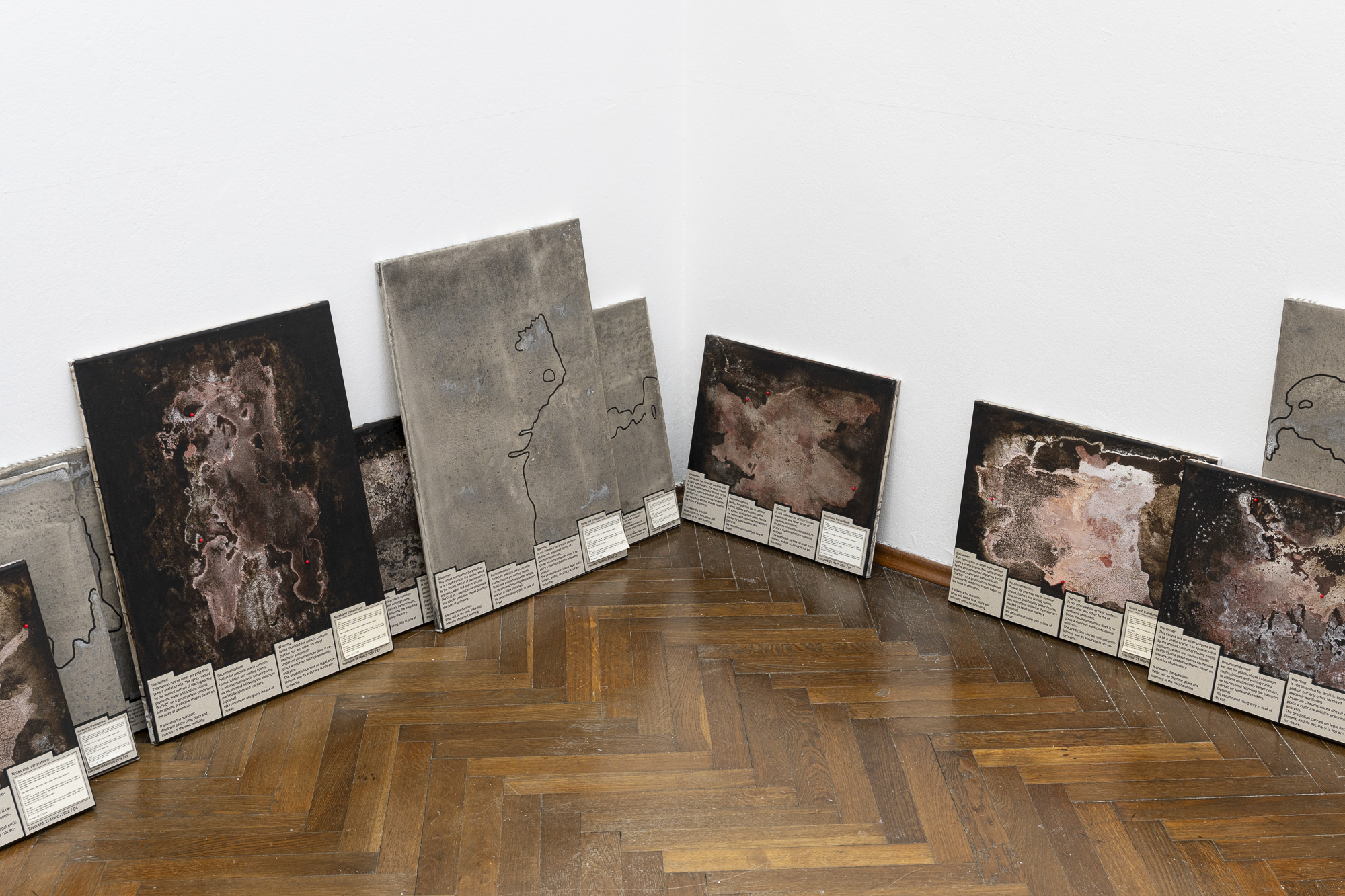
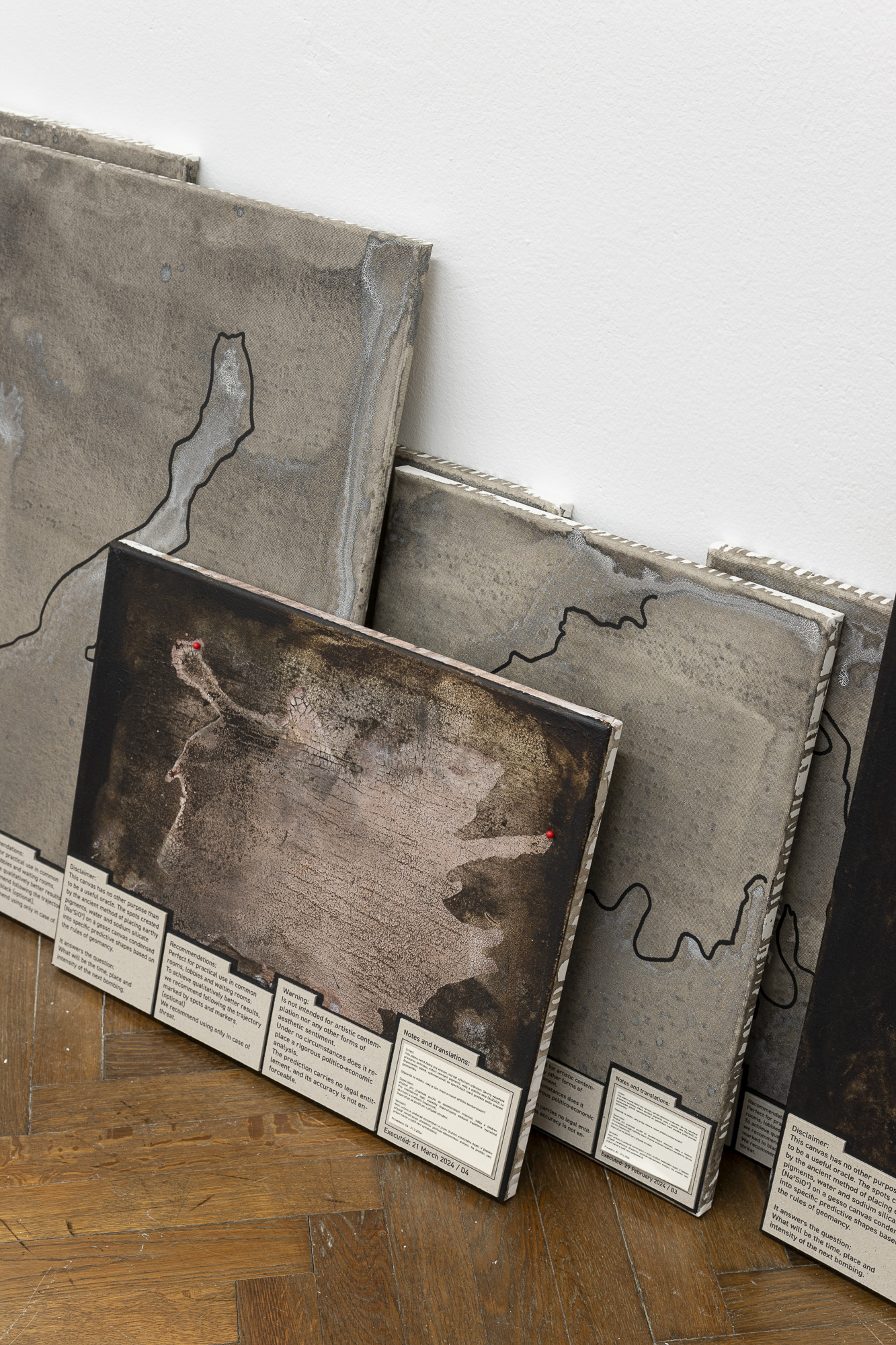
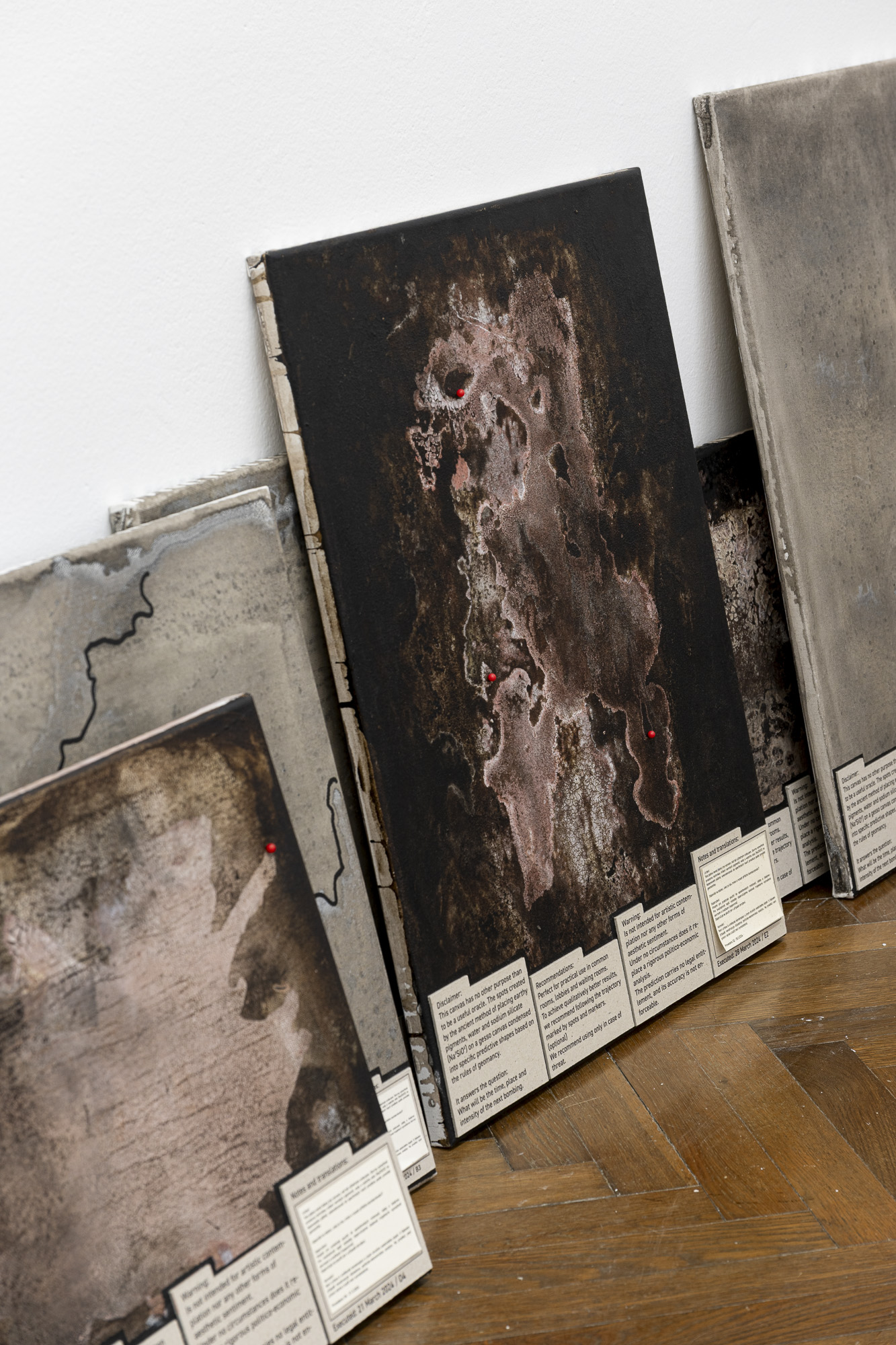
The second project opens up precisely this question. Are works of art necessary, or do they only have a specific role in the speculative market or in individual contemplation in institutions designed for this purpose? The starting point was the ancient idea of seeking answers to important questions in dialogue with oracles. What if art had just such a function? Could it be justified, or is it absurd to think this way? While working on the oracle paintings, it was necessary to explain something further; emotions alone are not enough; it is necessary to grasp them and transform them into opinion.
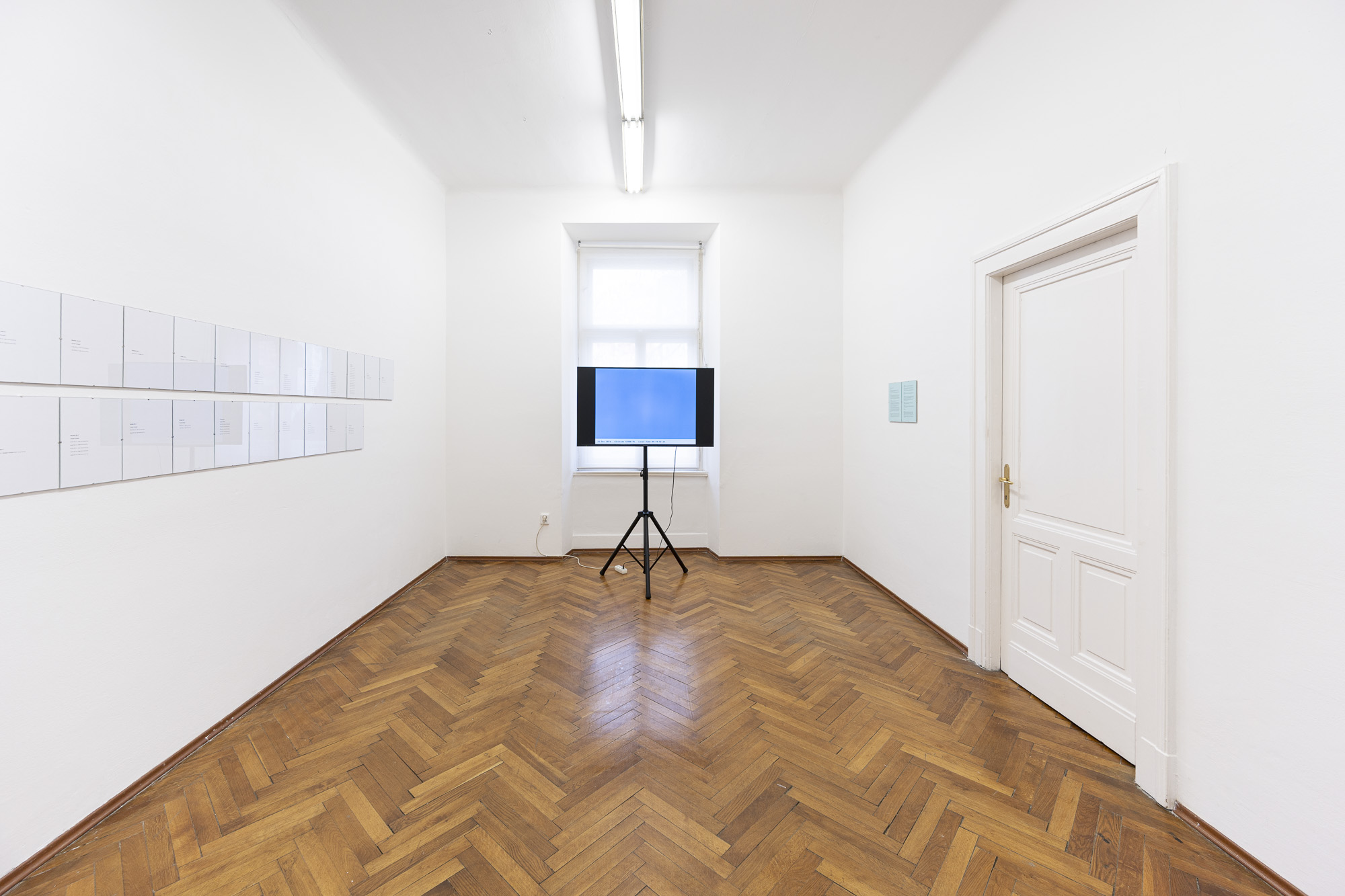
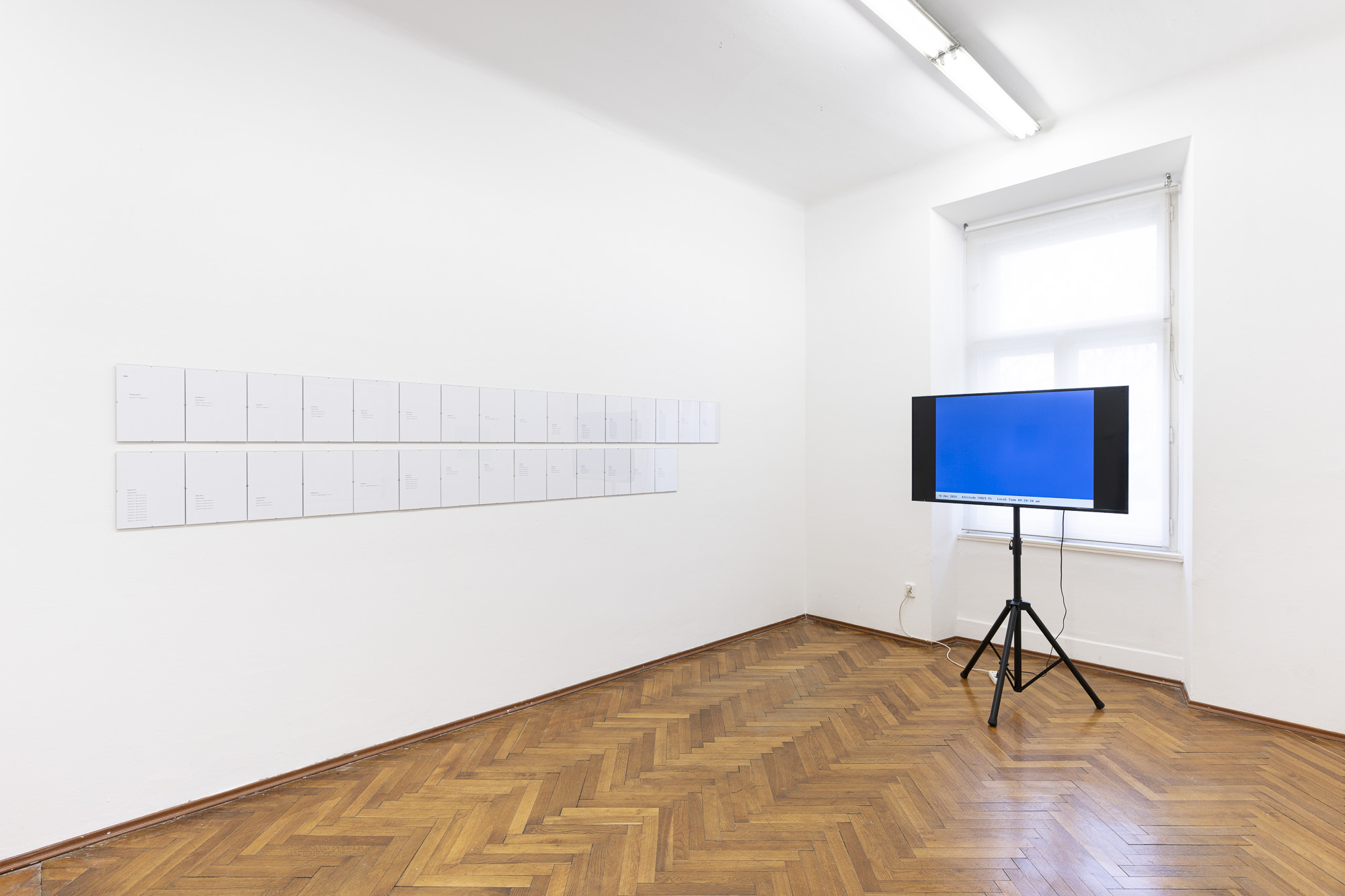
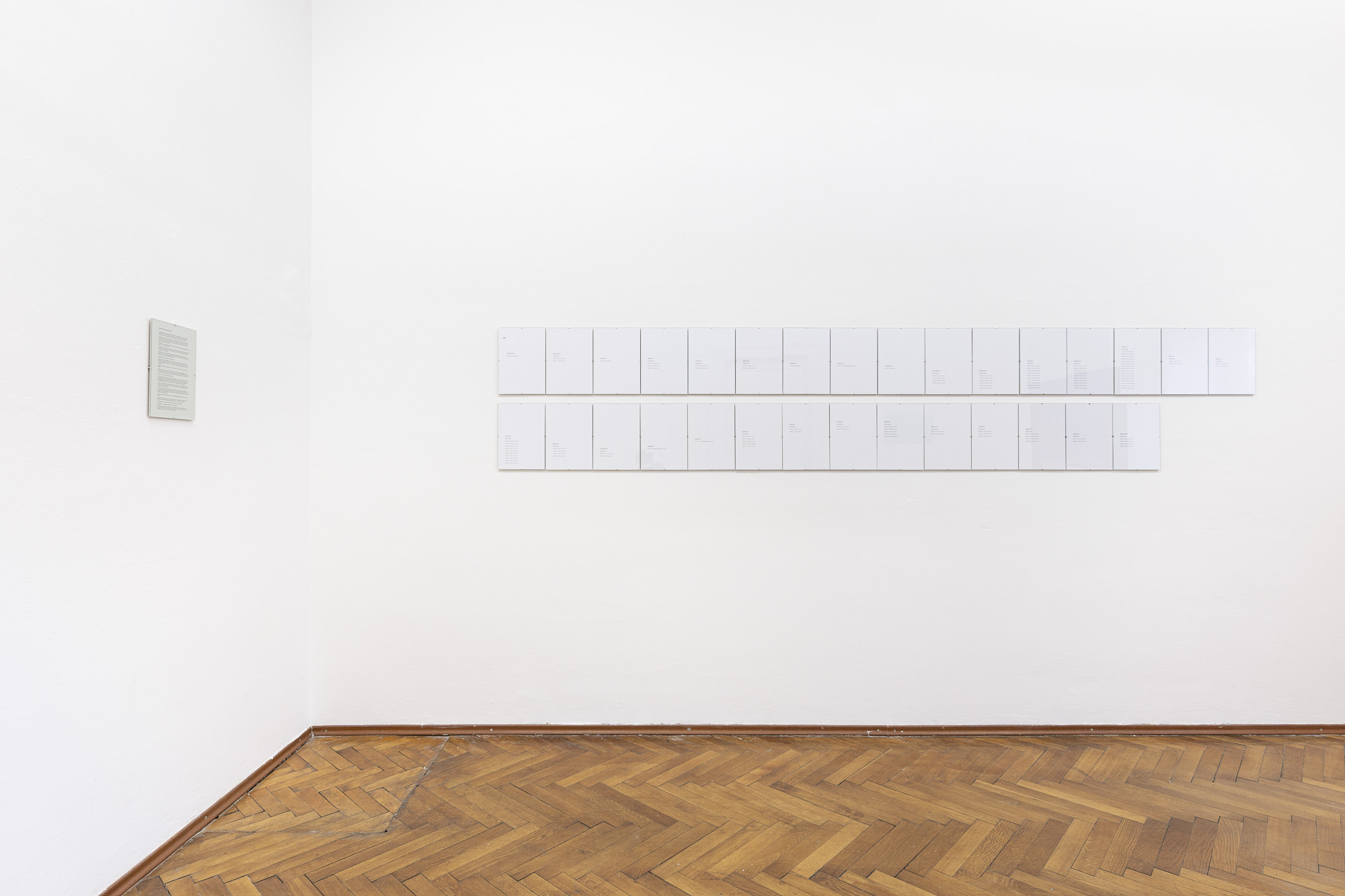
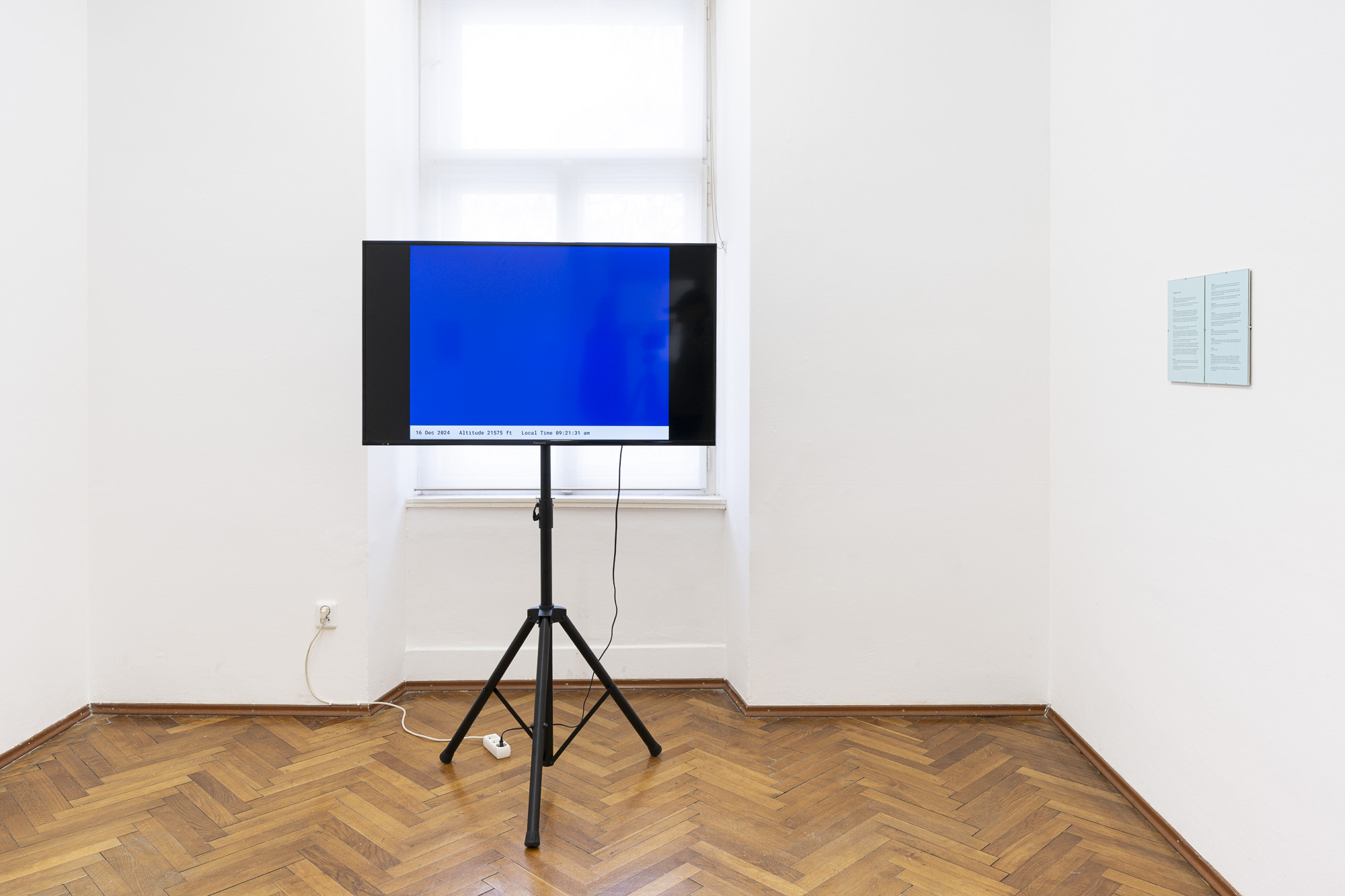
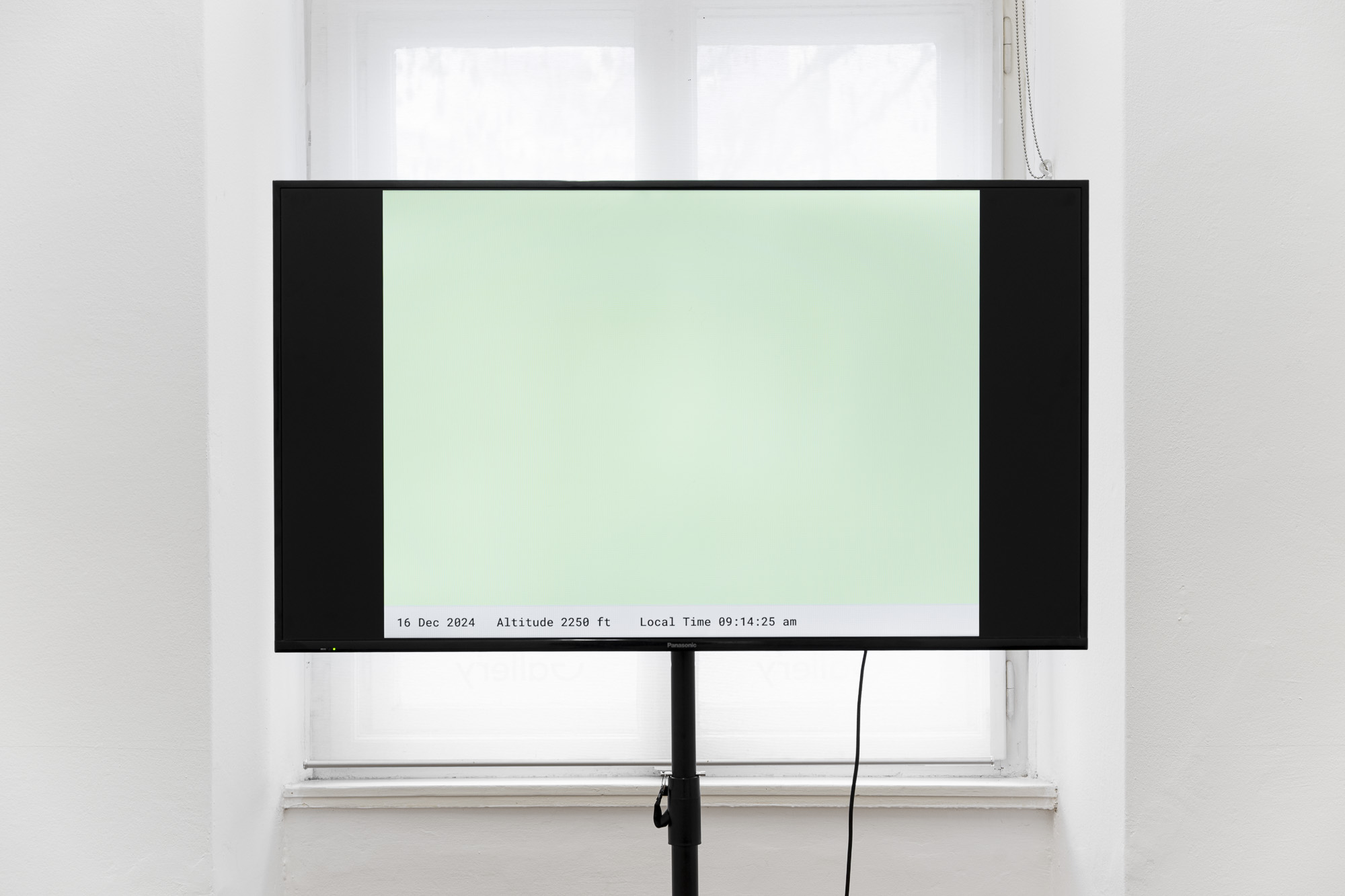
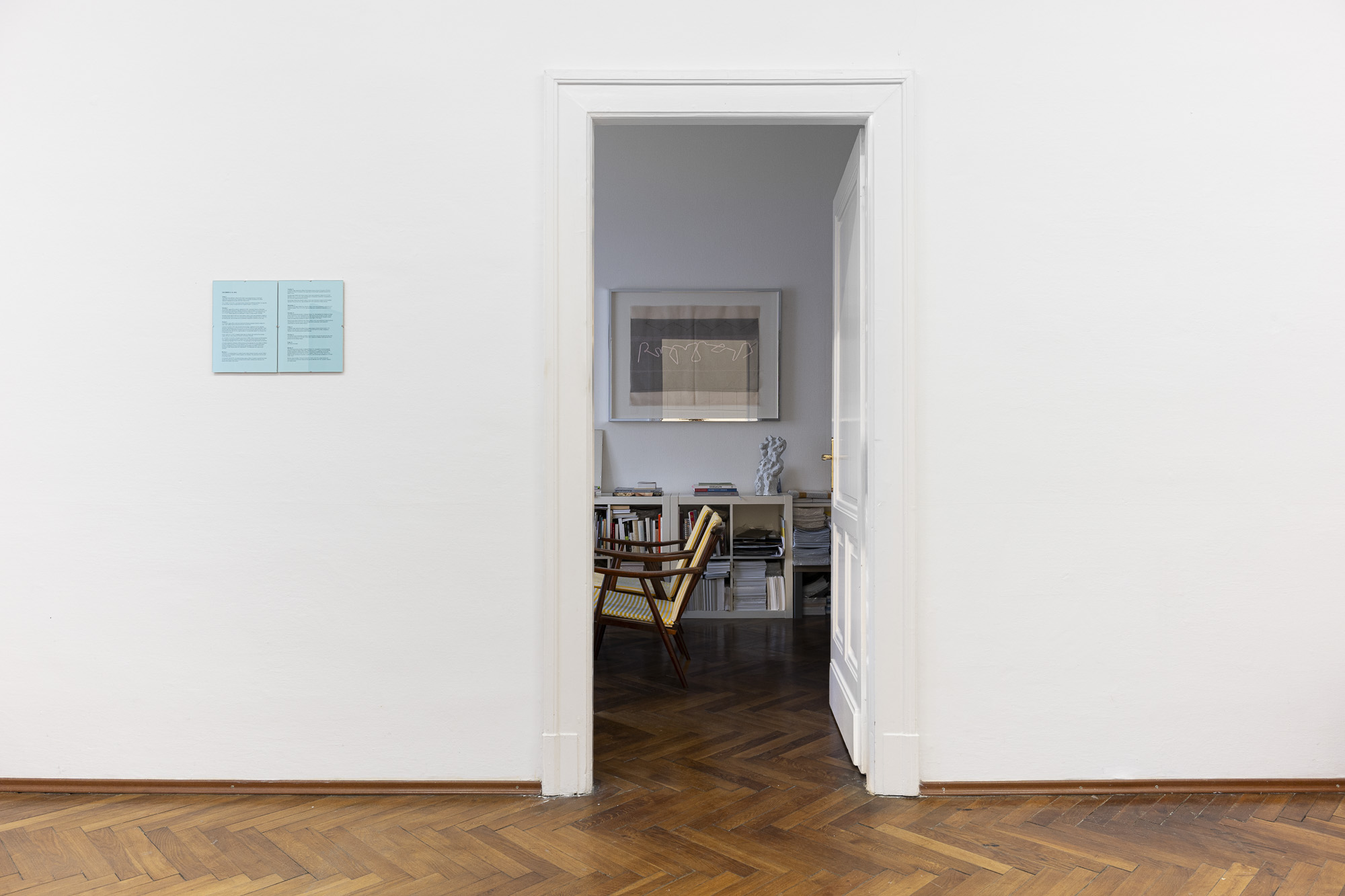
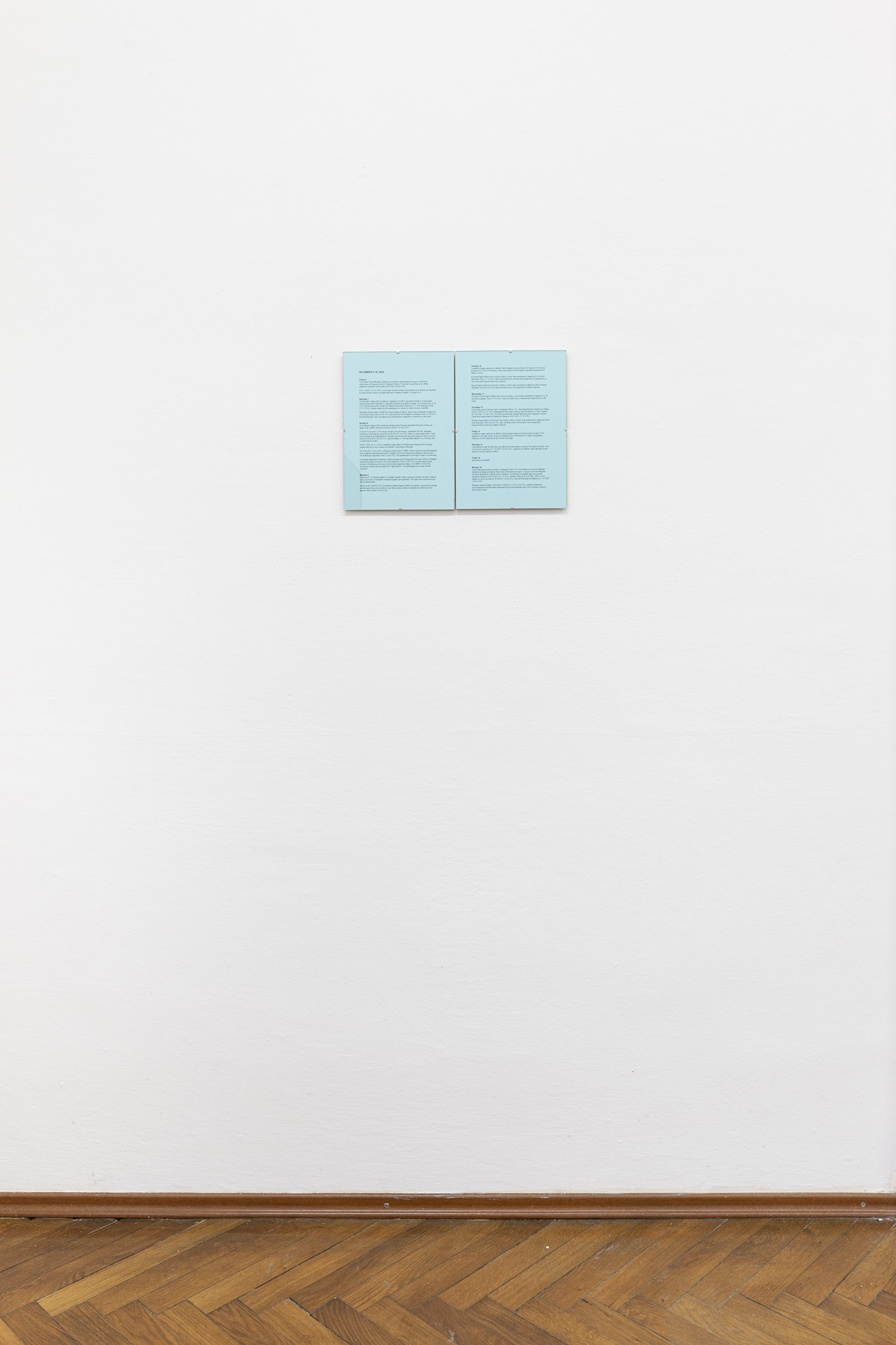
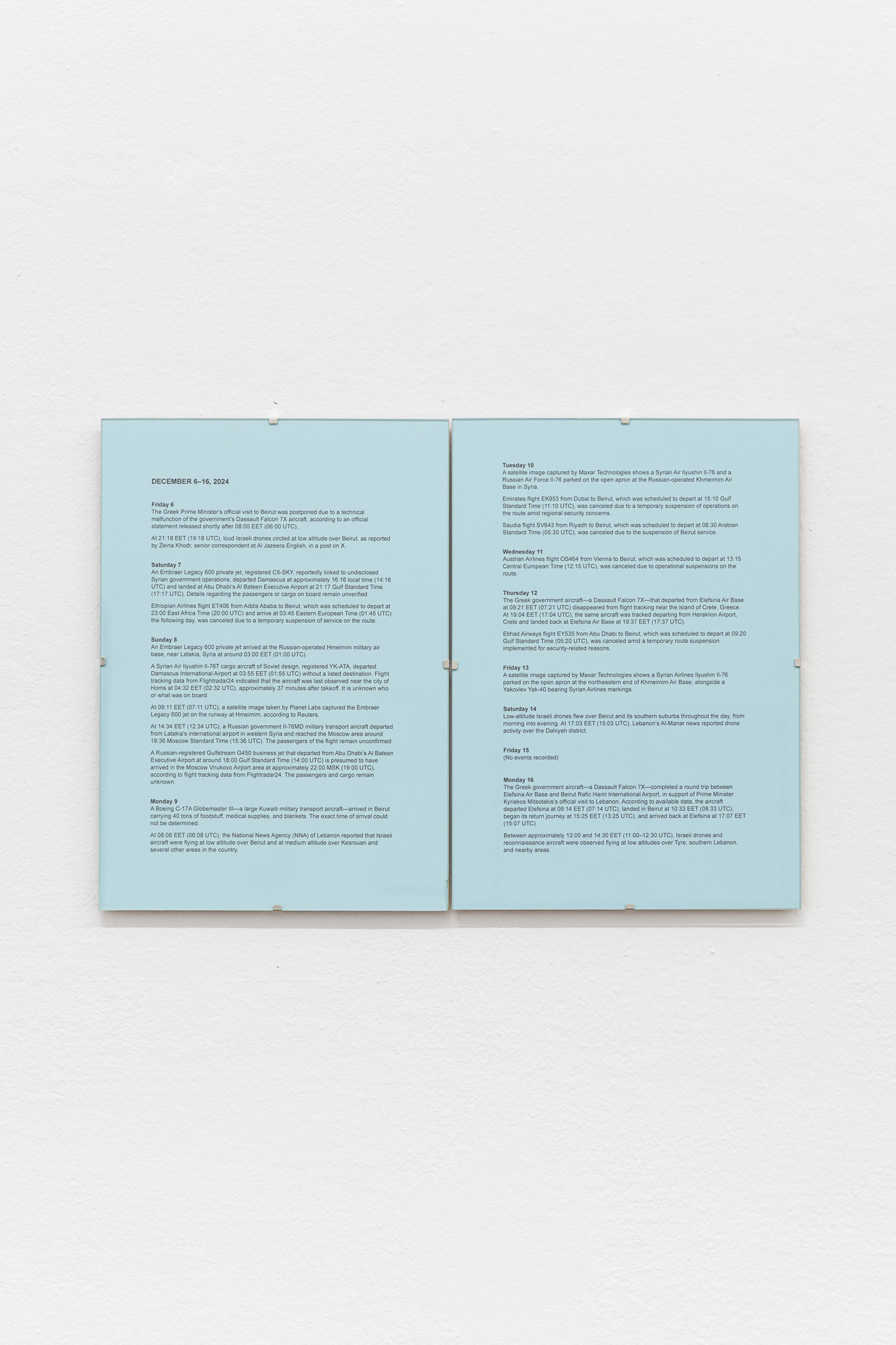
Vangelis Vlahos (Greece, 1971) uses archives, texts, and video to revisit Greece’s recent history and regional geopolitics, building networks of references that unsettle dominant narratives and invite alternative readings. His presentation at Candy Gallery comprises three projects, the first No Event for Monday, December 16, 2024, (2025) is structured around two parallel timelines: a text-based chronicle—tracing diplomatic, military, and aviation events across the Eastern Mediterranean from December 6 to 16, during the postponement of the Greek Prime Minister’s planned visit to Lebanon, and a 1h20m video that visualizes real-time temperature fluctuations during the rescheduled Elefsina–Beirut flight on December 16, 2024. Drawing on altitude, regional climate, and historical weather data, these fluctuations appear as continuous color transitions, precisely synchronized to the flight’s duration.
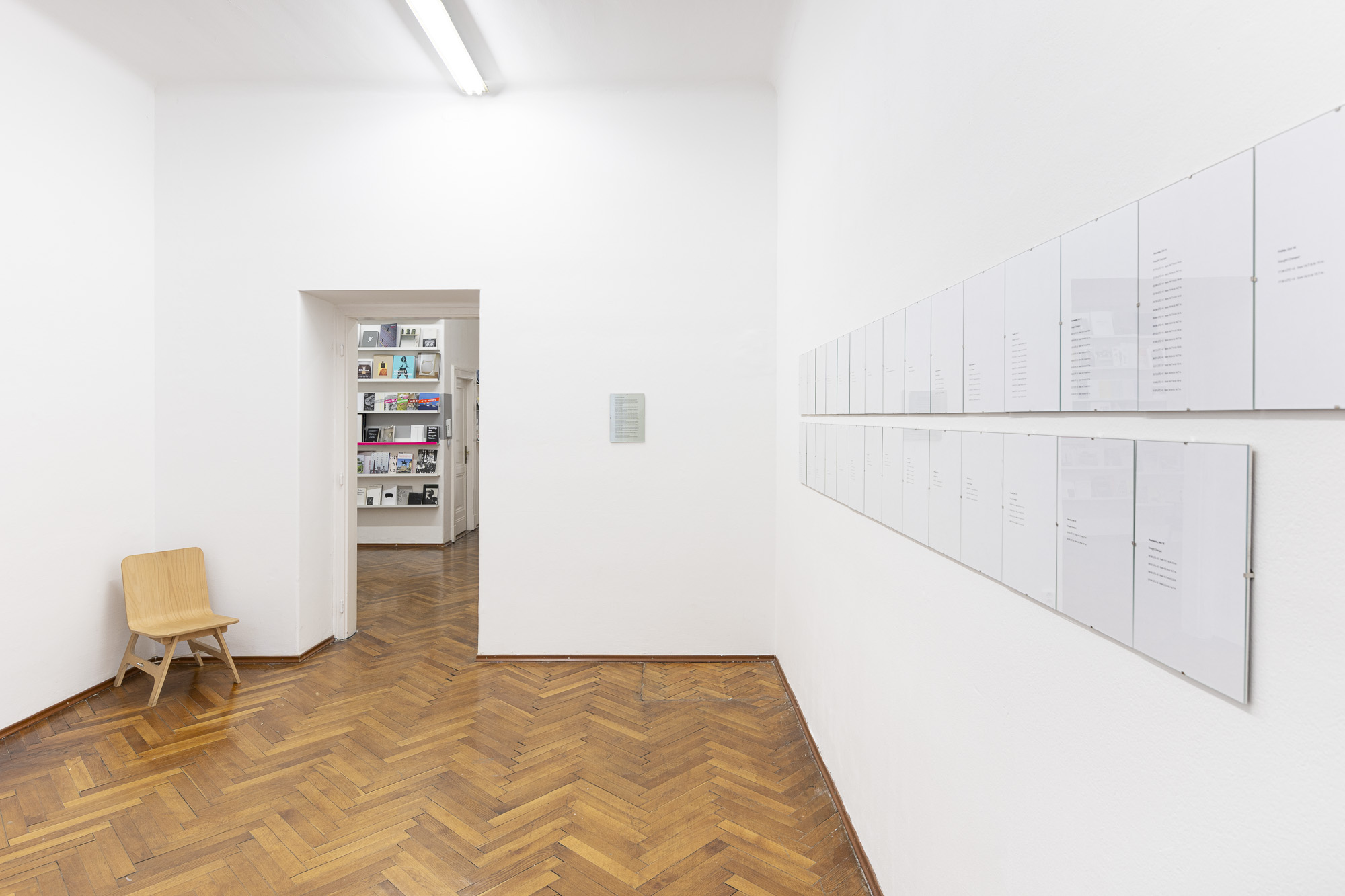
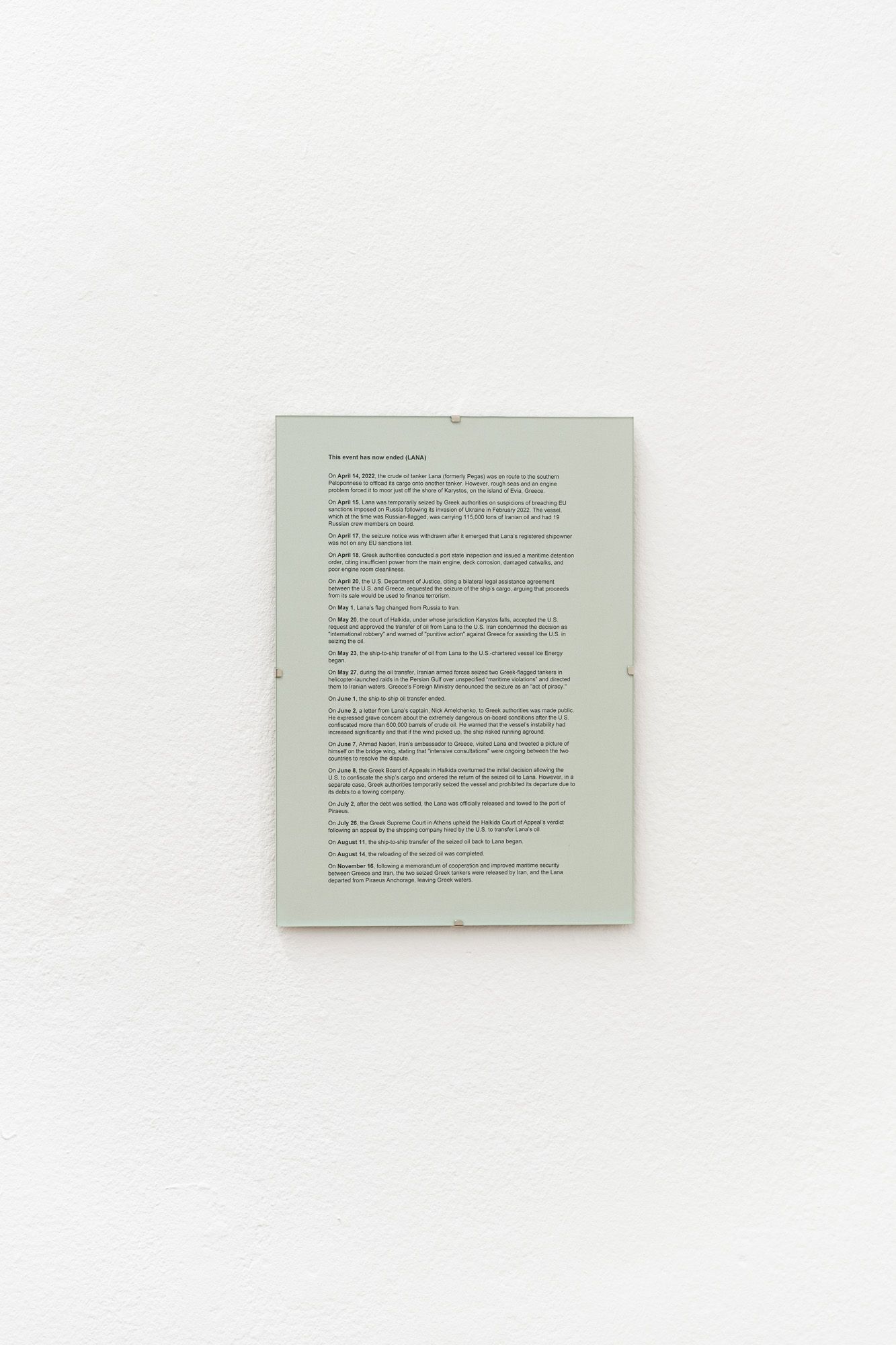
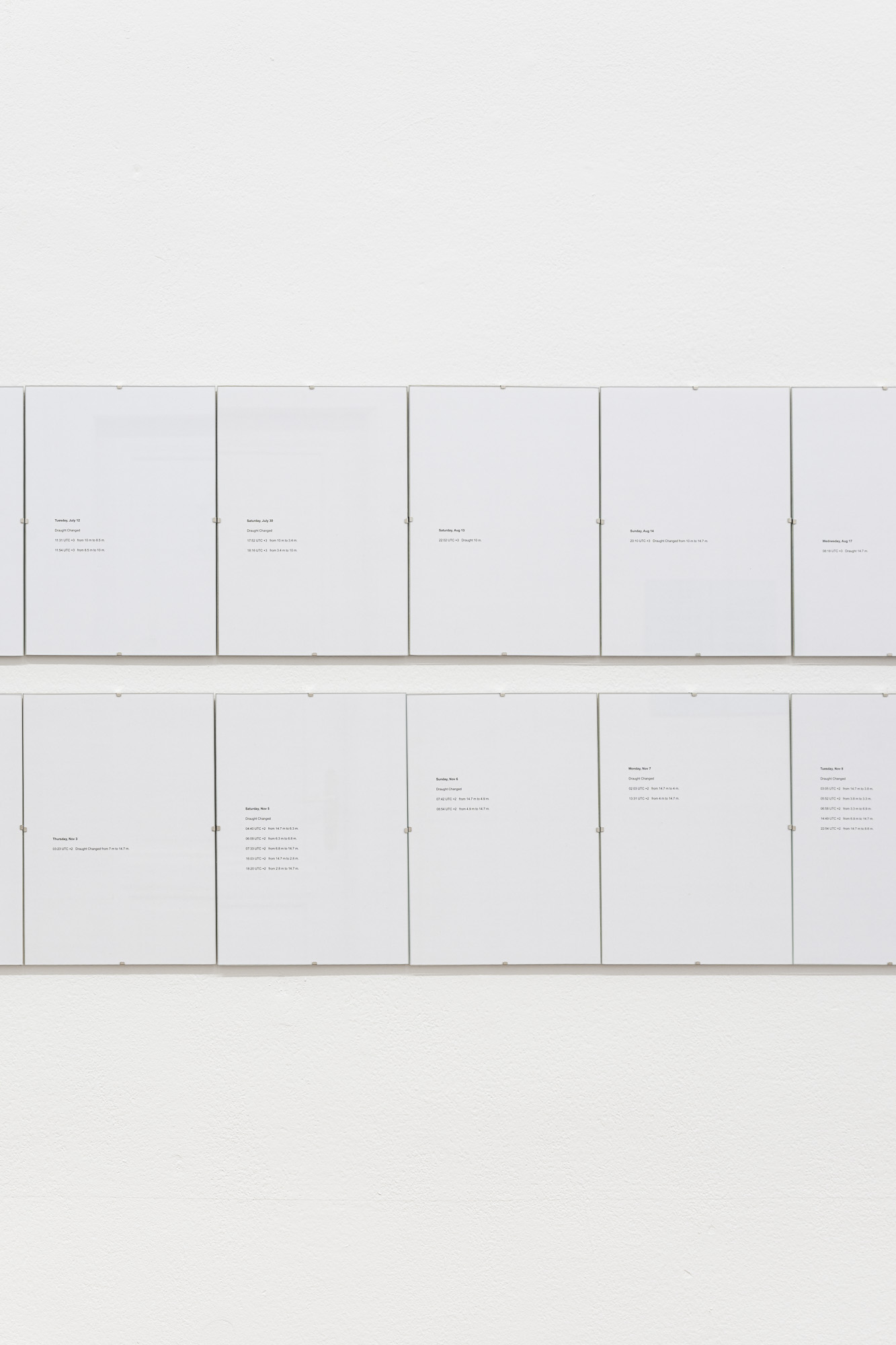
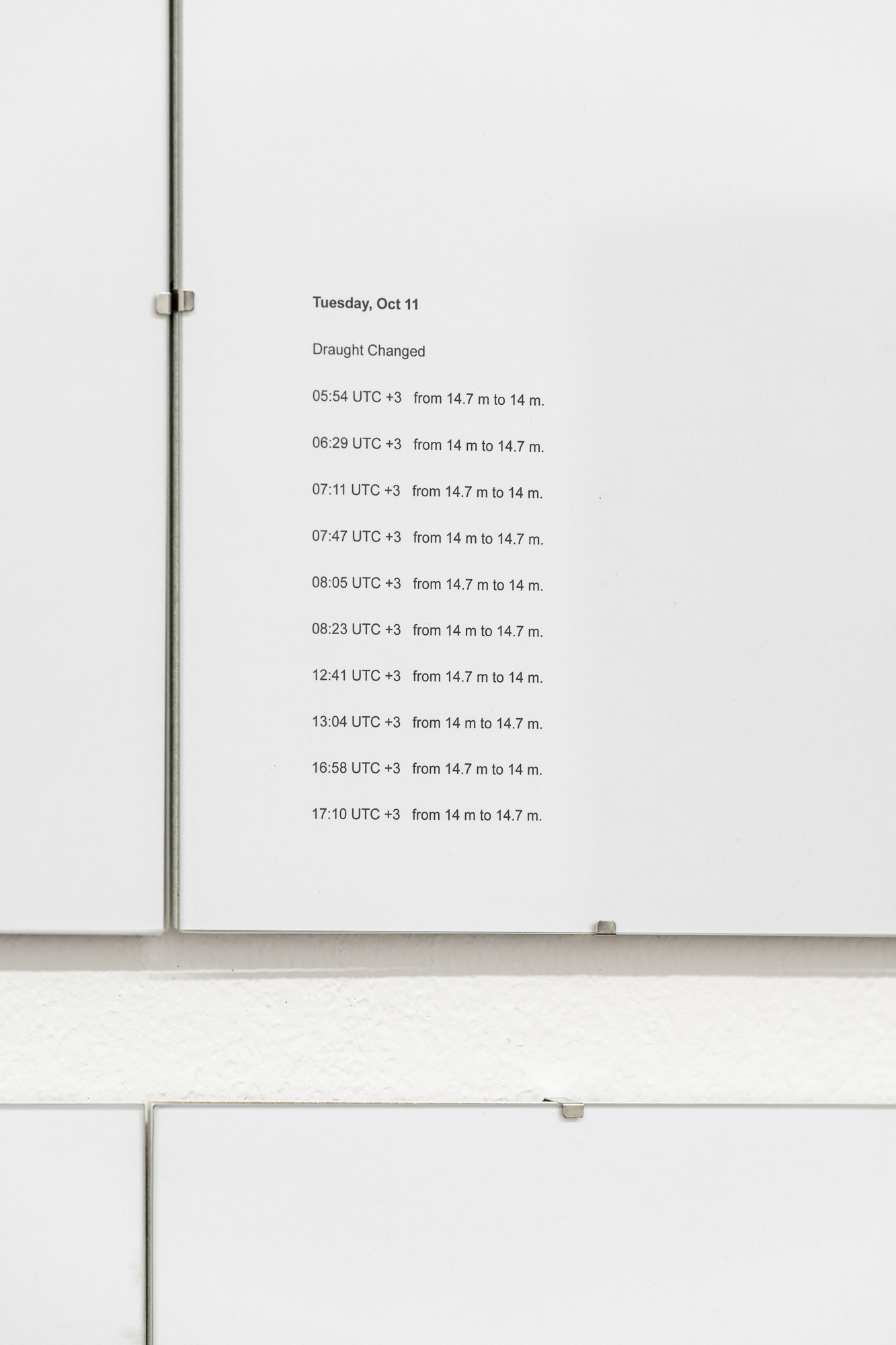
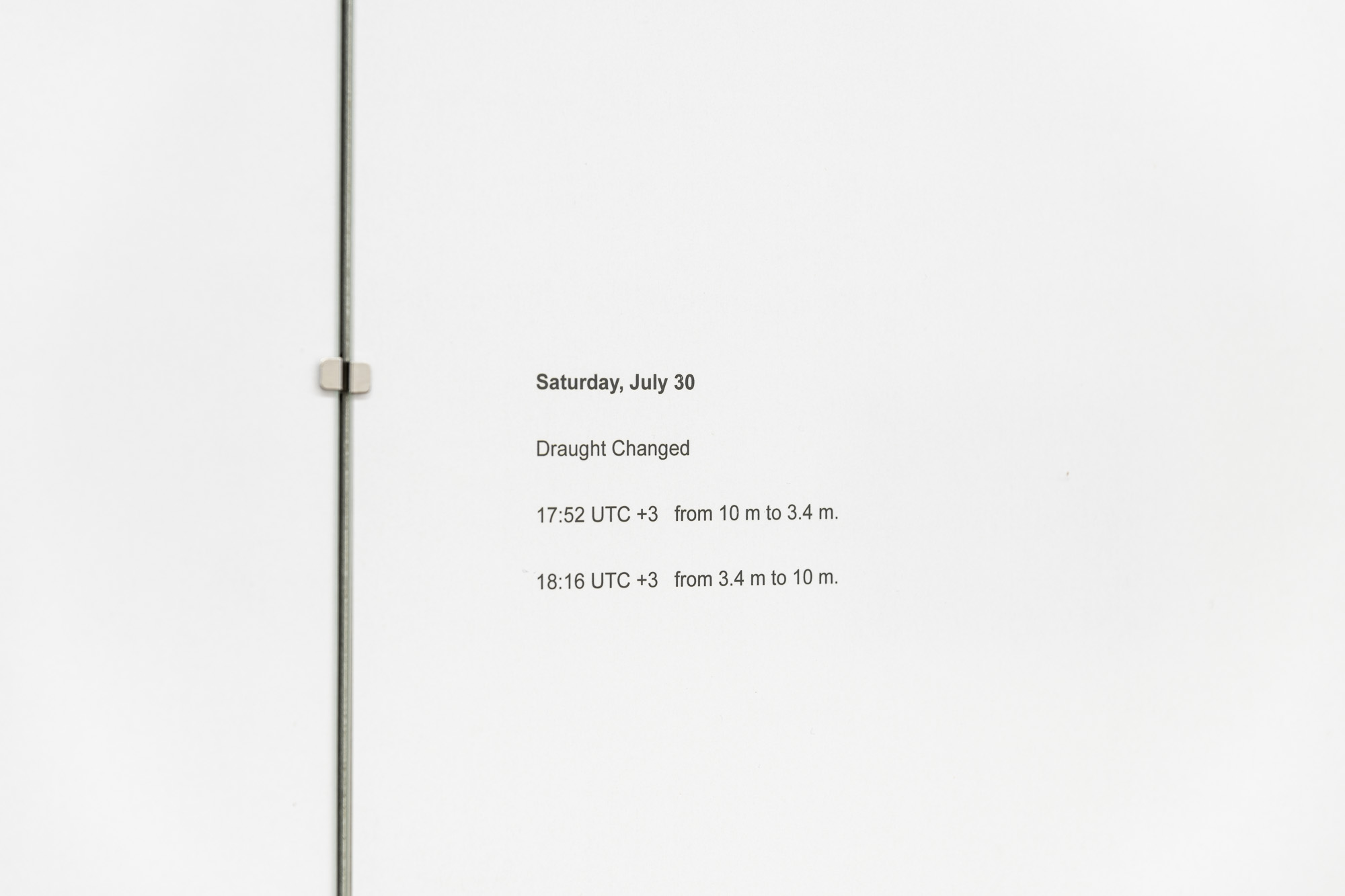
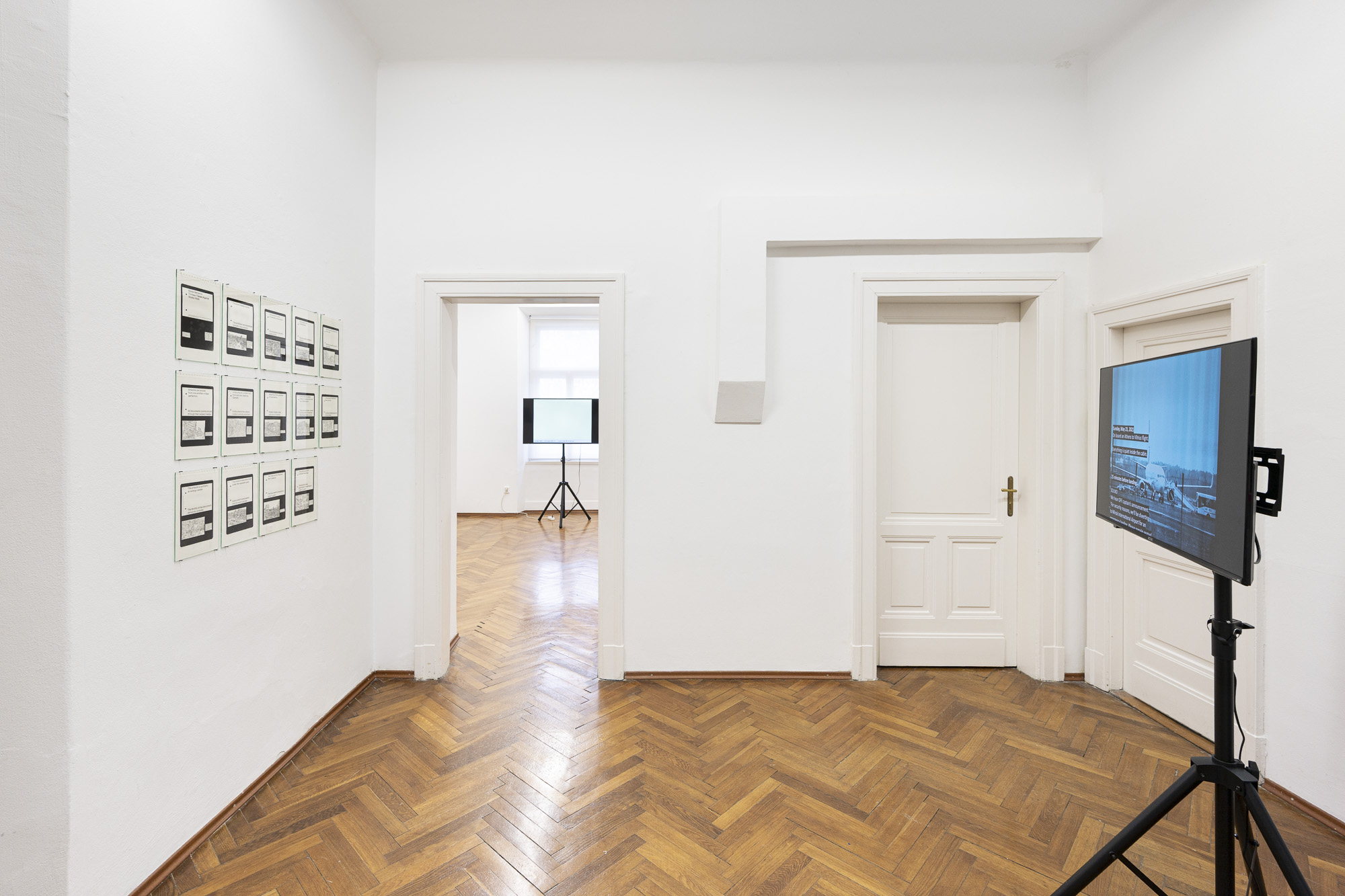
The second project, This event has now ended (LANA) (2023), examines the 2022 Iran–Greece naval incident through the events surrounding the Russian-flagged tanker Lana. Impounded at Karystos in April 2022 under EU sanctions, part of its Iranian oil was later seized by U.S. authorities, prompting Iran to detain two Greek tankers in retaliation. The dispute ended when Greek courts overturned the seizure and ordered the oil returned. Drawing on press, social media, and marine-tracking research, the work presents a two-part timeline—from the ship’s arrival to its departure—charting changes in the vessel’s draft alongside the case’s unfolding political developments.
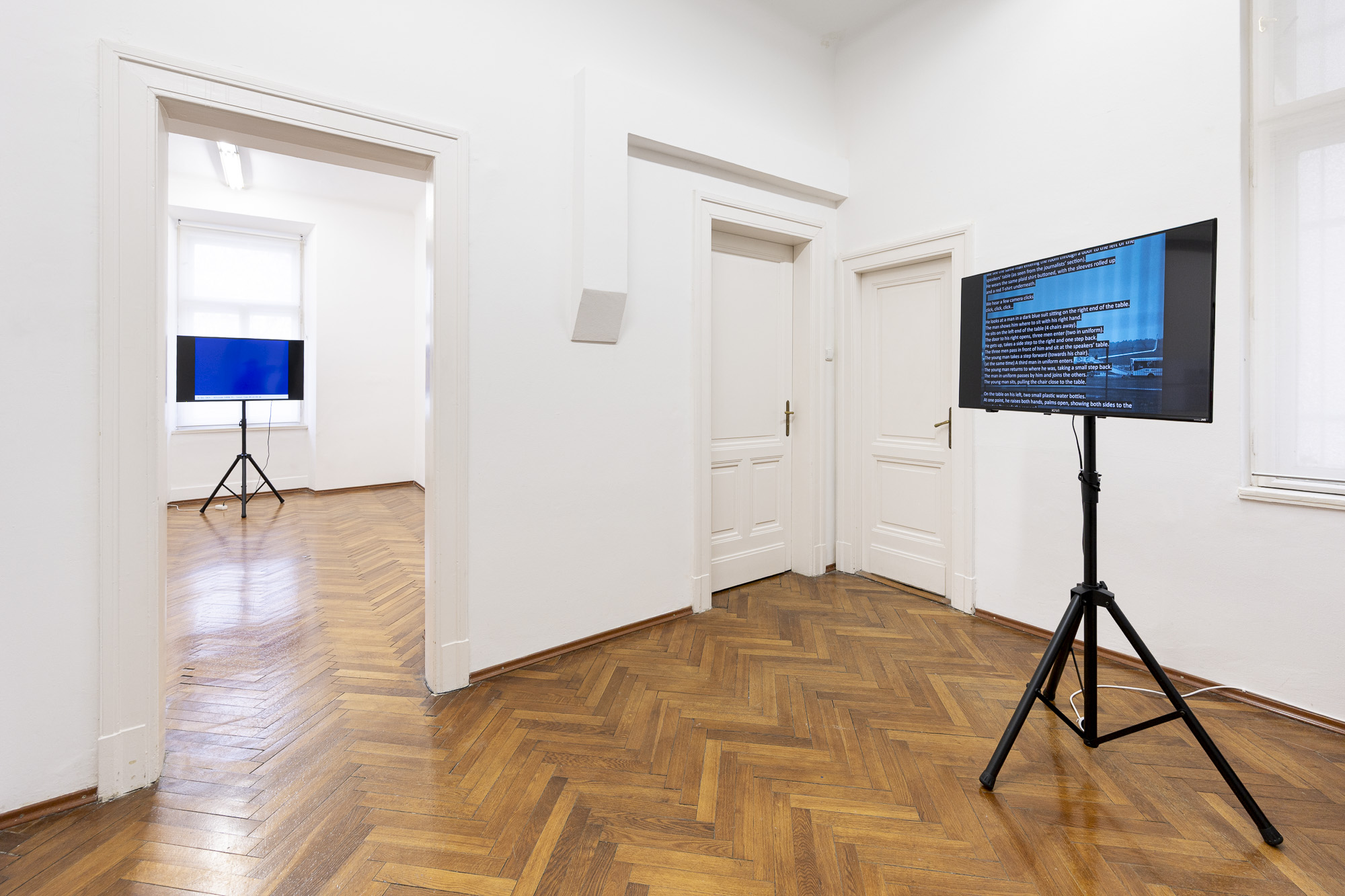
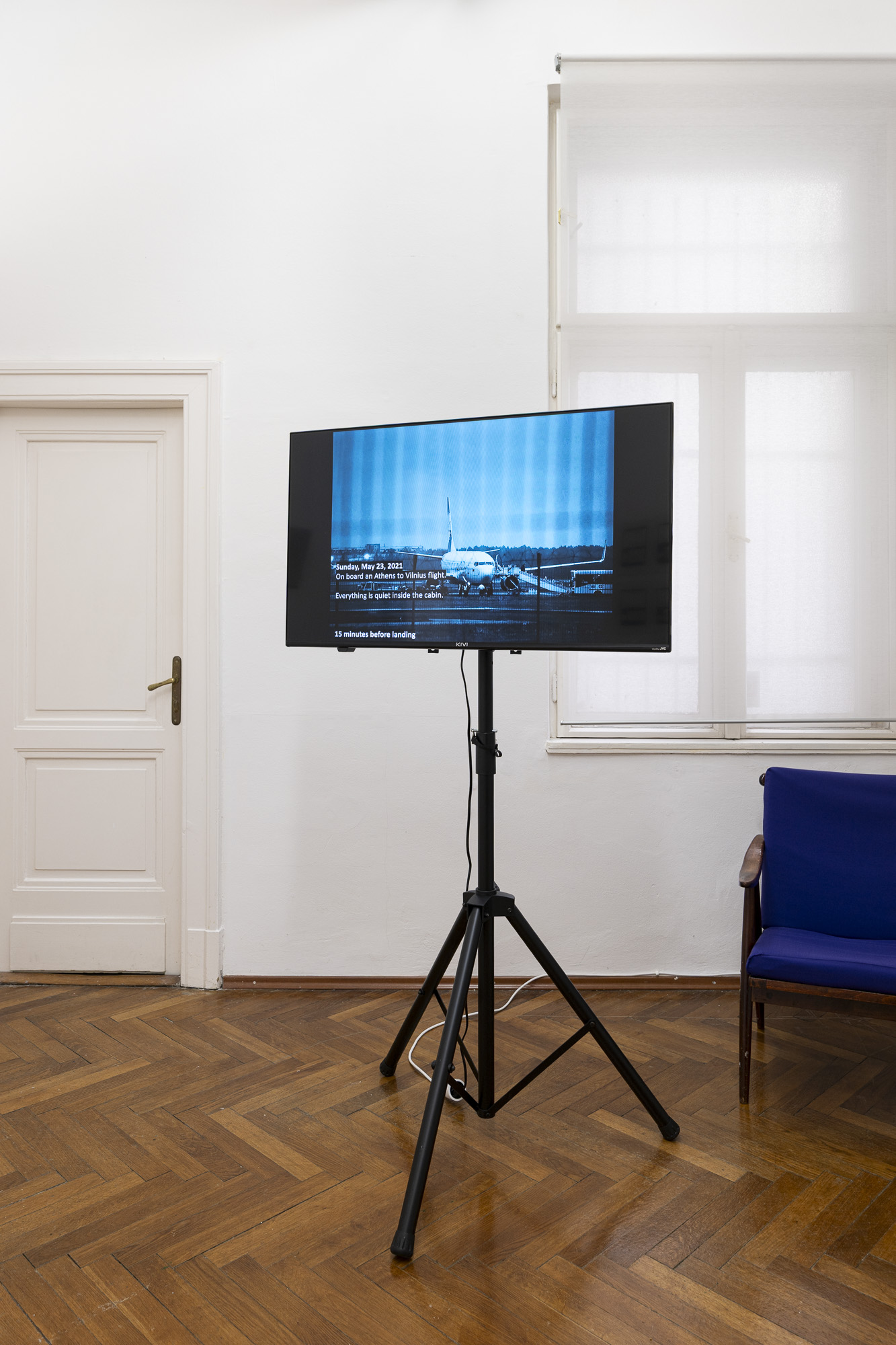
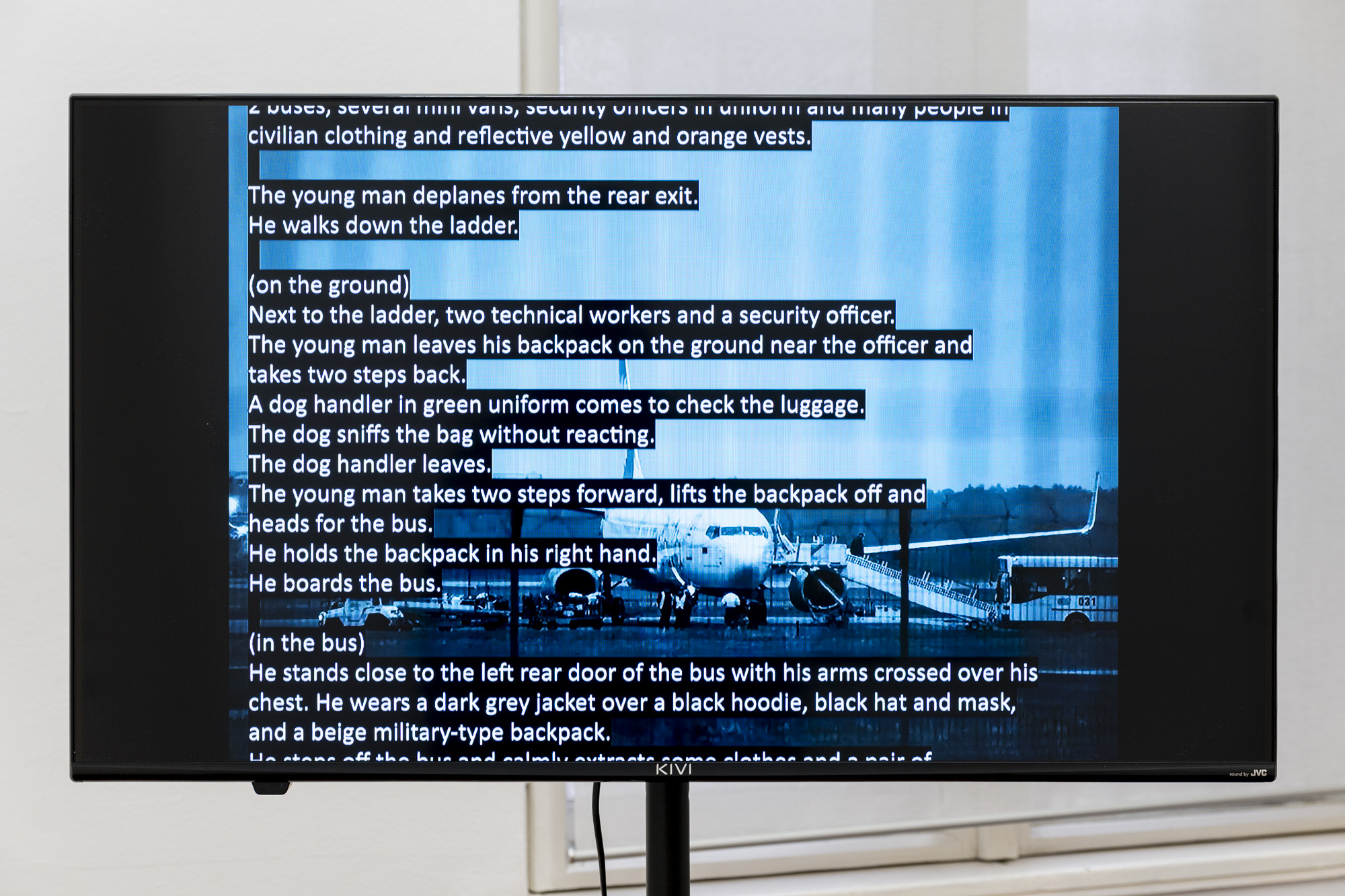
The third project, No event for Sunday, May 23, 2021 (2022), is a video that revisits the diversion of the Athens–Vilnius flight to Minsk and the arrest of Belarusian opposition figure Roman Protasevich. Framed by debates over the possible presence of foreign intelligence operatives at Athens International Airport, the work traces—through a text-led sequence—the first 22 days of Protasevich’s detention as reported in the media, focusing on gestures, posture, clothing, and the interiors in which he appeared.
Zbyněk Baladrán (b. 1973 in Prague, Czechoslovakia) studied Art History at the Faculty of Arts, Charles University and New Media at the Academy of Fine Arts in Prague. In 2001 he co-founded Display – Association for Research and Collective Practice, where he works as a curator and organizer. Since 2025, he has been teaching at the Academy of Fine Arts in Prague. He participated as a curator in the biennials Manifesta 8 in Murcia (2010) and Steirischer Herbst in Graz (2012). From 2006-2010 he worked on the interdisciplinary project Monument of Transformation. He has participated in exhibitions such as Manifesta 5 in San Sebastian (2004), the 11th Biennale de Lyon (2011), the 56th La Biennale di Venezia (2013). He has exhibited in group exhibitions at MoMA New York (2015), Württembergischer Kunstverein (2019), etc.
Vangelis Vlahos (Greece, 1971) lives and works in Athens, Greece. He has participated in exhibitions such as Manifesta 5, San Sebastian (2004); 3rd Berlin Biennale (2004); 27th São Paulo Biennale (2006); 11th Istanbul Biennial (2009); Monument to Transformation, Prague's City Galley (2009); To the Arts, Citizens!, Serralves Museum, Porto (2010); 3rd Athens Biennial (2011); The End of Money, Witte de With, Rotterdam (2011); Gesture, Kunstverein Stuttgart (2014); The Triennial 50JPG, CAMÉRA(AUTO)CONTRÔLE, Centre de la photographie, Genève (2016); Antidoron - the collection of the National Museum of Contemporary Art of Athens (as part of Documenta 14), Fridericianum Museum, Kassel (2017); When the Present is History, Depo, Istanbul (2019); 7th Thessaloniki Biennial, Thessaloniki (2019); Statecraft (constructing the nation), National Museum of Contemporary Art in Athens (2022); Machinations, Reina Sofia Museum, Madrid (2023); The Spectre of the People (Thessaloniki PhotoBiennale 2023), Thessaloniki Museum of Photography (2023), etc.